HERB PROFILE | PLANT GUIDE
Agrimony

By ERIN CASTILLO
August 23, 2023
“Argemone” means a plant that heals eyes. “Eupatoria” comes from Mithridates Eupator, the king of Pontus who is said to have practiced immunotherapy.
(rewrite this paragraph)In Elizabethan England, it was known as philanthropos (with the same root word as philanthropy—to give) thanks to its abundance of benefits and the way it would stick to travelers’ clothes giving them a parting gift on their journey. In Victorian Era in England, agrimony flowers were used to express gratitude and appreciation.
Can be found throughout Europe and Canada as well as North America. Natural habitats are woods, fields, and hedgerows.
Once used as a tea substitute for Thea sinesnsis in France. Historically used in the past for gun shot wounds and some studies indicate it helps with blood clotting.1
SPECIES:2
- Agrimonia eupatoria – Common agrimony
- Agrimonia gryposepala – Common agrimony, tall hairy agrimony
- Agrimonia incisa – Incised agrimony
- Agrimonia coreana – Korean agrimony
- Agrimonia microcarpa – Smallfruit agrimony
- Agrimonia nipponica – Japanese agrimony
- Agrimonia parviflora – Harvestlice agrimony
- Agrimonia pilosa – Hairy agrimony
- Agrimonia procera – Fragrant agrimony
- Agrimonia pubescens – Soft or downy agrimony
- Agrimonia repens – Short agrimony
- Agrimonia rostellata – Beaked agrimony
- Agrimonia striata – Roadside agrimony
Medicinal Uses: Much used in herbal medicine, it is often used to alleviate menstrual discomfort, aid in diabetes management, improving bladder control and respiratory health, and detoxifies the body improving the liver and gall balder health. Also has been known to provide gout relief and used as a good gargle for mouth and throat inflammations.
Other Uses: It can be used to dye fabric or wool in shades of yellow, gold and green with very good color fastness. For a lighter yellow shade use young plants and for darker shades of yellow use end-of-growing-season leaves.3 Agrimony also contains tannins and used for treating leathers.
Usable Parts of Herb: Flowers, leaves, and stems harvested when the plant is in flower. When crushed, the flowers and leaves give off a faint lemon scent. The leaves and flowers in particular contain a chemical composition that can act on the body in a detoxifying, astringent, coagulating, and in anti-inflammatory ways.
Flowers are edible and can be tossed in with salads4
Warnings: Due to agrimony’s astringent properties, it can increase constipation.5 Agrimony doesn’t have a history of toxicity or allergenic effects in people of all ages, but it is always a good idea to consult with your doctor before using any new herbal protocol.
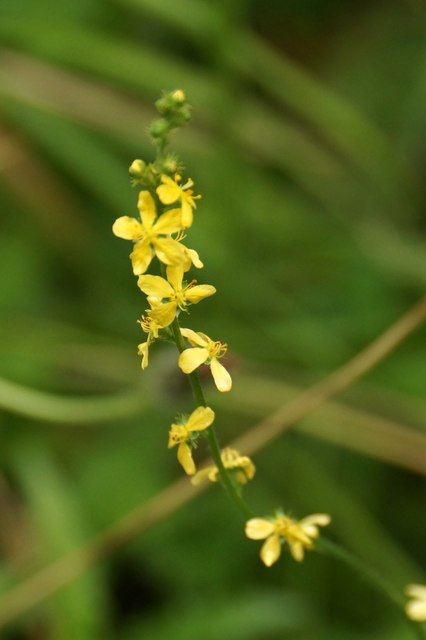
photo credit: Mike Pennington
How to Use:
• Brew as a tea (aka: infusion): steep 1 to 2 teaspoons of dried agrimony herb (or 3 teaspoons if fresh, gently crushed) in 1 cup of boiling water. Some compare the taste to apricots and say it tastes good when flavored with licorice or honey. Tea can be drunk or used as a wash for healing wounds or skin eruptions.6
• Liver Tonic: Combine together 1 teaspoon licorice root, 1 teaspoon milk thistle seeds, and 1 teaspoon dried agrimony leaves. Bring 2 cups of water to a boil and simmer root and seeds for 15 minutes. Remove from heat and add agrimony leaves and let steep for another 5 to 10 minutes or to taste.
Common names: sticklewort, cocklebur, and church steeples (its yellow flowers are spire-like.)
Taxonomy of the Agrimony Herb
Kingdom: Plantae
Clade: Angiosperms
Clade: Eudicots
Clade: Rosids
Order: Rosales
Family: Rosaceae/Rosaceae Agrimonia Eupatoria
Genus: Agrimonia
Species: Eupatoria
Binomial Name: Agrimonia eupatoria
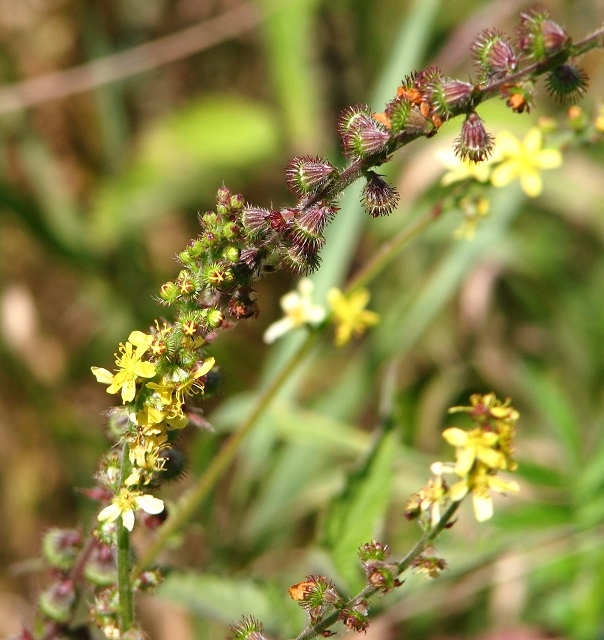
(Agrimonia eupatoria)
photo credit: Evelyn Simak
GROWING TIPS:
Height: 2 to 3 feet tall. Appropriate for mid or back of the border plantings.
Soil: Well-drained, basic soil mix kept on the dry side
Exposure: Full sun or light shade
Deer Tolerant
Spacing: space mature plants 7-10 inches apart
Propagation /
Seed Starting: Seeds planted in spring or fall or you can also plant by root division. The seedpod is a bristly bur and easily catches on the fur of animals or clothes of of people.
Footnotes:
- Richter’s Seeds. richters.com ↩︎
- Wikipedia: Agrimony ↩︎
- Eupterra: All About the Agrimony Herb
Created On: February 14, 2018 | Updated: May 5, 2022 https://eupterra.com/agrimony-herb ↩︎ - Wild Plant Guides: https://wildplantguides.com/2021/01/20/common-agrimony-agrimonia-eupatoria/ ↩︎
- Organic Facts: 9 Surprising Benefits Of Agrimony
by John Staughton (BASc, BFA), February 11, 2020 https://www.organicfacts.net/health-benefits/herbs-and-spices/agrimony.html ↩︎ - Richter’s Seeds. richters.com
Please Note: Information offered on the Grow Your Health Gardening website is for educational purposes only. Grow Your Health Gardening makes neither medical claim, nor intends to diagnose or treat medical conditions. Links to external sites are for informational purposes only. Grow Your Health Gardening neither endorses them nor is in any way responsible for their content. Readers must do their own research concerning the safety and usage of any plants, herbs, or supplements.
↩︎
 Grow Your Health Gardening