Use the following chart to help jog your memory on when it is best to prune either a fruit tree or a bush. We will come back to this list periodically to add to it as we have updates. And after you have pruned, be ready for when blooms emerge as spring is an ideal time to fertilize once you see new growth.
Fruit Trees:
Apple
Winter or early spring
Train tree for low head and prune moderately. Keep the center of the tree open with main branches well-spaced around the tree. Avoid sharp V-shaped crotches.
Cherry
Winter or early spring
Prune moderately, cut back slightly the most vigorous shoots.
Citrus
Spring after risk of freeze has passed,
Prune after risk of freeze has passed, but well in advance of summer heat. Water sprouts, a.k.a. “suckers”, emerge frequently, especially the first few years of the tree’s life. It’s best to remove suckers as they appear, otherwise, they take energy from the tree. The thorns also make harvest difficult. If the suckers do produce fruit, it is usually bitter and unpalatable.
Peach
Early spring before buds
Prune vigorously removing one-half of the previous year’s growth keeping the tree headed low and well thinned out.
Plum
Early spring
Remove dead and diseased branches, keep tree shaped up by cutting back rank growth. Prune moderately.
Quince
Early spring
Cut back young trees to form low, open head. Little pruning of older trees is required except to remove dead and weak growth and keep airflow.
Flowering Japanese Magnolia
Early spring
Before buds open, trim off side limbs that cross another limb. Keep center of tree open for airflow and birds will nest in it.
Fruit Bushes, Flowering Bushes, and Vining Plants
Blackberry
After bearing and summer
Remove at ground canes that bore last crop.In summer, but back new shoots 3.5′ high.
Boxwood
Early spring
Trim and shape before new growth occurs.
Blueberry
Winter while plants are dormant
Blueberries only grow on branches that are at least one year old, but the older the branch, the fewer the berries produced. You must prune the bushes so that they provide enough new growth for blueberry production the following year.
Raspberry
After bearing and summer
Remove at the ground in fall canes which bore last crop. In summer, head back new canes 20 ” to 22″ inches high.
Currant
Early spring
Remove old unfruitful growth and encourage new shoots.
Gardenia
Right after blooms have faded
Pruning your gardenia every other year typically keeps the size manageable. Gardenia blooms on new growth, so pruning after bloom cycle is ideal.
Gooseberry
Early spring
Same as currant—cut back shoots at 12″ inch and side shoots to two buds.
Grape
Late winter or early spring
Requires heavy pruning of old wood to encourage new bearing wood. Remove all old branches back to main vine. Cut back the previous year’s new growth to four buds.
Hydrangea
Early spring
Hills of Snow variety cut back to ground. Other varieties: remove dead and weak growth, cut old flowering stems back
Elderberry
After fruiting (Sept/Oct)
Prune severely. Remove one-half of season’s growth on established plants.
Roses, Tea, Hybrid, Perpetual
Early spring
Cut away all dead and weak growth and shorten all remaining branches or canes to four buds for weak growers and five buds for vigorous varieties.
Roses, Climbing
After flowering
Cut away all dead and weak growth and shorten all remaining branches or canes to four buds for weak growers and five buds for vigorous varieties.
Before moving forward into the new year, I wanted to take once last glance backward to 2023 in regards to food that has been modified genetically. There were three big announcements in 2023 that involved genetically changed / altered / modified food and food sources that have been modified by CRISPR breeding technologies.
If you’re not familiar with the acronym, CRISPR (Clustered Regularly Interspaced Short Palindromic Repeats) is essentially a DNA gene-editing system. It allows scientists to edit parts of the genome by removing, adding, or altering sections of DNA in order to dial down undesired traits and dial-up/in to traits that are beneficial.
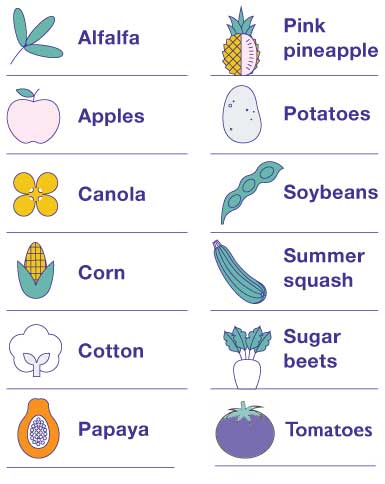
In recent years, GMOs (Genetically Modified Organisms) have entered the market. In 2020, GMO soybeans made up 94% of all soybeans planted, GMO cotton made up 96% of all cotton planted, and 92% of corn planted was GMO corn.1 (In fact, I learned this year—along with my 6th and 8th graders—that GMO cottonseed oil (in addition to feeding cattle) is commonly used in crackers, peanut butter, tortillas, chips, baked goods, fruit snacks, and as a frying oil in mainstream restaurants2.)
Keep in mind that there is a difference between GMO and CRISPR genetic editing processes. GMO takes two organisms/kinds that do not naturally reproduce in nature and joins their DNA thru gene editing. CRISPR gene editing removes or add genes into the genome within the plant’s own kind. As you read on, keep these methodologies in mind.
These bio-engineered improvements are touted as “improved”. Yet, there is little research to be found online on the genetic effects of bio-engineered foods on the human body on a cellular level — specifically whether or not they cause inflammation in the human body. If the altered foods have polyphenols and antioxidants, how can it be measured how these foods had a positive (or otherwise) impact on the human body?
Genetically engineered crops must be approved by the U.S. Department of Agriculture (USDA) before they can be freely grown and consumed in the United States. I was not able to find if the USDA runs any sort of trial or tests of bio-engineered products on actual human beings before allowing them to enter the marketplace. From what I can gather, it appears that the USDA focus on any concerns they have is to the plant affecting other plants or insects and animals from an environmental perspective (which needs to be looked at) more so than understanding how these changes within the DNA code will affect the human body. If there is concern by the USDA, it is not readily transparent with receipts to show its safety claims on humans. (I do not claim to be an expert is this area and only have common knowledge on the subject. I would be happy to learn more from someone in the genetic field about what happens behind the scenes that the general public may not see.)
Without further delay, let’s dive in and explore what is coming (or has arrived in 2023) in a grocery store near you. Remember, this is for informational purposes only so readers can make informed decisions.
28-DAY NON-BROWNING APPLES
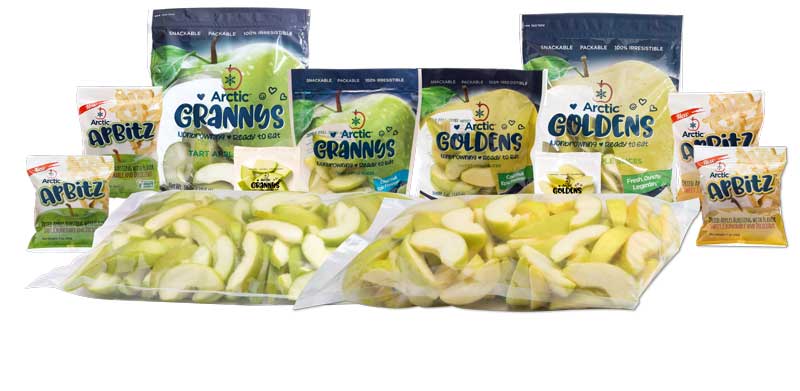
In October of 2023, The Packer, an industry trade publication for producers and grocery stores, shared that Okanagan Specialty Fruits had received approval for taking non-browning, “Arctic” apples to the public. In turning off the enzyme that makes the apple turn brown, the Arctic apple is said to stay “orchard fresh” for up to 28 days.3
It reported that Okanagan Speciality Fruits (parent company Third Security, LLC formally known as Intrexon4)5 was building a 110,000-square-foot processing facility in Moses Lake, Washington.6 This processing facility has been touted as being able to process more than 50 million pounds of apples per year. When fully built (anticipated 2024), it will be able to store, process and pack more than 100,000 bins of Arctic apples.
Okanagan Specialty Fruits picked their first Arctic apple in 2004.7 Currently, Okanagan Specialty Fruits has 1,250 acres of Arctic Fuji, Arctic Golden, and Arctic Granny apples. Arctic Gala will be the next variety the company will grow followed by Arctic Honey and Arctic Pink.8 When you see the Arctic brand, know that this fruit has been genetically modified to not brown as quick as other apples.
Some questions I have for Arctic and the USDA….
• If you can’t see an apple brown, and it doesn’t brown for 28-days how do you know if pre-cut apples on the store shelf are still fresh to eat? • Has the DNA change affected the nutritional profile of the apple? If so, what was lost/gained? • Has the DNA change been tested in how it will affect the human body? • In removing this browning enzyme, will it alter how the human body utilizes the nutrients? • Will it cause inflammation in the body? • Studies have shown that there is nutrient loss from the time of harvest in many foods. What happens to the nutritional profile of the apple from time of harvest to table?
MOVE OVER ROMAINE … CRISPRED PURPLE MUSTARD GREENS ARE NOW MORE NUTRITIOUS
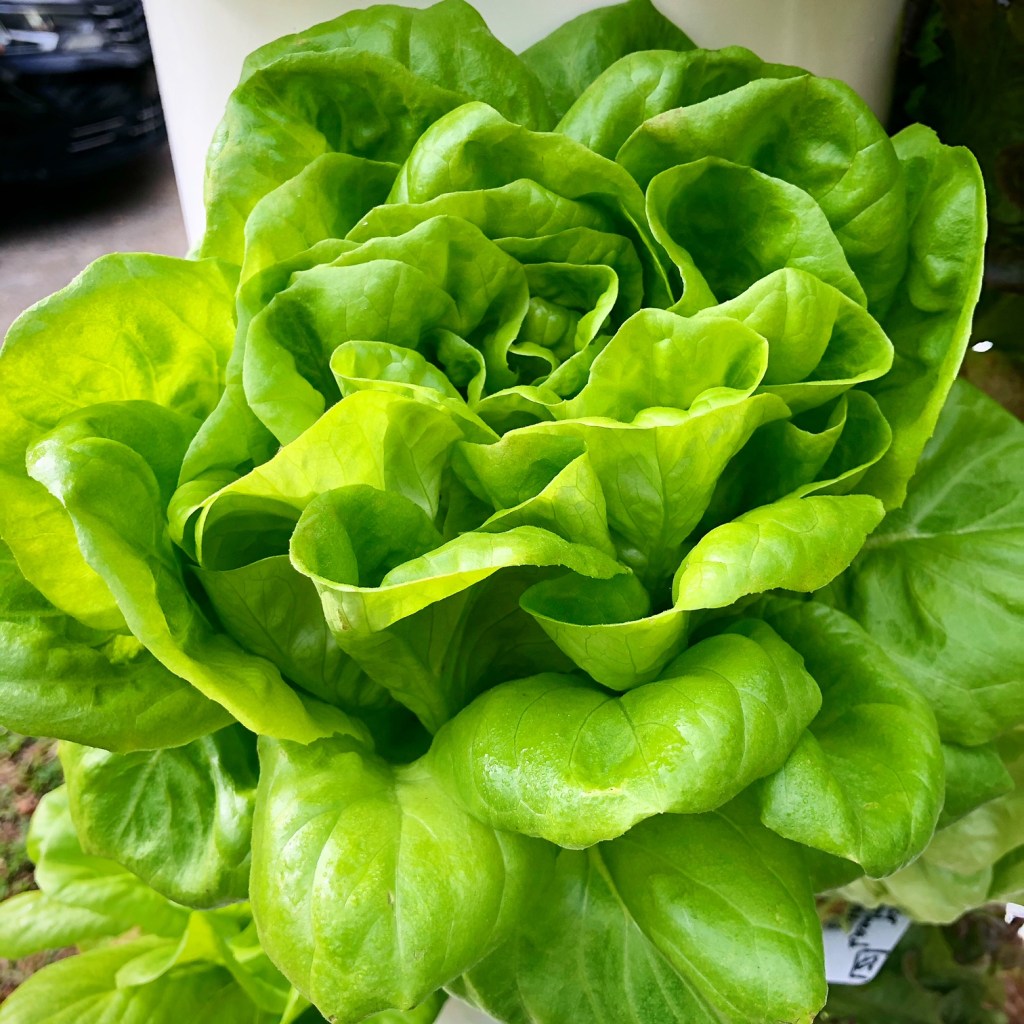
Conscious Greens, a product of Pairwise Conscious Foods, is offering purple leafy greens that boast double the nutrition of romaine.9 They set out to improve upon lettuce’s nutritional profile and used CRISPR breeding technology by taking mustard green DNA and editing the DNA to dial down any bitter flavor. It is said to now taste like romaine or any other green in a salad mix.
The company is also currently working on seedless blackberries, black raspberries, and red raspberries, as well as pit-less cherries, all with year-round availability under its Conscious Foods brand.10
Some questions I have for Conscious Greens (aka: Pairwise) and the USDA….
I’m wondering how these claims really play out in the human body. Where are the studies? I would like to learn more. I know that flavonoids play an important role in the body while also offering flavor (these are released when you cut into an herb for example). Have these anti-oxidants been deleted or altered? I’d love to learn more about your process there and see some transparency. If the flavor has been dialed down, how did you preserve the nutritional benefit?
A reminder to we, the consumer.… As for those of us growing our own food for health and Pairwise’s plans… CRISPR changes aside, remember, a plant without a seed cannot reproduce in kind and you must go back to the source that makes the original seedless plant to continue enjoying the fruits (unless somehow propagated — which would be against the law because said plant would be trademarked/copyrighted.) Food freedom can only exist if the plant can reproduced as God intended — by seed or natural propagation. I’m leery of anyone removing that option from my food source.
Also, I also find it super interesting that Bayer and Pairwise have formed “a strategic alliance to advance agriculture research and development through gene-editing technology.” Within this partnership, Pairwise says it works in corn, soybeans, wheat, cotton and canola crops exclusively with Bayer. Together, they created a new corn phenotype that produces 20% more kernels on a corn thereby increasing corn production.11
I also noticed that Pairwise recently got a pass on changes made to brown mustard. I use brown mustard to make my homemade mayonnaise. Will it be disclosed by these dijon mustard companies that their brown mustard seed is altered because it didn’t have to go through the approval process by the USDA? And again, does this alteration to the DNA affect just the plant growth mechanism, or has any nutrient been altered as well?
ANTIOXIDANT-RICH GMO PURPLE SNAPDRAGON TOMATOES
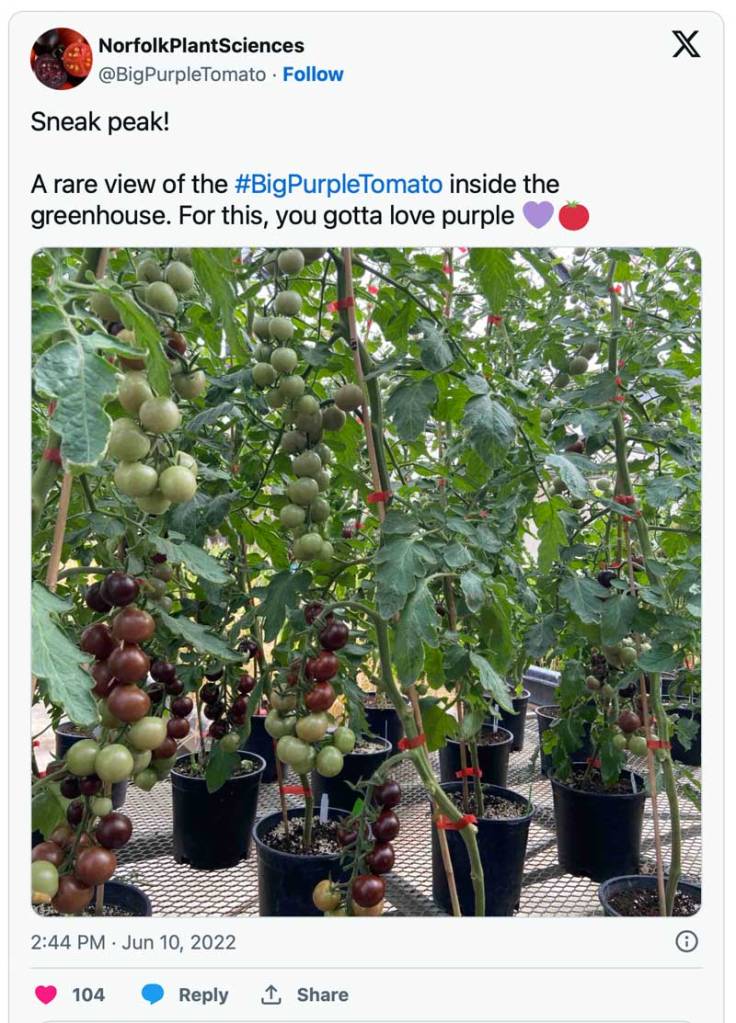
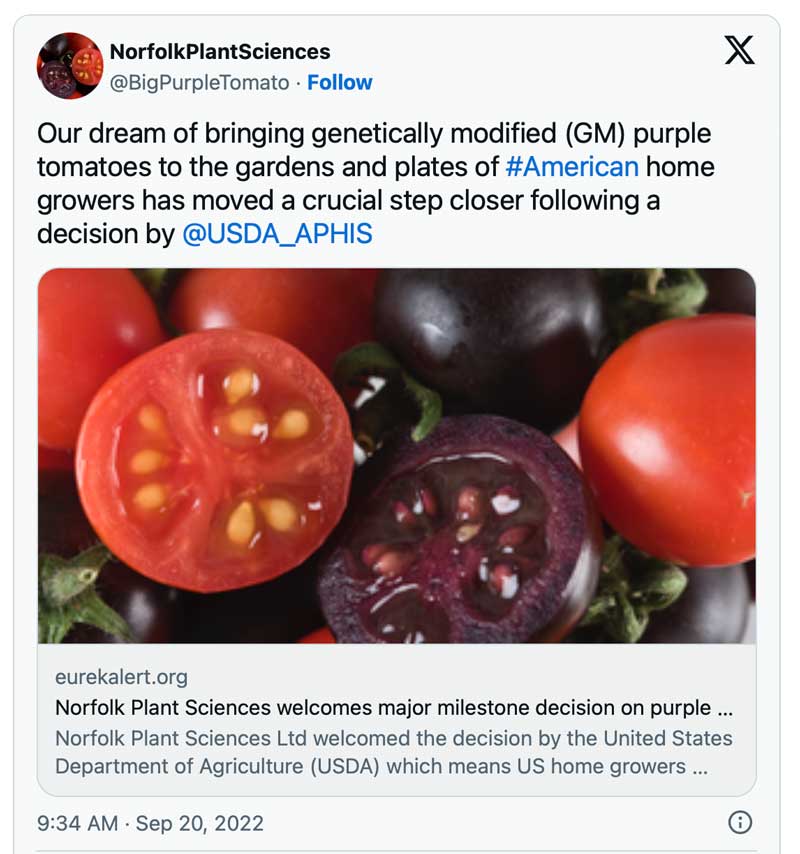
In July, Norfolk Plant Sciences says it successfully completed a consultation with the FDA12 regarding its high-antioxidant, genetically engineered purple tomato.131415According to their Web site, they carefully added two genes from snapdragons that work like “on switches.” As they explain, “These ‘on switches’ turn on the antioxidant benefits already in the purple tomato skin and juice DNA.” Y’all, this tomato is the darkest purple I’ve ever seen (albeit I’m looking at examples by photo / screen) —it’s even darker than Indigo Chocolate or Black Beauty by the looks of it.
Purple tomatoes have been shown through research to be higher in anthocyanins and polyphenols — anti-oxidants that have health benefits similar to eating blueberries or blackberries.
The company states, “We have developed a proprietary technology for massively enhancing the production of beneficial phytonutrients in plants. Tomato fruit expressing two genes derived from another plant species, antirrhinum (the edible snapdragon flower), are a beautiful deep purple colour. These tomatoes contain high levels of anthocyanins, the healthy polyphenols associated with consumption of blueberries, blackcurrants acai, and pomegranate. A paper published in Nature Biotechnology in 2008 showed that consumption of NPS purple tomatoes extends the lifespan of cancer-prone mice by 30%.”16
Some questions I have for Norfolk Plant Sciences (aka: Big Purple Tomato / Little Purple Tomato) and the USDA….
I’m curious to see any lab work on the nutrient profile of this tomato compared to other tomatoes bred through natural methods. Again, I’m not against the claimed benefits — we want to focus on foods that heal our body. Just wondering what other research is saying about these altered tomatoes. Forgive my skepticism, as the tomatoes I find in the grocery store have been modified genetically (aka “bio-engineered”) to lengthen the time from harvest-to-table and altered so they can sit on the shelf and not decay. They tomatoes are absolutely tasteless in my opinion. These GMO tomatoes are the reason why I love to grow Cherokee Purple Tomato or Black Cherry Tomatoes every season and look forward to when they produce. Taste and nutrition is a big part in why I like to grow my own past tomatoes — especially orange ones as they are chock full of beneficial nutrients that have been found that they help our DNA function properly and actually have been shown to bring protective qualities in regards to humans when x-rays are administered. I’d love to learn more about these genetically modified tomatoes especially since they have stated plans of introducing seeds into the everyday gardener’s plot.
BEFORE WE WRAP UP…
Before I wrap up this 2023 highlight list, I think it’s also good to be aware of what DIDN’T go through regulation. That can be cause for even more attention because we have even less information on what these companies are doing/ have done.
I’m particularly interested in the Tropic Biosciences non-browning banana because I purchased some bananas from Costco this year that NEVER finished ripening and I had to throw them out because it was just not natural. Were they just picked too green for market or was there some other DNA funny-business going on that wasn’t disclosed to the consumer. We need to be able to make informed decisions and you, the consumer should know if what you’re putting in your body has been altered at a genetic level in a lab somewhere prior to growing.
12 PLANTS GENETICALLY MODIFIED AND DEEMED NOT SUBJECT TO REGULATION
On November 14, 2023, the U.S. Department of Agriculture’s (USDA) Animal and Plant Health Inspection Service (APHIS) reviewed 12 plants modified using genetic alteration to determine whether they posed an increased plant pest risk as relative to non-modified comparators:
Bayer Crop Science, modified soybean for herbicide resistance (glufosinate, dicamba, dichlorophenoxyacetic acid (2,4-D), and mesotrione).
Bioheuris, Inc., modified soybean for herbicide resistance (auxin and 2,4-D)
CoverCress, Inc., modified pennycress for reduced levels of erucic acid and reduced fiber in the seed.
Inari Agriculture, Inc., modified corn for altered plant architecture
Insignum AgTech, modified corn to induce a rapid response to fungal infection.
Mazen Animal Health, Inc., modified corn for altered enzyme levels and herbicide resistance (glufosinate).
Pairwise Plants Services, Inc., modified brown mustard for altered pungency to improve flavor and altered outgrowth/texture to reduce appendage development on leaves and stems.
Tropic Biosciences, modified banana for altered fruit quality, non-browning.
Yield10 Bioscience, Inc., modified four camelina plants for herbicide resistance; one for resistance to glufosinate; and three for resistance to glufosinate, imidazolinone and sulfonylurea.
APHIS found, “these modified plants are unlikely to pose an increased plant pest risk compared to other cultivated plants. As a result, they are not subject to regulation under 7 CFR part 340. From a plant pest risk perspective, these modified plants may be safely grown and bred in the United States.”
From what I can gather, these USDA decisions—based on the new regulations—focus regulatory oversight on organisms that pose a risk to plant health, but say nothing to any oversight on organisms that pose a risk to the human body, nor any information released publicly on how it would be absorbed (or not) in a human’s intestinal tract or how the DNA would interact at a cellular level within the human body once ingested.
At the end of November 2023, the USDA announced it was deregulating Pioneer Hi-Bred International, Inc.’s (Pioneer) DP23211 corn. This corn was developed using genetic engineering to resist corn rootworm and given the genetic traits to tolerate glufosinate herbicides.17
Look for these labels on foods that contain bio-engineered foods:
Click image below to read details:
This is obviously a massive topic that keeps on growing and to try and tackle it in one article is a bit daunting. (If you’re still reading, I applaud you on caring about this area of our food supply chain.) I will circle back and provide more information as I learn more. In the meantime, please do your own due diligence and be aware of the products that have been altered genetically and reach out to these companies and feel free to ask questions of them and the USDA. And, as always, if you learn of anything not mentioned in this article, feel free to share in the comments below.
Please Note:
For both GMO and CRISPR processes, we could not find information from any of the regulatory agencies like the USDA on whether or not these genetic modification and changes have been tested in regards to how they affect the human body. If you know of any human studies that have been conducted on these genome-edited foods, please feel free to reach out to us. All research has been gleaned from online articles provided by the companies. Footnotes are noted below. We cannot be responsible for any companies changing information after the date of this posting.
We share the above information for informational purposes only and to help the public become more aware of what bio-engineered foods are entering the main stream grocery stores, restaurants, and even farmers markets in some cases. I have included sources for my research in the footnotes below and you are welcome and encouraged to dive deeper. As a sovereign human being, you have the right to be informed when making decisions about your health. We are not medical professionals, nor do we offer any medical advice. Readers are encouraged to do their own research before making any decisions on their health and you alone are responsible for what you eat or drink.
If you work in the industry or have personal knowledge or information regarding a possible violation of the USDA National Bioengineered Food Disclosure Standard (BE Standard) you may file a written statement or complaint. You can find the contact form here. https://www.ams.usda.gov/rules-regulations/be/file-complaint
Let’s remember that synonyms for “modified” also include, “altered, qualified, restricted.” The term, “modified” can sound so benign when in fact, the act of changing the DNA code at a cellular level for a given organism is essentially “man trying to be like God” as some scientist believe these foods have been designed by our Creator to nourish and even heal within our human bodies. I do believe we are created in our Creator’s image, so it is not surprising to see His creation mimicking Him, but I am not convinced yet that it is a good thing to be manipulating what He keeps in motion. I’m continuing to think about this topic in great details and hope this information above helps you to be a little more aware of what is entering our grocery stores and ultimately, our bodies.
Be well, my friends, and wishing you a wonderful and healthy New Year!
Here are some simple swaps you can use when you run out of a specific recipe ingredient while baking. Remember that you are not only substituting the chemical components of the item in your baking, but also moisture content in some cases (like with eggs.) When in a pinch, try pulling from these as staples in your kitchen:
Want to dive deeper? King Arthur has this fantastic review with pics as well as Kitchn where they rated and ranked how they felt the substitutes performed in a basic muffin recipe. I encourage you to check those out if you want to learn more on how these substitutions can effect the baking without an actual egg.
Happy baking!
Erin
PS: Don’t forget that to grow your health gardening, you can grow your own garlic, onions and heritage wheat. These typically are started in the fall, so now is a great time to plan these wonderful staples for your pantry.
“The best food in the world starts in the garden and ends on your plate, perhaps after a comfortingly stop in a well-stocked pantry or freezer. It never knows the back of a truck or the inside of a factory, and it holds no chemical or genetic secrets. Eating it feels comfortable and good.”
What is it about growing and preserving your own food that makes it worth the time and trouble? Here are 18 common traits we’ve observed of pantry gardeners… See how many you can identify with!
You want to know exactly what’s in the food you’re eating and feeding those you love. You have been educated in the effects of chemicals on foods and understand you can’t always simply “wash off” the pesticides. Everything that comes into contact with the commercially grown plant and soil is taken up by the plant affecting the nutrition as soils wane and become poorer with every season of use.
You understand that “organic” still means pesticides may have been applied to the plant you’re about to eat and “some” pesticides is still too much. You want to feel confident that the food you eat and feed to your family is the best clean nutritious food you can find.
You understand that plants grown for the grocery store are grown for their transportability and shelf life, not for nutritional value or flavor as the primary goal. Growing your own produce from seed gives you the advantage of picking what you’re going to eat at its peak ripeness meaning it will have all the nutritional benefits you are desiring. Further, you can quickly process the plant at its peak by harvesting, cleaning, and processing it either to eat right away or put into long term storage. In either case, you’ll be locking in optimal nutrition for your body.
You understand that growing your own food is investing in your own personal health and the health of those you care for on a daily basis. The activity of gardening is good for your mind and body according to research and personal experience.
You don’t have a consumer mindset where you only buy and live in the moment… instead, you think about your future needs and make an effort to have something on hand in the event you cannot find what you enjoy eating. This mindset of thinking long-range not only gives you peace of mind that you have some food security when tough times come. Those of us that had grandparents that lived through the depression era, now understand why they took the time to plant a garden and can food. Food security can be empowering and peace-giving.
It feels good knowing that you won’t be the cause for more packaging and plastic to be thrown away. Eliminating the need to purchase items from the store means you are creating a smaller carbon footprint on the need to rely on packaged goods.
You have practiced persistence and are able to stick with a task over a period of time in order to achieve the end goal (often referred to as delayed gratification.) You know with a little bit of effort, consistently over time, you can achieve anything — including a stocked pantry full of nutritious food you have grown.
You understand that investing in the right tools to grow food upfront will have a savings effect over time. Your homegrown food will outpace inflation in savings — it will cost less than store bought food (especially if you’re using a hydroponic Tower Garden.)
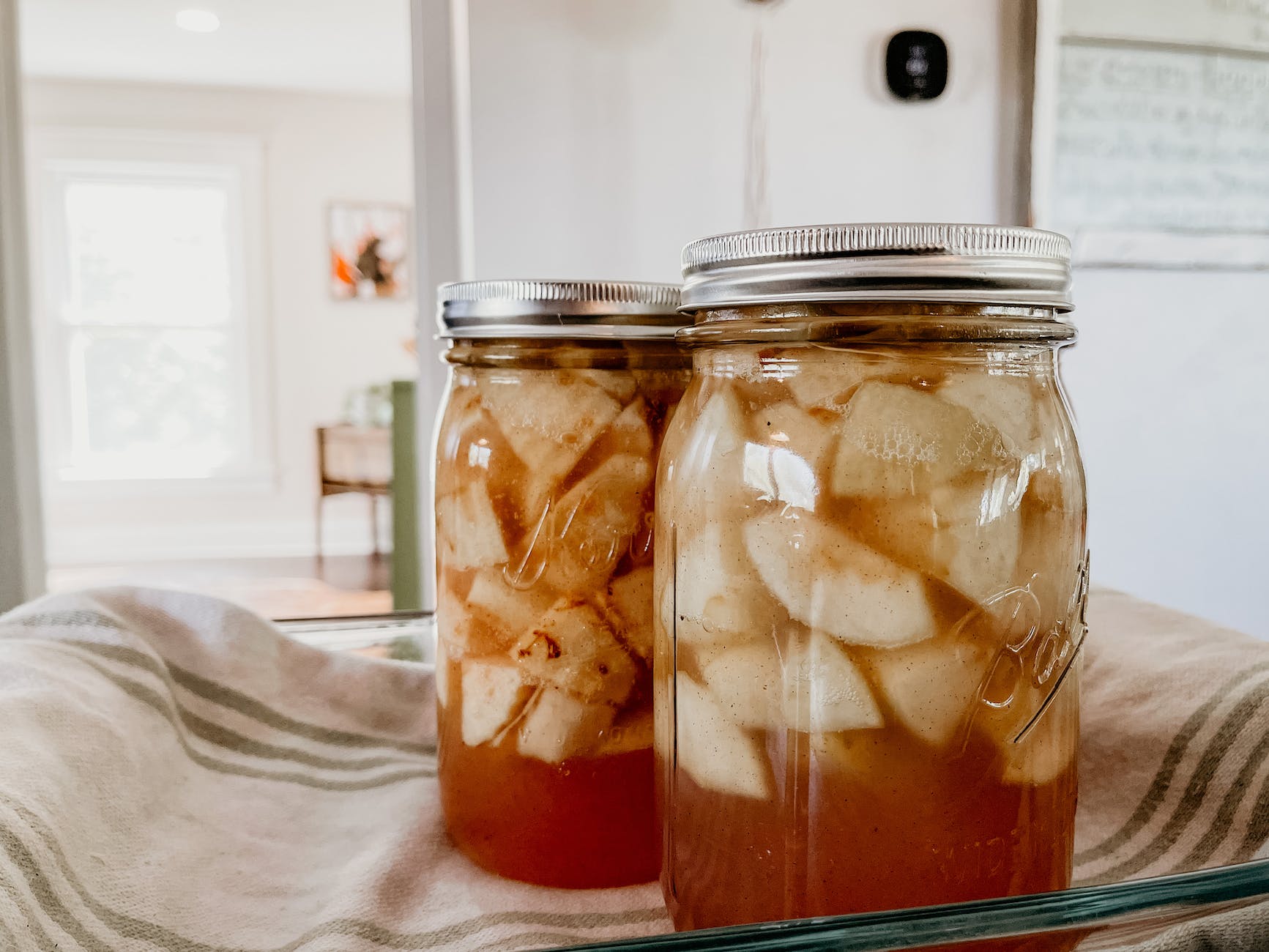
You connect with family history through gardening and preserving teaching the next generation through example these simply lessons of healthy living. Maybe it’s making your grandmother’s apply pie or your mama’s fresh basil pesto — these foods have a strong connection to your past and good memories. In sharing that with your children, you pass along these gifts.
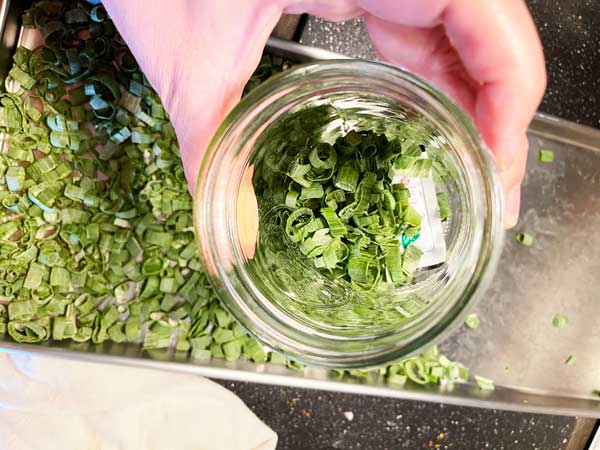
You know that home grown herbs that are dried immediately after harvesting out-surpass anything you can buy in the store when it comes to flavor and nutrients. Store bought seasonings sit on the shelf and lose flavonoids when they are crushed. By the time they are used in your cooking, the flavor has diminished. Drying your own herbs and keeping them in leaf form as much as possible keeps the flavonoids in tack and maintains a superior seasoning when you go to crush them and use them in your cooking.
You find that maintaining your own food supply helps to connect you more deeply to the earth and the seasons of life. Watching a plant grow from seed to harvest or even to produce seed to collect gives you a deeper connection to living life to the fullest as you appreciate the cycle of life.
You feel empowered to try something new and aren’t afraid to risk failing. You know that nothing is gained by not trying, so you’re willing to put yourself out there and explore new things in order to gain understanding.
You have a generous nature in that you freely share what you have grown and preserved either through sharing of a meal together or in helping out a neighbor or loved one when they are grieving or in need.
In selecting plants intentionally for their usefulness, you are able to gain the benefit of harvesting herbs in particular for medicinal uses to bolster your immune system. Homegrown herbs with medicinal benefits give one access to health care no matter your age or demographic.
In preparing items for your pantry, the time it takes to go to the store to purchase those items (as well as the cost associated with that grocery run) saves you time in making meals at home. You just walk over to the pantry shelf or go outside to the garden and “shop” from your own aisle.
You know the importance of being mindful of salt and sugar in your food as it affects your arteries and heart. Store-bought options and eating out expose you to higher than normal recommended levels of sodium and sugar. Plus, aluminum cans leech aluminum into contents (food) over time. Storing your own food puts you in control of how much salt or sugar is put into whatever you are preserving.
You like working smarter, not harder. If you have an indoor Tower Garden with grow lights, you have total freedom to grow food 3x bigger and 3x faster using 98% LESS water than traditional gardens 365 days a year indoors. You bask 24/7 in your ability to have food freedom no matter what the weather or pest pressure happens to be outside.
You are resourceful and don’t waste anything—you are the top recycler in your neighborhood. You know that some of the things we consume can be used to feed your soil and garden. The whole chicken you just ate can be used to make bone broth. The bones can be dried and then put into ACV (Apple Cider Vinegar) for four weeks to extract calcium for a shelf stable fertilizer that can then be added to water and used as a foliar spray or soil drench. Remove the bones from your ACV and re-dry the bones and they can be crushed down into a powder to add into your soil. No need to go out and buy bone meal or calcium spray. You literally can make your own fertilizers.
I love lavender. It’s one of my go-to essential oils and a good lavender foot soak with salt is THE BEST! So, when my husband surprised me with a special mother/daughter lavender farm tour and workshop in Thomson, Georgia I was thrilled! Of course, it is more fun to travel as a family so I asked if he and one of our sons could tag along.
When we arrived at our hotel Friday evening, we were given two wonderful gift bags full of information on what we could do during our stay as well as treats and Thomson, GA swag (like a fun tumbler, luggage tags, vinyl stickers, and a drink cozy) and a couple of gift cards to use in the area (which we were delighted to take advantage of to stretch our dollars!
I’ve never been to Thomson before, but it’s a quaint town just outside of Augusta that is evidently known for a local music event called the Blind Willie McTell Music Festival (note: this Jazz festival is coming up Sept 23, 2023) and the Belle Meade Hunt Opening Meet which it hosts annually the first Saturday in November. There are also some large nurseries in the area that grow and ship out to the local region that used to have a large plant sale once a year, but when I checked out the event Web site, they hadn’t had the event the past three years for some reason. Bummer. Love me a good plant sale.
McDuffie Public Fishing Area near Thomson, Georgia is stocked from the nearby fish hatchery with plenty of room to fish.
Saturday morning we enjoyed a complementary breakfast at our hotel (nice spread with plenty of options) and then headed toward the fishing area where we planned to drop-off my husband and son at the lake which was five minutes away from where our tour and workshop was to take place at White Hills Farm.
Our Tour, Workshop, and Luncheon at White Hills Farm
The owner, Amy, was friendly and made us immediately feel welcome. She has a beautiful shop on site where she hangs her lavender bundles to dry. You could smell the lavender in the air and the cool A/C was a welcome already at 10 am in the morning.
She immediately took us on a tour of her gardens where we saw not only the lavender she grew, but also rosemary and other herbs, veggies, and legumes.
Varieties to plant in the Southeast and how to plant
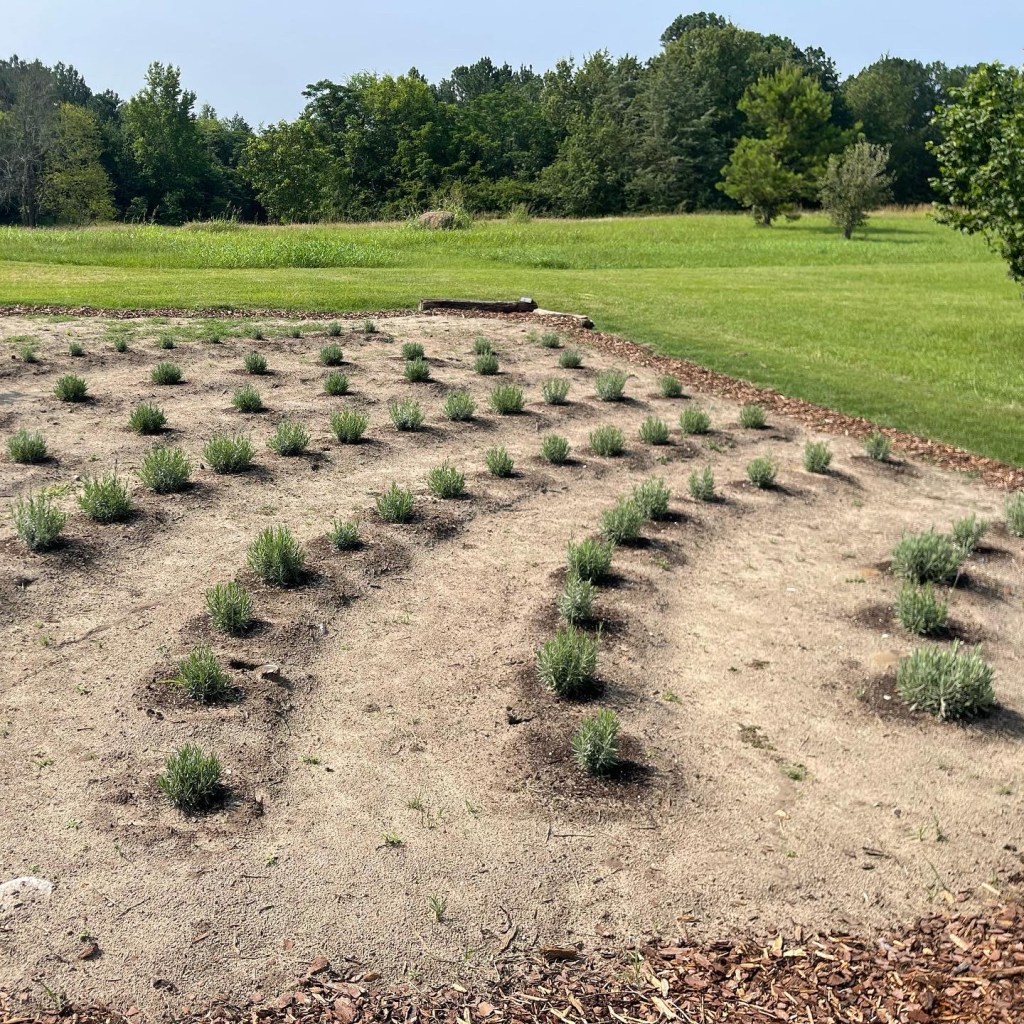
When she showed me her newly planted lavender bed, she said that lavender likes sandy soil with good drainage. She recommended a mix of 1 part sand, 1 part potting soil, & 1 part compost. She recommended to water daily at first & then wait a day, water, & then 2 days, water, & then 3 days, water, and so forth until established continuing to spread time out between waterings while watching the young plant for any stress. In the Southeast, you will want to look for varieties that tolerate heat and humidity of course. She likes the varieties “Grosso” and “Lavendula X Intermedia” (aka: Provence) for cuttings & “Lavendula Angustifolia” aka: English Lavender for culinary use.
We grabbed a refreshing cool drink of Hibiscus Tea with lavender simple syrup and went out to harvest some lavender from her established hybrid lavender plants which were buzzing with busy bees. Amy showed us how to harvest, focusing only on stalks with larger flower bud heads and cutting the stem low, but where it was still green. If you cut down into the woody area, it will not continue to grow stalks from that area.
Workshop on how to make your own bundles to dry
We sat down to make bundles of our lavender to dry and a little vase to fill with culinary herbs Amy had collected while we walked and talked earlier on the garden tour. We were then treated to a nice lunch under two 100 year old pecans. The shade was lovely and the spread was beautiful and tasty as well!
Rosemary and lavender bundles to dry and a sweet little culinary herb bouquet to take home.Rolls, chicken salad, pimento cheese, garden-to-table cucumber, and grape salad with yogurt, pecans and brown sugar (YUM!)Strawberry cup cake on pretty floral plates.
My daughter and I had quite the laugh when one of the farm cats jumped up onto the table to try and sample our chicken salad. Another farm cat came along and soon the two were vying to compete for the food they knew was close by. Lunch and entertainment! LOL
Tips for Drying Lavender for Herbal Use in Tinctures, Salves, Sachets, and More
When drying herbs, you can make bunches to hang and secure them with a rubber band, but don’t make too large or you may get fungal issues in the center of the bunch. Your lavender needs warm air circulating around it to dry well. Amy also had some screens positioned to dry other herbs she was growing in her garden in her workshop and store area. If you use screens, just make sure you don’t use metal screens, but nylon. If you have a dehydrator (how I dry mine) lay out (flowers still on stem, without overlapping) & keep heat circulating 90°-100°F for 24-48 hrs until stem is crispy dry. Defoliate (strip) petals from stem and store in an amber jar with a lid that seals in a cool dry place until you are ready to use.
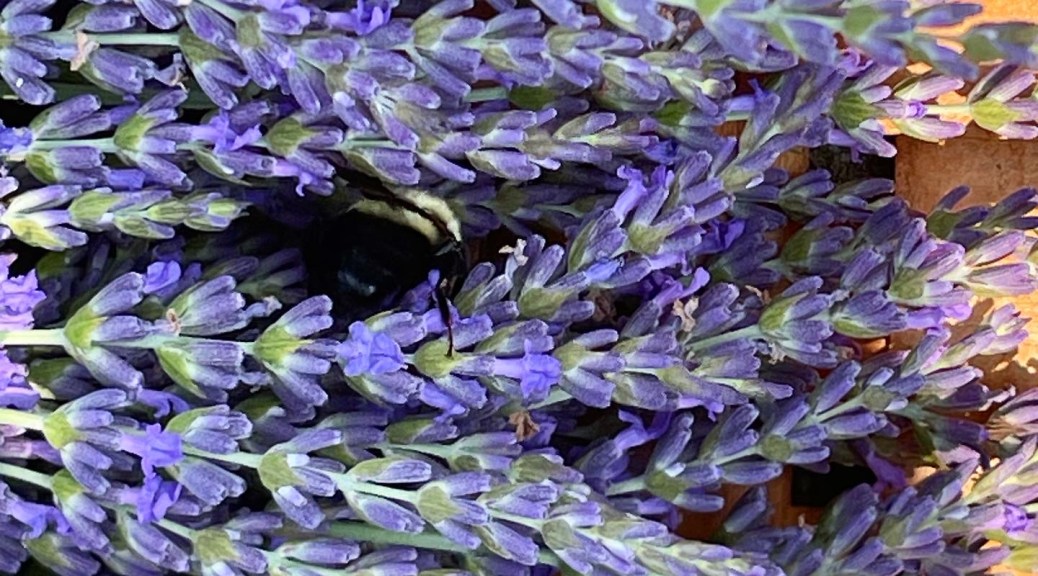
Can you see the bee?Gift shop with fresh herbal teas to drink and cool off while you enjoy the farm.
Ideas for using culinary lavender
Amy also kindly shared some ideas for using lavender to enjoy with food:
Make a lavender simple syrup and add to most any beverage (teas, juice, cocktails, or sparkling water). If you’re wanting to try making your own lavender simple syrup, you can grab the recipe here.
Make infused sugar or infused salt (add several sprigs to a jar of sugar and let it sit up to six (6) weeks
Add lavender buds to your scrambled eggs or omelette while cooking (eggs and lavender pair well together).
Add to salad dressings and marinades.
Cook in lavender when making jams and jelly.
Decorate tops of cakes, cupcakes, desserts.
Bake with lavender (for most recipes, add about 1 Tbsp ground lavender to recipe.)
Roast chicken or port with a little lavender (and rosemary , too!)
Lavender Simple Syrup Flower Essence
I first enjoyed this at White Hill Farm in Dearborn, GA with Hibiscus Tea. The owner, Amy, shared this recipe with me and it was so fun to try I wanted to share with you!
Way to Heat Purified Water
Container with lid to store simple syrup in fridge when not using
Mixing Spoon
1-cup measuring cup
1 cup sugar
1 cup purified filtered water
8 or 10 sprigs dried lavender
Add boiling water to sugar in a a 2-cup Pyrex measuring cup and stir (or boil together in small saucepan on stove.)
When sure is dissolved, break apart lavender stems and add to sugar mixture.
Let steep for 30-60 minutes until desired taste, then strain out lavender.
Lavender syrup will keep in the refrigerator for about 3 weeks.
Lavender Lemonade: 1 cup lavender simple syrup (recipe above) 1 cup fresh squeezed lemon juice from 4-6 lemons 4 cups of filtered cold water
Combine all ingredients and taste. Add more syrup or juice if desired. Serve chilled or over ice.
Beverage ideas for herbal syrups:
Make a simple syrup using fresh mint, rosemary, basil, thyme, organic rose petals, hibiscus, or your favorite herb.
Add to unsweetened black or green tea.
Add fresh fruit juice and syrup to unflavored carbonated water (such as La Croix, Perrier, or soda water) to create your own bubbly sodas.
flower essence, lavender, simple syrup, syrup
If you’re interested in visiting Amy’s lavender farm, White Hills Farm, and staying in Thomson, you can enjoy the same package we did by using this link. Be sure to let them know you heard about it from Grow Your Health Gardening! (We don’t get a kick back, but it helps them know how to best serve future interested visitors.)
Thomson, Georgia has some good local eateries
A few other highlights from the trip included eating at a barbecue place called Pigg-ah-boo’s. It was recommended by Amy whose husband liked to smoke meat as well. My husband makes amazing barbecue as well, so we love to try out other barbecue places while traveling. To be honest, when we first arrived I had my doubts. There was no one else there and the place lacked ambiance. But we sat down and soon others started to arrive to get food as well. Everything tasted fantastic!
Pigg-ah-Boos was worth the stop if you like good barbecue.
The next day we tried Fernanda’s Grill and Pizzeria because it was one of the few restaurants opened (and was also one of the recommendations Amy gave us. The food there did not disappoint either and we ate well! The above pizza pictured is called the “Fahgetaboutit” and was super filling. The service was good and we didn’t have to wait long to get our food on Father’s Day even though the place was busy.
Travel midweek and call ahead for tour of Georgia’s first all-robotic Dairy Farm
We tried to check out the first robotic dairy farm in Georgia, but you have to organize a tour in advance and minimum is $100 for them to even give a tour. They only tour through the week, so if you’re a week-end traveler, skip this option or call in advance to make arrangements.
Fun shopping, but shop before 3 pm on Saturday!
We did find some cool vintage stuff at a place called Aunt Tique and Uncle Junks. It was so nice that they stayed open until 6 pm as most of the shops in town closed at 3 pm and were closed on Sunday. I picked myself up a few vintage medicine glass pieces to put herbal tinctures in at a later date.
Aunt Tique and Uncle Junks is worth the stop (closed Sundays).Check out E.T. hanging out in the VW in front of the store.Vintage goods high and low, but easy to shop. We found some treasures!
All in all, a fun week-end getaway. If we were to go again, I would research places on our interest list and when they are open/closed because we missed out on some neat looking gift shops because of our Saturday morning plans and didn’t realize most of the stores shut down at 3 pm on a Saturday and then are closed on Sunday. I also wish the hotel’s pool had been open, because our kids would have really enjoyed swimming. But we were glad to know that fishing wasn’t too far away, because the guys really were able to relax lakeside for a few hours each day which was nice. I also loved the farm tour and am planning where I can plant some of the cultivars that Amy recommended. I would eat at the same places again and try to squeeze in a few more local restaurants instead of opting for familiar chain eats near the hotel our first night.
Part of the fun of traveling is trying new foods and seeing new things, so getting our game plan ahead of time would be helpful. If you want to visit Thomson, GA, check out this page they have created for out-of-towners visiting. If you live in the Atlanta area, be sure to check it out sometime! And don’t forget to plant some lavender this year!
We have been making our own Sourdough Starter for some time now to use in making our own bread (and we use a Spelt Sourdough Starter in particular because Spelt is said to be easier on your digestion system. But that’s for another conversation.)
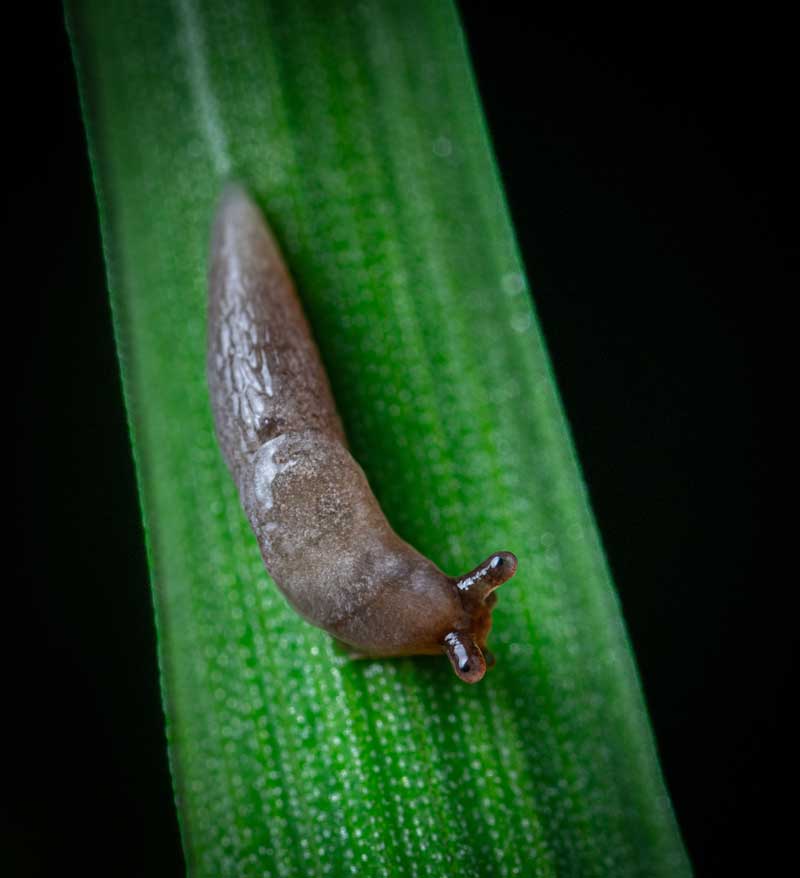
Exciting news (especially for any of your folks that like sustainable organic gardening)! There’s yet another use for our sourdough discard! Chemical-free, pesticide-free, and organic slug bait! Yes, you read that correctly. Sourdough starter discard can be used as an organic option for rounding up slugs and snails.
Recently, Oregon State University (OSU) researcher, Rory McDonnell, led a multi-institutional research collaboration and found that a simple mixture of flour, water and yeast (bread dough) attracts slugs and snails in droves.
McDonnell theorizes that it is the fermentation process that draws them in saying, “We gave them a choice of food and they consistently went for the bread dough. They really, really like it. They went bonkers for it. Bread dough outperformed everything (even better than beer).” In fact, in one instance, over 18,000 snails were trapped within 48-hours according to McDonnell! Research also revealed that it can be effective in the field in Oregon for at least 8 days if the bread dough is kept moist.
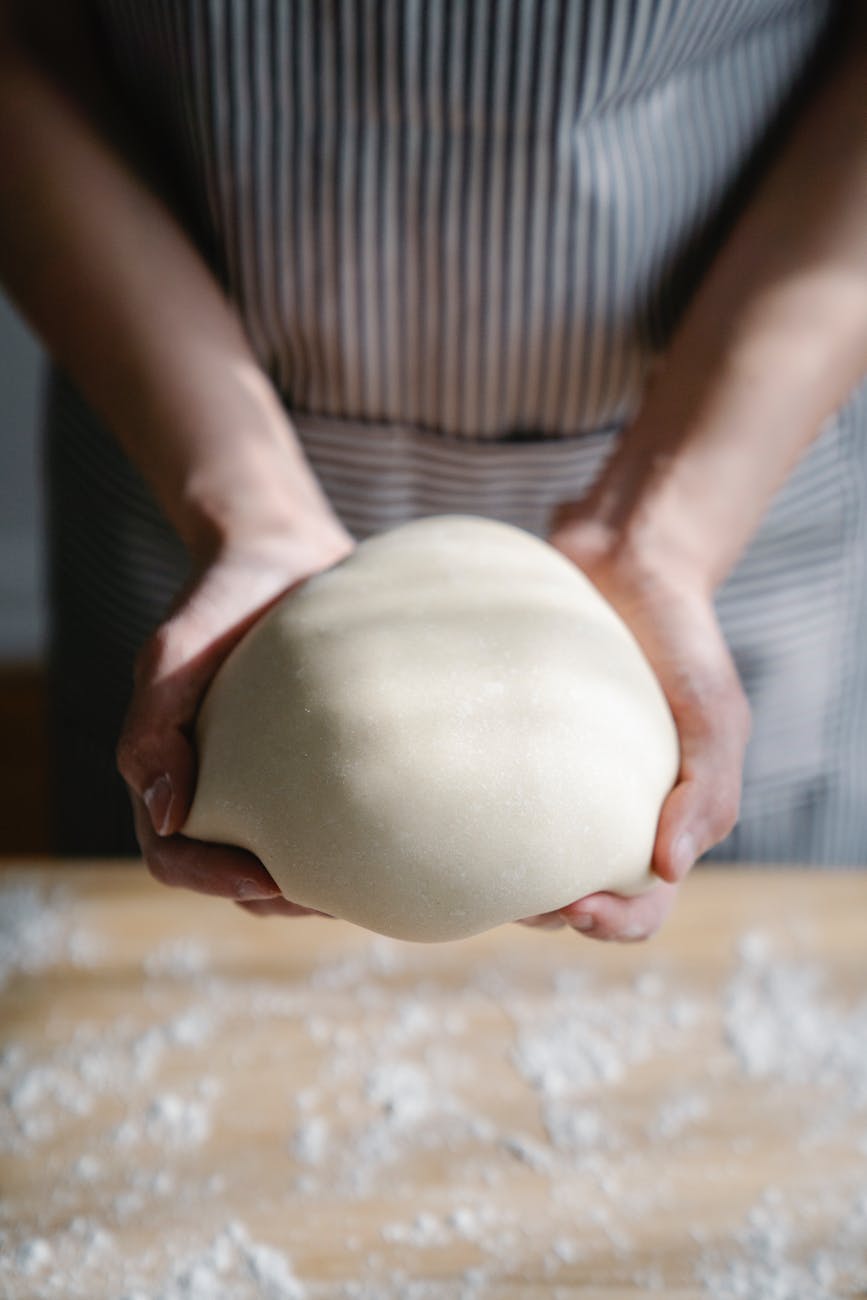
Don’t have sourdough starter discard? No problem! You can make your own slug and snail slurry any time using whatever flour you have on hand along with yeast and water. Here is the recipe McDonnell recommends:
500 g of All-Purpose Enriched Bleached Flour
500 mL of water
2 packets of Active Dry Yeast (0.25 oz packet size)
Note: You do not need to use any particular brand of flour or active dry yeast
Instructions: 1. Mix all three ingredients thoroughly until combined. (If you already have sourdough starter discard, simply feed your discard with equal amounts of water and flour to the weight of your discard and mix ingredients thoroughly.) 2. Apply dough directly to the ground leaving a little distance away from the plants you want to protect. Simply remove the slugs or snails as they arrive. 3. Alternatively, you can also sink a shallow container into the ground and add the bread dough / sourdough starter discard. If you add water to make it a bit more watery, they may simply drown and then you can toss the jar contents periodically, rinse out, and replace with fresh sourdough starter discard or bread dough.
McDonnell also suggests, “The dough works best when it is moist. If it dries out, it will not be as attractive, so in dry weather we stir the dough daily and then replace it if it starts to get dry.”
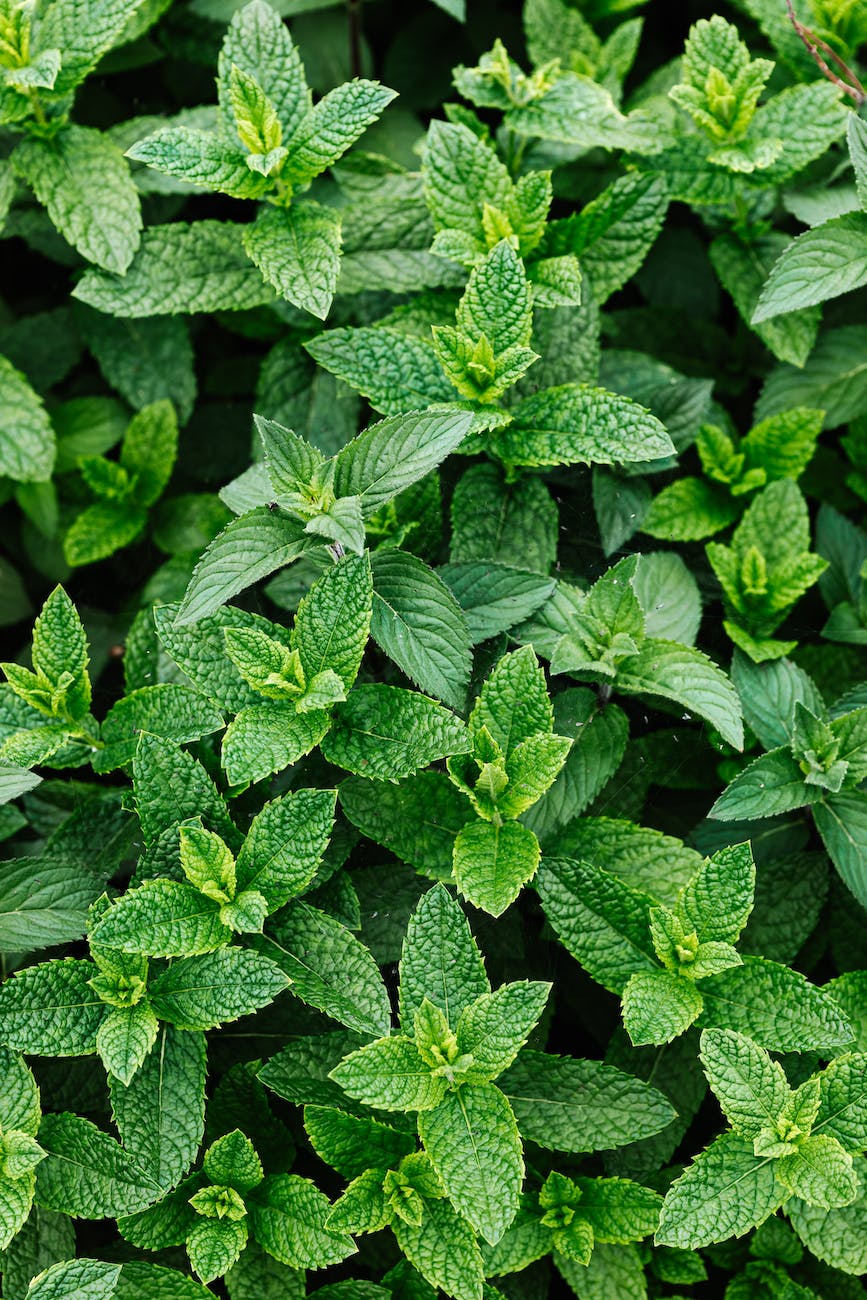
If you grow anything in the mint family, know that during wetter weather, snails and slugs will especially be attracted to these plants. Have a non-toxic slug or snail plan in place like bread dough.
Also, NASA spotted El Niño precursor from space (May 21, 2023) and says that in the Southern part of the United States we may see wetter weather more than usual. This is actually something I’ve been noticing in our own garden (and I’m totally enjoying this cooler spring) — the snails and slugs have been out in full-force.
I will be implementing this sustainable gardening practice bread dough tip from the OSU right away! Be sure to let us know in the comments below if you try it in your area and if it works for you.
PS: OSU has a slug portal (yes, I’m not making this up) if you want to learn more about the latest news on slug identification and management using sustainable practices. You can check that out here if you are interested. (Also great for any homeschoolers out there who want to learn more!) 😉
Our family likes to travel and I remember one time while we were vacationing at an RV park in Florida, our RV neighbor came over and shared a sack of satsumas he had purchased from a local grower. Y’all! These were THE BEST oranges we had ever tasted… sweet, easy to peel, and perfect snack size. I was hooked.
Upon returning home, I quickly learned that the shelf life of a Satsuma is not conducive to the grocery store system where food must be able to handle transportation time and sit on the shelf until sold. I did find it at an asian market much to my delight. But, alas, I wanted a Satsuma tree I could call my own…. so I bought four Satsumas. (I justified my purchase telling myself that even though these trees were self-pollinated, if I got a few others, it would produce more fruit.)
Satsumas can grow in large pots if they are on a dwarf rootstock and pruned to limit their height and overall size, but they are best in the ground as the limbs will get heavy laden with fruit anywhere from October through December (typically, but will vary by cultivar.) Fresh Satsumas for Thanksgiving and Christmas? Count me in!
As I was caring for my young citrus trees and other fruit trees, I thought it might be a good time to talk about how to care for these wonderful trees that provide us with the healing nutrient vitamin C (among other beneficial antioxidants!)
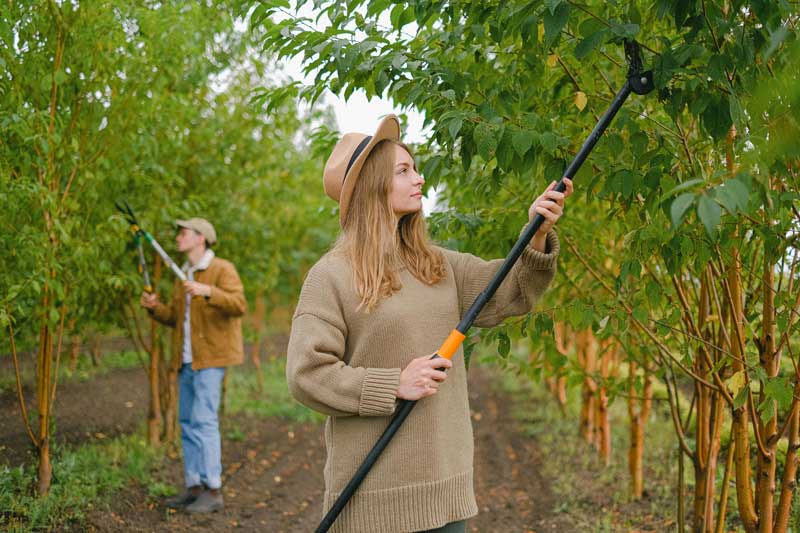
Not a pic of me, but these are an example of the kind of pruners you want to have sharp and clean (with rubbing alcohol.)
When should I prune my fruit trees?
The time to prune and treat your fruit trees is late January and into February, so now is the perfect time to be looking at your citrus and other fruit trees if you live in growing zone 8+ or if you grow indoor trees of this nature. I also have peach trees, olive trees as well as roses in pots that I plan to use the following treatment on in preparation for spring and summer growing season.
And when we prune, we need to protect. Make sure you always use sharp pruners appropriate for the size of the limb your are trimming. Always clean your pruners with 80% or higher alcohol in between each tree or bush you prune. Follow up by sealing cuts with an organic sealer to protect the plant from bacteria and pests. As we look at pruning and protecting our investment, I personally like when I find a product that has multiple benefits with one application. Here’s a quick rundown of one that makes logical sense to me to be a good solution and I am currently testing it out on my trees and ornamental bushes.
One Step Protects Tree Three Ways
As I study and learn from other growers on this beautiful citrus option, I’ve learned from Charles Malki, Director of Horticulture and Education at IV Organics that even though citrus are heat-loving, the intensity of the sun can actually burn the trunk’s outer bark layer inviting disease and pests to attack the tree in the sun-damaged region. I encourage you when you have an hour or so to check out his video series on fruit trees as it is very informative.
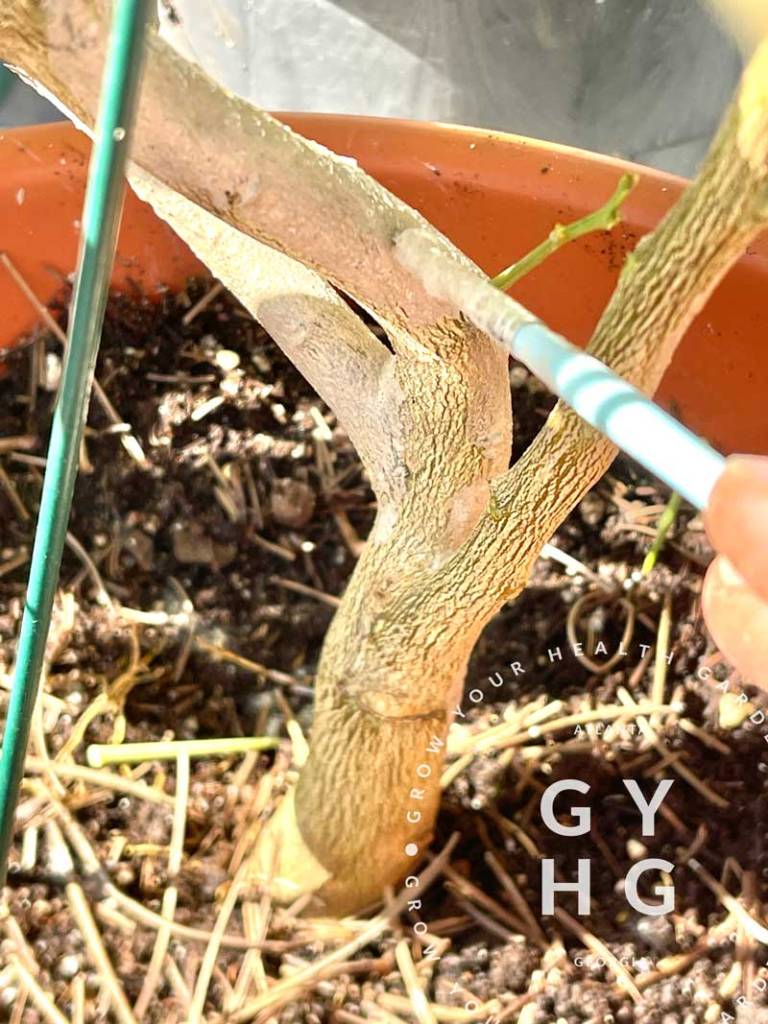
Malki has developed a product called IV Organics, a 3-in-1 Plant Guard, that is organic and can reapplied annually while doing spot checks on your tree(s) called IV Organics. This product is purported to tackle three things: sunburn on trunk (and leaves), protects from pests and open cuts (caused by pruning or breakage) that promote bacteria to enter the tree. and protects from rodents who may want to chew on the bark towards the base of the tree.
He also notes that using latex paint or tar-based products to protect tree trunks may last longer without reapplication, but you’re exposing your tree to toxic chemicals which can affect the health of the tree.
What is IV Organics 3-in-1?
This IV Organics 3-in-1 Plant Guard reminds me of a milk paint, but it contains beneficial compounds that not only coat a “sunscreen” to the tree trunk’s exterior, but it also contains essential oils that are known to naturally repel most insects and rodents. The mix of essential oils included are: castor, cinnamon, clove, garlic, peppermint, rosemary and spearmint.
Castor oil, spearmint, peppermint and rosemary are known to repel rodents. Garlic, Clove, Peppermint, Rosemary are known to repel various insects including but not limited to: aphids, ants, beetles, borers, caterpillars, slugs, termites, and whiteflies. Some of these oils also have anti-fungal properties.
You can also choose from five color options to fit your aesthetic preferences: Greige, Grey, Brown, White, Green. I personally chose “Greige” as I wanted it to look natural, but keep in mind that certain colors absorb light (and heat) and other colors reflect light (limit heat). (White would have shown up better for example pictures and easier to see to apply while wearing my sunglasses.) I am really happy at the results of my color choice as from a distance, you can’t even tell anything has been applied to the tree in my opinion.
How much will you need?
If you have an orchard of several mature trees, you’ll want the gallon size, otherwise, the pint-size is ideal from one or two trees or several tree starts. Keep in mind, that the product, once mixed, will last for 2 weeks in the refridgerator.
The product comes in a paint can with a package of clay-type powder and a vial of essential oils. You mix the two and add water until it becomes combined and then paint onto the trunk of your tree. You can also add some of the product to a spray bottle and dilute it down further to spray as a foliar application to leaves during the hotter months. They also have a ready-to-go option if that suits your preferences better. (Note: be sure to apply this foliar spray at dusk after bees have gone and the heat of the day has ended.)
I recommend getting two when you purchase… one to use now as you prune and spot-check your tree(s) and another later for reapplication if needed and to apply a foliar leaf application as you enter the more intense sun in the Southeast as we approach the summer months. Keep in mind that rain will eventually affect the leaves, so reapplication may be necessary if you begin to see sun damage on your leaves. Remember, you can also use IV Organics on roses, fruit & nut trees, as well as ornamental trees & shrubs. You can get a combo pack which includes the product to paint your tree trunk and limbs, a foliar spray, and nutrition your tree needs throughout the growing season which makes it easy to treat your trees and bushes all season long.
Malki also reminds us to not neglect feeding our citrus, avocado, and olive trees during the winter with a light foliar application once a month. In spring, you will want to amp up the soil fertilization with the heaviest feeding of nutrition during the peak growing season of summer. Kelp and or a worm casting biological tea makes for a great foliar nutritional feeding. Malki also has a a super blend of your main nutritional needs of your fruit trees (ie: Nitrogen, Phosphorous, and Potassium), but also essential micronutrients.
Let me know in the comments below if you try this method and how it works for you. Or, if you have any questions or want an update to see how it’s going with this product before you try it, just leave a comment below and I’ll do my best to get back to you. In the meantime, happy garden planning and don’t forget to buy some fruit trees if you have space to put one!
The Tower Garden has been recently featured on “Daily Mom” in their list of “unique gardening equipment, gear, and fall decoration for outside.” [Link below] Although we run our Tower Gardens from April to October outdoors, these hydroponic systems really shine indoors where you can grow food 24 hours a day, 7 days a week using built-in automation through timers that turn on the pump and light without you having to do anything once it’s been set up to run.
My husband and I see our Tower Gardens as an investment — it is a gardening tool that helps us grow food easily and effectively. As a busy mom of five children running a growing operation, I like any time saving tools I can utilize and my hydroponic Tower Gardens have MORE THAN paid for themselves over the years.
I’m not only saving time, but also a valuable resource: water. Research has shown that hydroponic systems like the Tower Garden grow food 3x faster, 3x bigger all while only using 98% of the water used in traditional soil-based growing systems. I can grow my greens in 2% of the water it would normally take to grow greens in soil! And what’s more, I have less to clean and wash when it comes to harvesting food, because my plants are not in contact with soil which can harbor bacteria.
Lastly, I love that I know what is going into and onto our food. I pick it fresh and eat it the same day for maximum nutrition. Our food is grown with nutrients and minerals mined from the earth and put into a water-soluble form for plants to utilize and grow.
And if I’m not able to eat everything we’ve grown, no problem! We go from harvest to our Harvest Right freeze dryer or dehydrator immediately capturing and sealing in all that nutrition for later use.
Here in Atlanta, Georgia, we are beginning to see warmer days in the mid-80ºs (F) which means hot summer days are just around the corner starting in early to mid-May.
With that in mind, we are doing a last call on all spring seed sales so that our seeds do not get damaged in transit by the high heat of shipping containers. High heat can dramatically affect the life of a seed (and even kill good seed), so we recommend our customers purchase purchase seeds during cooler conditions across the United States before the southern shipping lanes get hot.
Now is the time to stock-up on seeds for warm season crops and fall planting! And for a limited time you can get 20% all seed orders* with code “BEATTHESHIPPINGHEAT“
*Limited to stock on hand. No Cash Value. Offer valid 4/23/22-4/30/22.
Remember, our seeds are:
packaged in a water-resistant sealed envelope to protect your seeds from rain and moisture.
packaged in a non-descript envelope and shipped with tracking to limit stolen and lost packages. (Believe it or not, we have a handful of seed orders that mysteriously go missing when we don’t ship with tracking, so now we only ship using tracking!)
when local temps begin to go above 75ºF, our packages are always hand-delivered to the U.S.P.S. — your seed order never will sit out in a hot mail box or metal mail collection box that is exposed to the sun and heat. (And be sure that where ever you ship your seeds is climate-controlled so they will not be sitting out in the heat while waiting for you to receive your order.) 😉
Grown with love and care on our family small farm using organic methods — many are hydroponic adapted.
Heirloom or open source seed (OSSI) so you can have confidence in food security and encourage diversity in your own garden and sharing with friends (patent-free seeds!)
With daily heat temps rising in the southeast, we are going to be limiting our shipments in mid-May to protect seeds from heat damage during transit. Be sure and secure your heirloom and open source seed now before summer and fall!
Grow Your Health Gardening (GYHG) Seed Co. has been awarded the April Star Seller on Etsy for the fourth consecutive month in a row in 2022! Grow Your Health Gardening Seed Co. received a 100 percent score in every category for exemplary customer service.
Grow Your Health Gardening Seed Co. specializes in growing all their own hydroponic-adapted seeds and seeds adapted to being grown in the soil in the Southeast Zone 7B. Even though Grow Your Health Seed Co. sells on Etsy, their main online store can be found on store.GrowYourHealthGardening.com along with the latest releases and updates, how-tos, and more.
Here are a few things our customer’s have shared with us over the past month:
“Seeds look great will be planting soon! Fast shipping and good communication. Clean light colored and not dark. I recommend this seller. I will be back!” — Gigi
“Amazing customer service- they always go above & beyond! I love their seeds too- highest quality, hand selected and always packed with care. They always offer growing help and sent extra growing information and some free goodies with my order too. i LOVE this company and always shop here first when i’m ready to get growing!” — Gabrielle
“This shop is always amazing. They ship fast and the seeds always grow! I’ll be back for more!” —Karen
“Thank you for your fast shipping, beautiful packaging and helpful instructions. I can not wait to plant them with the rest of my seeds indoors tonight.” — Donielle
“100% germination rate 👍” — Laurie
“Very fast and great condition 💚” — Nita
“These have ALL sprouted beautifully in about 2 weeks! I will definitely be purchasing more seeds!” — Skylar
“The shipping was so fast and I loved the little info leaflet that was sent with the seeds. So far every single seed has germinated and the sprouts are looking great! Every seed has germinated and sprouted so far. Very happy! Very pleased.” —Laura
“We just want to thank our customers who trusted us as their seed source this growing season! We appreciate your support of our small family business!” said Erin Castillo, Owner of Grow Your Health Gardening Seed Co. “Providing locally adapted seed to our community and across the United States is something we take great joy and pride in.”
Tips for Hydroponic, Aquaponic, and Soil-based Gardening Methods

























 Grow Your Health Gardening