Category Archives: hydroponics

New Tomato Variety Releases for 2024 — Part 3 — Kellogg’s Breakfast

Today, we continue sharing about our favorite tomato varieties and what we are releasing for 2024. If you want to catch-up, you can read part 1 here and part 2 here.

Remember, all of the varieties mentioned in this article can be found on our store.growyourhealthgardening.com (and if you sign-up for our newsletter on our store, you’ll get a 15% off coupon to save money on any $15 seed order. Remember, we always include a free package of seeds with every order!)

As you may recall, I shared previously how Craig Schaaf, a grower from Michigan who uses the Korean Farming Technique (KFT), had generously shared some of his favorite tomato varieties with me through a mutual seed swap. That brings us to our next favorite variety which also comes from Craig; Kellogg’s Breakfast Tomato.

Kellogg’s Breakfast Tomato is named after orange juice and Darrell Kellogg who submitted the variety to the Seed Savers Exchange.
Photo copyright Grow Your Health Gardening 2024

Kellogg’s Breakfast Tomato

I have seen Kellogg’s Breakfast Tomato listed in seed catalog after seed catalog and paid no attention to it — mainly in part because of my own bias against the cereal manufacturer. But, come to find out, the name of this tomato has NOTHING to do with the cereal company you might be thinking of right now.

Instead, according to the research I find, it is named after a humble gardener and a Seed Saver Exchange (SSE) member, Darrell Kellogg from Redford, Michigan who by trade was a railroad supervisor, but also loved to grow his own food. Darrell purportedly received this variety from a friend in West Virginia (name unknown) and saved the seed year after year. Darrell eventually shared his seeds with Bill Minkey who introduced the seeds to the Seed Savers Exchange in 1993.  The “breakfast” part of the tomato’s name is said to refer to the beautiful orange color of the inside of the tomato which is reminiscent of the color of orange juice—hence Kellogg’s Breakfast Tomato.

I have grown and enjoyed many an orange tomato, like Olga’s Round Chicken Tomato, Apricot Brandywine Tomato, Big Rainbow Tomato, Pineapple Tomato (which is a bit more yellow than orange), and Orange Orangutane Tomato.

But to be honest, I only grew this variety because Craig recommended it to me. My bias kept me from trying a great variety and I almost missed out on it. That’s something to keep in mind as you explore what you want to grow this growing season. Be adventurous and curious. Be willing to try something new — especially if you can’t find it at the grocery store produce aisle or at a big box nursery. And share your favorites with others to keep the variety going and adapted to your growing region.

— Erin C, Grow Your Health Gardening owner and soil/hydroponic grower and coach
Kellogg’s Breakfast Tomato, sliced and shown above next to a red variety for comparison. It’s so juicy and tasty off of the vine!
Photo copyright Grow Your Health Gardening 2024

Kellogg’s Breakfast Tomato has become quite popular among fans that like to try different tomato varieties and has won honors such as:

  • Gary Ibsen’s annual “Best-Tasting Tomato” at the Carmel TomatoFest Event
  • Dr. Carolyn Male, the author of 101 Heirloom Tomatoes, and who has raised more than a thousand heirloom tomatoes, presents 100 consistently top-performing varieties for North American gardeners and in her book she lists this variety as “one of her favorites”
  • Voted one of the “best tomatoes” by Sunset Magazine

Not only is Kellogg’s Breakfast Tomato good tasting, but it also has health benefits such as tetra-cis-lycopene, a healthy anti-oxidant found especially in some orange tomatoes. According to research done by New Zealand non-profit, Heritage Food Crops, the Kellogg Breakfast variety scored a 3.42 level of tetra-cis-lycopene in their lab tests. We will do a deeper dive on orange tomatoes in another article, but for now, just know that these are nutritionally beneficial to the human body (having protective effects even) and a good variety to choose beyond taste and adding fantastic color to any plate!

— Heritage Food Crops

The yellow/orange nature of this tomato also is important as it contains Beta Carotene. Beta Carotene is converted in the body to vitamin A (retinol). Vitamin A is an important nutrient in maintaining healthy eyes and eyesight as well as a critical role in cell growth within the heart, lungs, kidneys and other organs.1

Kellogg’s Breakfast Tomato, when pruned and given ideal growing conditions,
may produce 1-1.5 lb tomatoes on the vine that measure 3-4″ across in diameter.
Photo copyright Grow Your Health Gardening 2024

This seed stock comes from the northern region of the United States (Michigan) and Craig adapted it grow earlier in the season and ripen in cooler conditions. We’ve taken his Kellogg’s Breakfast seed and gone the opposite direction and have grown it in a hydroponic system here in the Southeast. That means it has already adapted to a hot and humid environment for one growing season while also maintaining that DNA of surviving colder climates grown in soil through epigenetics.

We enjoyed this tomato so much that we can’t wait to offer it to you in Craig’s honor. We are thankful for the opportunity to grow such a wonderful variety and think that you’ll enjoy it as well.

Get Kellogg’s Breakfast Tomato seed for your own garden here >
(while supplies last)

Continue reading Grow Your Health Gardening’s 
Part 4 of New Tomato Variety Releases for 2024 >

  1. https://www.webmd.com/diet/health-benefits-beta-carotene ↩︎

New Tomato Variety Releases for 2024 — Part 1

We’ve trialed new tomato varieties and are bringing you our seven fav’s over the course of a week we will release more information about each one. So much of why I grow the food I do is because I cannot find these amazing tasting varieties at the grocery store. They are just best enjoyed from garden to table and so worth the time and little effort involved in growing them at home.

All of the varieties mentioned here can be found on our store.growyourhealthgardening.com (and if you sign-up for our newsletter on our store, you’ll get a 15% off coupon to save money on any $15 seed order. Remember, we always include a free package of seeds with every order!)

Without further adieu, here are our new tomato seed varieties we have home grown and offer to our customers:

Aunt Ruby's German Green Tomato
Aunt Ruby’s German Green Tomato. Photo copyright 2024 Grow Your Health Gardening

Aunt Ruby’s Green German Tomato

My husband loves to try out barbecue places across the southeast and whenever we go to any barbecue restaurant there are two things we always try if they are on the menu: banana pudding and fried green tomatoes. So, for the past 20+ years we have taste-tested our way across the southeast and I wanted to pair that knowledge with testing varieties at home to find the perfect green tomato variety to make our southern favorite, Fried Green Tomatoes! And I am officially declaring that Aunt Ruby’s German Green tomato did not disappoint! (It’s also a great addition to any salsa verde!)

Aunt Ruby’s German Green Tomato variety has been listed in the top 10 tomatoes by many chefs and home growers alike as well as won several taste tests.1 Slow Food USA ( slowfoodusa.org ) nominated this tomato to the Ark of Taste Program. This is also one of the 100 varieties described in Carolyn J. Male’s book “100 Heirloom Tomatoes for the American Garden“. In fact, Chuck Wyatt, Seedsmen Hall of Fame and long-time grower and fan of vintage tomato varieties had this to say about Aunt Ruby’s German Green;

According to my research, Aunt Ruby’s German Green Tomato is a family heirloom from Germany. It purportedly was first introduced in the Seed Savers Exchange (SSE) 1993 Yearbook by Bill Minkey of Darien, Wisconsin. According to Tatiana’s TOMATObase, Minkey received the seed from Nita Hofstrom of Clinton, Wisconsin. Hofstrom’s Aunt Ruby E. Arnold (1915-1997) lived in Greeneville, Tennessee, and had grown it for years and according to Aunt Ruby, the seed originally came to the United States with her German immigrant grandfather. Aunt Ruby had simply called it ‘German Green’. Minkey asked Aunt Ruby for permission to rename this variety and he called it ‘Aunt Ruby’s German Green‘ after Ruby Arnold.3 You should know that I couldn’t find anything on the SSE’s web site to confirm or deny this account, but we have reached out to them for comment as it contradicts another account given by Victory Seeds Co.

We have not tested the pH level on this particular tomato, but according to tomatoabout.com, green tomatoes tend to have a high acidity level with a pH range of 3.5 – 4.2 pH.4 If you’re not sensitive to the acidity in tomatoes, this one will help support healthy stomach acid which you want to break down food easily in your stomach.

One of the advantages of growing your own homegrown green tomatoes is how you can control when to harvest tomatoes. By allowing them to fully ripen on the vine, you can increase sweetness and reduce tart green flavors while also getting the most nutritional benefit from your homegrown tomatoes, because it is not sitting on a store shelf somewhere aging. You also get THE BEST green tomatoes to make Fried Green Tomatoes or salsa verde and this variety is worth growing if you like either of those sides.

The seed stock we sell comes from plants grown hydroponically on a Tower Garden. They are open-pollinated and our parent plant produced multiple large beefsteak green tomatoes (see photo below) weighing 10-16 oz or more each. With proper pruning and timed fertilizing, you could reach 1 pound or more.

Plants do vine, so you will need a strong support cage. It typically ripens late in the season taking around 85 days to be ready for harvest after transplanting outdoors when overnight temps are a consistent 64ºF. This variety you’ll want to start from seed as it is typically difficult to find starts of this tomato from local greenhouses or big box stores.

You can find and purchase Aunt Ruby’s German Green Tomato here
(and if you sign-up for our newsletter on our store, you’ll get a 15% off coupon to save money on any $15 seed order. Remember, we always include a free package of seeds with every order!)

And if you have a favorite Fried Green Tomato or Salsa Verde Recipe, feel free to share with the GYHG community in the comments below!

Here's a look at how abundant Aunt Ruby's German Green Tomato is on the vine. The darker yellowish green is how you know when the fruit is ready to pick and enjoy.
Here’s a look at how abundant Aunt Ruby’s German Green Tomato is on the vine.
The darker yellowish green is how you know when the fruit is ready to pick and enjoy.
Photo copyright 2024 Grow Your Health Gardening

Continue reading Grow Your Health Gardening’s
New Tomato Variety Releases for 2024 >


  1. https://fafard.com/americas-10-best-tasting-tomatoes/ ↩︎
  2. http://www.saveseeds.org/biography/wyatt/index.html ↩︎
  3. https://tatianastomatobase.com/wiki/Aunt_Ruby%27s_German_Green ↩︎
  4. https://tomatoabout.com/are-tomatoes-acidic-or-alkaline/ ↩︎

How many of the 18 common traits of pantry gardeners do you happen to have?

“The best food in the world starts in the garden and ends on your plate, perhaps after a comfortingly stop in a well-stocked pantry or freezer. It never knows the back of a truck or the inside of a factory, and it holds no chemical or genetic secrets. Eating it feels comfortable and good.”

Barbara Pleasant, author of Homegrown Pantry
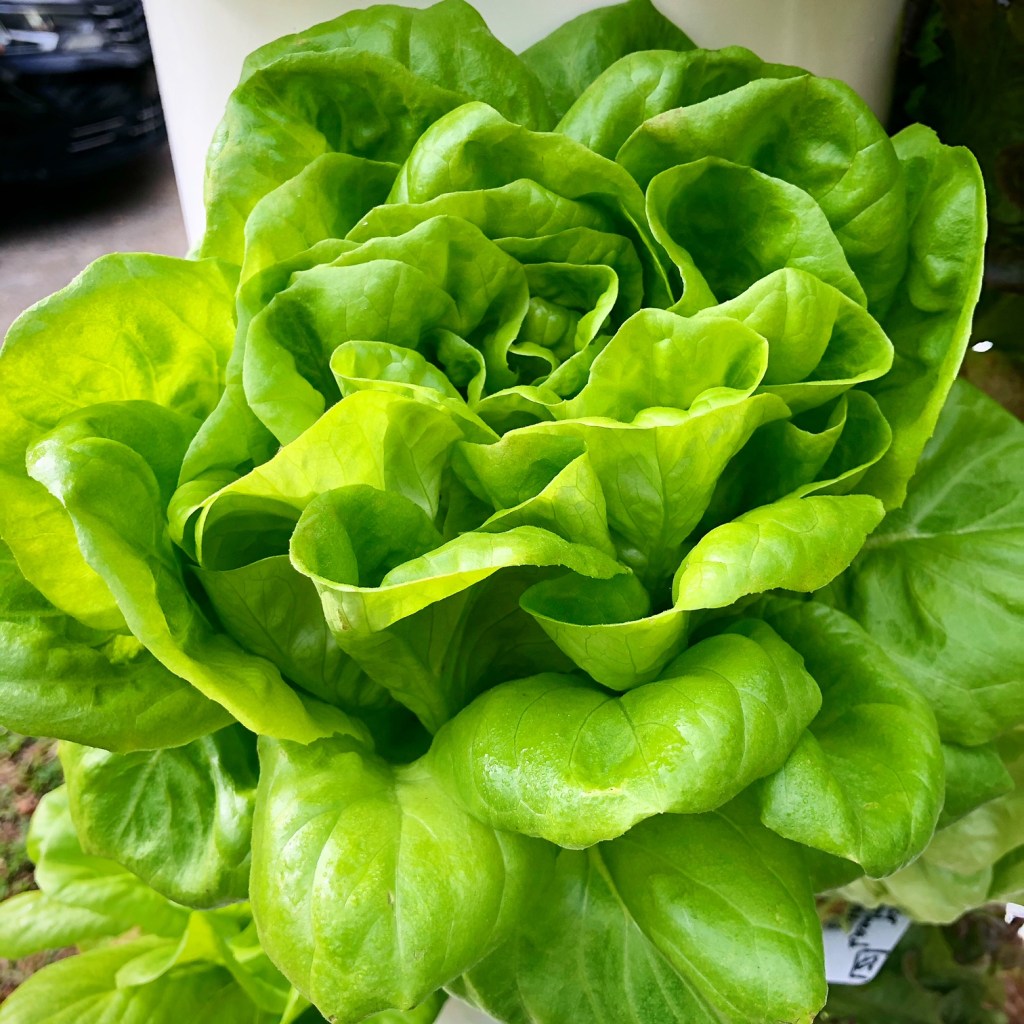
Green Bibb Lettuce growing in a hydroponic aeroponic Tower Garden

What is it about growing and preserving your own food that makes it worth the time and trouble? Here are 18 common traits we’ve observed of pantry gardeners… See how many you can identify with!

  1. You want to know exactly what’s in the food you’re eating and feeding those you love. You have been educated in the effects of chemicals on foods and understand you can’t always simply “wash off” the pesticides. Everything that comes into contact with the commercially grown plant and soil is taken up by the plant affecting the nutrition as soils wane and become poorer with every season of use.
  2. You understand that “organic” still means pesticides may have been applied to the plant you’re about to eat and “some” pesticides is still too much. You want to feel confident that the food you eat and feed to your family is the best clean nutritious food you can find.
  3. You understand that plants grown for the grocery store are grown for their transportability and shelf life, not for nutritional value or flavor as the primary goal. Growing your own produce from seed gives you the advantage of picking what you’re going to eat at its peak ripeness meaning it will have all the nutritional benefits you are desiring. Further, you can quickly process the plant at its peak by harvesting, cleaning, and processing it either to eat right away or put into long term storage. In either case, you’ll be locking in optimal nutrition for your body.
  4. You understand that growing your own food is investing in your own personal health and the health of those you care for on a daily basis. The activity of gardening is good for your mind and body according to research and personal experience.
  5. You don’t have a consumer mindset where you only buy and live in the moment… instead, you think about your future needs and make an effort to have something on hand in the event you cannot find what you enjoy eating. This mindset of thinking long-range not only gives you peace of mind that you have some food security when tough times come. Those of us that had grandparents that lived through the depression era, now understand why they took the time to plant a garden and can food. Food security can be empowering and peace-giving.
  6. It feels good knowing that you won’t be the cause for more packaging and plastic to be thrown away. Eliminating the need to purchase items from the store means you are creating a smaller carbon footprint on the need to rely on packaged goods.
  7. You have practiced persistence and are able to stick with a task over a period of time in order to achieve the end goal (often referred to as delayed gratification.) You know with a little bit of effort, consistently over time, you can achieve anything — including a stocked pantry full of nutritious food you have grown.
  8. You understand that investing in the right tools to grow food upfront will have a savings effect over time. Your homegrown food will outpace inflation in savings — it will cost less than store bought food (especially if you’re using a hydroponic Tower Garden.)
  9. You connect with family history through gardening and preserving teaching the next generation through example these simply lessons of healthy living. Maybe it’s making your grandmother’s apply pie or your mama’s fresh basil pesto — these foods have a strong connection to your past and good memories. In sharing that with your children, you pass along these gifts.
  10. You know that home grown herbs that are dried immediately after harvesting out-surpass anything you can buy in the store when it comes to flavor and nutrients. Store bought seasonings sit on the shelf and lose flavonoids when they are crushed. By the time they are used in your cooking, the flavor has diminished. Drying your own herbs and keeping them in leaf form as much as possible keeps the flavonoids in tack and maintains a superior seasoning when you go to crush them and use them in your cooking.
  11. You find that maintaining your own food supply helps to connect you more deeply to the earth and the seasons of life. Watching a plant grow from seed to harvest or even to produce seed to collect gives you a deeper connection to living life to the fullest as you appreciate the cycle of life.
  12. You feel empowered to try something new and aren’t afraid to risk failing. You know that nothing is gained by not trying, so you’re willing to put yourself out there and explore new things in order to gain understanding.
  13. You have a generous nature in that you freely share what you have grown and preserved either through sharing of a meal together or in helping out a neighbor or loved one when they are grieving or in need.
  14. In selecting plants intentionally for their usefulness, you are able to gain the benefit of harvesting herbs in particular for medicinal uses to bolster your immune system. Homegrown herbs with medicinal benefits give one access to health care no matter your age or demographic.
  15. In preparing items for your pantry, the time it takes to go to the store to purchase those items (as well as the cost associated with that grocery run) saves you time in making meals at home. You just walk over to the pantry shelf or go outside to the garden and “shop” from your own aisle.
  16. You know the importance of being mindful of salt and sugar in your food as it affects your arteries and heart. Store-bought options and eating out expose you to higher than normal recommended levels of sodium and sugar. Plus, aluminum cans leech aluminum into contents (food) over time. Storing your own food puts you in control of how much salt or sugar is put into whatever you are preserving.
  17. You like working smarter, not harder. If you have an indoor Tower Garden with grow lights, you have total freedom to grow food 3x bigger and 3x faster using 98% LESS water than traditional gardens 365 days a year indoors. You bask 24/7 in your ability to have food freedom no matter what the weather or pest pressure happens to be outside.
  18. You are resourceful and don’t waste anything—you are the top recycler in your neighborhood. You know that some of the things we consume can be used to feed your soil and garden. The whole chicken you just ate can be used to make bone broth. The bones can be dried and then put into ACV (Apple Cider Vinegar) for four weeks to extract calcium for a shelf stable fertilizer that can then be added to water and used as a foliar spray or soil drench. Remove the bones from your ACV and re-dry the bones and they can be crushed down into a powder to add into your soil. No need to go out and buy bone meal or calcium spray. You literally can make your own fertilizers.
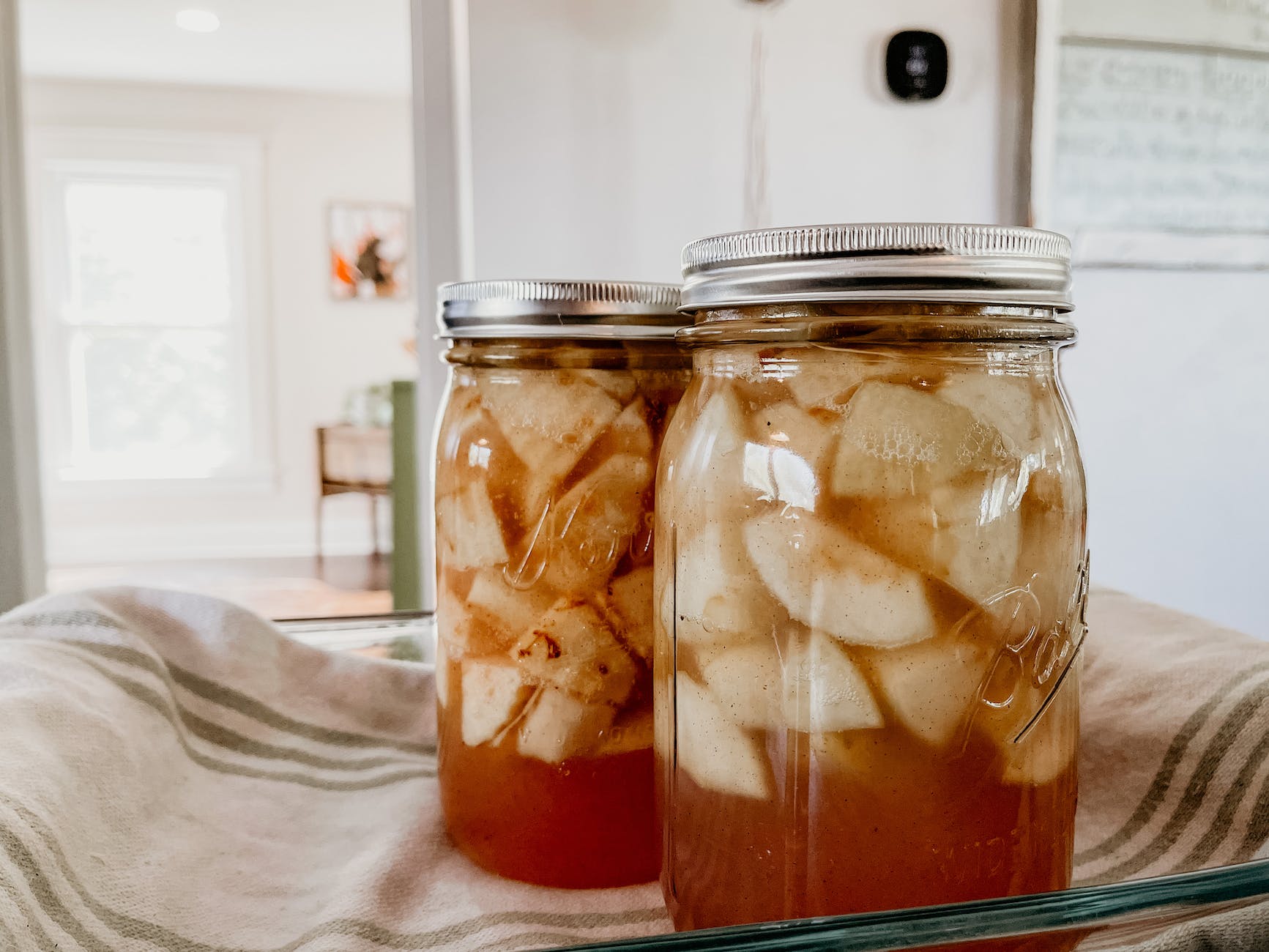
wood apple glass farm
Photo by Hannah Grapp on Pexels.com

Want to learn more about preserving your own food?

Check out a resource we have found to be helpful:
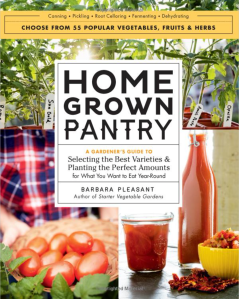
Homegrown Pantry: A gardener’s guide to selecting the best varieties and planting the perfect amounts for what you want to eat year round

Tower Garden Aeroponic and Hydroponic Growing System recently featured on Daily Mom

The Tower Garden has been recently featured on “Daily Mom” in their list of “unique gardening equipment, gear, and fall decoration for outside.” [Link below] Although we run our Tower Gardens from April to October outdoors, these hydroponic systems really shine indoors where you can grow food 24 hours a day, 7 days a week using built-in automation through timers that turn on the pump and light without you having to do anything once it’s been set up to run.

My husband and I see our Tower Gardens as an investment — it is a gardening tool that helps us grow food easily and effectively. As a busy mom of five children running a growing operation, I like any time saving tools I can utilize and my hydroponic Tower Gardens have MORE THAN paid for themselves over the years.

Tower Garden growing indoor Genovese basil hydroponically

I’m not only saving time, but also a valuable resource: water. Research has shown that hydroponic systems like the Tower Garden grow food 3x faster, 3x bigger all while only using 98% of the water used in traditional soil-based growing systems. I can grow my greens in 2% of the water it would normally take to grow greens in soil! And what’s more, I have less to clean and wash when it comes to harvesting food, because my plants are not in contact with soil which can harbor bacteria.

Kale harvest from hydroponic aeroponic Tower Garden

Lastly, I love that I know what is going into and onto our food. I pick it fresh and eat it the same day for maximum nutrition. Our food is grown with nutrients and minerals mined from the earth and put into a water-soluble form for plants to utilize and grow.

And if I’m not able to eat everything we’ve grown, no problem! We go from harvest to our Harvest Right freeze dryer or dehydrator immediately capturing and sealing in all that nutrition for later use.

Demand has gone up for these Tower Garden hydroponic / aeroponic growing systems, so if you’re thinking about it as a gift for Christmas, now is the time to order! Contact me (Erin Castillo) today to learn more!