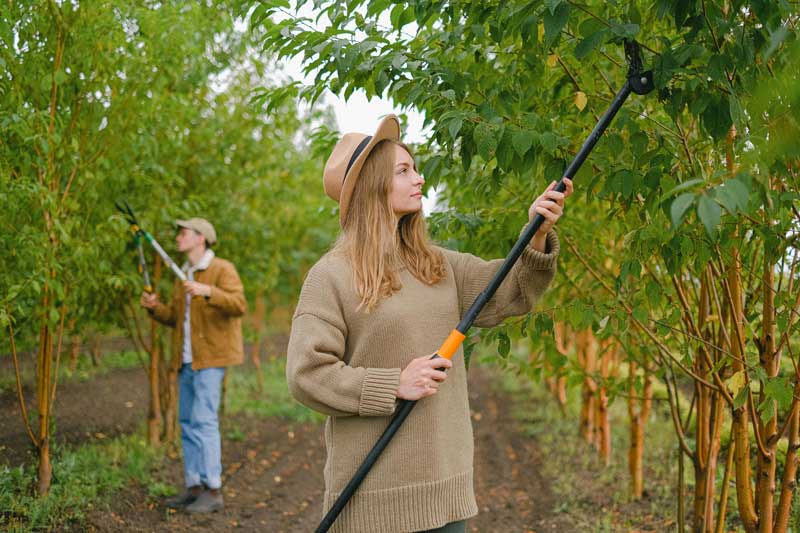
Use the following chart to help jog your memory on when it is best to prune either a fruit tree or a bush. We will come back to this list periodically to add to it as we have updates. And after you have pruned, be ready for when blooms emerge as spring is an ideal time to fertilize once you see new growth.
Fruit Trees:
Apple
Winter or early spring
Train tree for low head and prune moderately. Keep the center of the tree open with main branches well-spaced around the tree. Avoid sharp V-shaped crotches.
Cherry
Winter or early spring
Prune moderately, cut back slightly the most vigorous shoots.
Citrus
Spring after risk of freeze has passed,
Prune after risk of freeze has passed, but well in advance of summer heat. Water sprouts, a.k.a. “suckers”, emerge frequently, especially the first few years of the tree’s life. It’s best to remove suckers as they appear, otherwise, they take energy from the tree. The thorns also make harvest difficult. If the suckers do produce fruit, it is usually bitter and unpalatable.
Peach
Early spring before buds
Prune vigorously removing one-half of the previous year’s growth keeping the tree headed low and well thinned out.
Plum
Early spring
Remove dead and diseased branches, keep tree shaped up by cutting back rank growth. Prune moderately.
Quince
Early spring
Cut back young trees to form low, open head. Little pruning of older trees is required except to remove dead and weak growth and keep airflow.
Flowering Japanese Magnolia
Early spring
Before buds open, trim off side limbs that cross another limb. Keep center of tree open for airflow and birds will nest in it.
Fruit Bushes, Flowering Bushes, and Vining Plants
Blackberry
After bearing and summer
Remove at ground canes that bore last crop.In summer, but back new shoots 3.5′ high.
Boxwood
Early spring
Trim and shape before new growth occurs.
Blueberry
Winter while plants are dormant
Blueberries only grow on branches that are at least one year old, but the older the branch, the fewer the berries produced. You must prune the bushes so that they provide enough new growth for blueberry production the following year.
Raspberry
After bearing and summer
Remove at the ground in fall canes which bore last crop. In summer, head back new canes 20 ” to 22″ inches high.
Currant
Early spring
Remove old unfruitful growth and encourage new shoots.
Gardenia
Right after blooms have faded
Pruning your gardenia every other year typically keeps the size manageable. Gardenia blooms on new growth, so pruning after bloom cycle is ideal.
Gooseberry
Early spring
Same as currant—cut back shoots at 12″ inch and side shoots to two buds.
Grape
Late winter or early spring
Requires heavy pruning of old wood to encourage new bearing wood. Remove all old branches back to main vine. Cut back the previous year’s new growth to four buds.
Hydrangea
Early spring
Hills of Snow variety cut back to ground. Other varieties: remove dead and weak growth, cut old flowering stems back
Elderberry
After fruiting (Sept/Oct)
Prune severely. Remove one-half of season’s growth on established plants.
Roses, Tea, Hybrid, Perpetual
Early spring
Cut away all dead and weak growth and shorten all remaining branches or canes to four buds for weak growers and five buds for vigorous varieties.
Roses, Climbing
After flowering
Cut away all dead and weak growth and shorten all remaining branches or canes to four buds for weak growers and five buds for vigorous varieties.
I love lavender. It’s one of my go-to essential oils and a good lavender foot soak with salt is THE BEST! So, when my husband surprised me with a special mother/daughter lavender farm tour and workshop in Thomson, Georgia I was thrilled! Of course, it is more fun to travel as a family so I asked if he and one of our sons could tag along.
When we arrived at our hotel Friday evening, we were given two wonderful gift bags full of information on what we could do during our stay as well as treats and Thomson, GA swag (like a fun tumbler, luggage tags, vinyl stickers, and a drink cozy) and a couple of gift cards to use in the area (which we were delighted to take advantage of to stretch our dollars!
I’ve never been to Thomson before, but it’s a quaint town just outside of Augusta that is evidently known for a local music event called the Blind Willie McTell Music Festival (note: this Jazz festival is coming up Sept 23, 2023) and the Belle Meade Hunt Opening Meet which it hosts annually the first Saturday in November. There are also some large nurseries in the area that grow and ship out to the local region that used to have a large plant sale once a year, but when I checked out the event Web site, they hadn’t had the event the past three years for some reason. Bummer. Love me a good plant sale.
McDuffie Public Fishing Area near Thomson, Georgia is stocked from the nearby fish hatchery with plenty of room to fish.
Saturday morning we enjoyed a complementary breakfast at our hotel (nice spread with plenty of options) and then headed toward the fishing area where we planned to drop-off my husband and son at the lake which was five minutes away from where our tour and workshop was to take place at White Hills Farm.
Our Tour, Workshop, and Luncheon at White Hills Farm
The owner, Amy, was friendly and made us immediately feel welcome. She has a beautiful shop on site where she hangs her lavender bundles to dry. You could smell the lavender in the air and the cool A/C was a welcome already at 10 am in the morning.
She immediately took us on a tour of her gardens where we saw not only the lavender she grew, but also rosemary and other herbs, veggies, and legumes.
Varieties to plant in the Southeast and how to plant
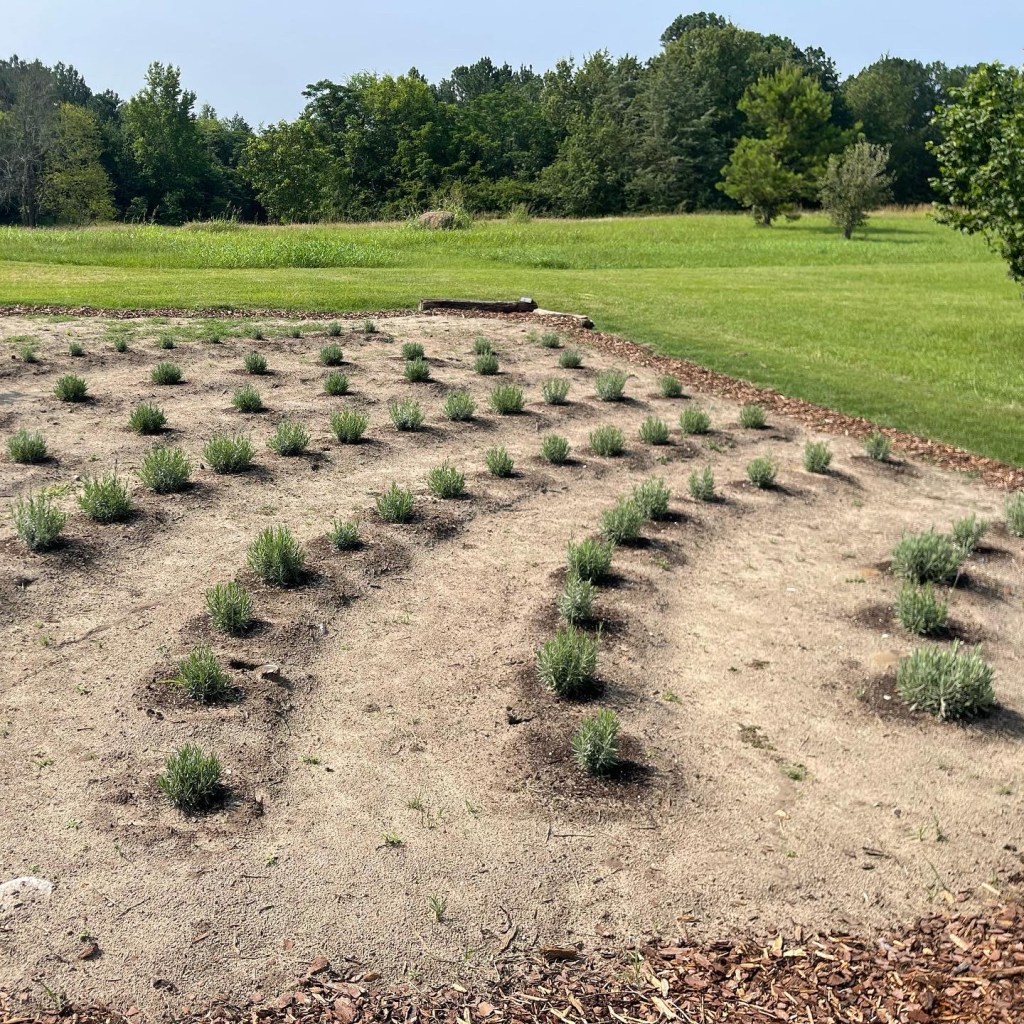
When she showed me her newly planted lavender bed, she said that lavender likes sandy soil with good drainage. She recommended a mix of 1 part sand, 1 part potting soil, & 1 part compost. She recommended to water daily at first & then wait a day, water, & then 2 days, water, & then 3 days, water, and so forth until established continuing to spread time out between waterings while watching the young plant for any stress. In the Southeast, you will want to look for varieties that tolerate heat and humidity of course. She likes the varieties “Grosso” and “Lavendula X Intermedia” (aka: Provence) for cuttings & “Lavendula Angustifolia” aka: English Lavender for culinary use.
We grabbed a refreshing cool drink of Hibiscus Tea with lavender simple syrup and went out to harvest some lavender from her established hybrid lavender plants which were buzzing with busy bees. Amy showed us how to harvest, focusing only on stalks with larger flower bud heads and cutting the stem low, but where it was still green. If you cut down into the woody area, it will not continue to grow stalks from that area.
Workshop on how to make your own bundles to dry
We sat down to make bundles of our lavender to dry and a little vase to fill with culinary herbs Amy had collected while we walked and talked earlier on the garden tour. We were then treated to a nice lunch under two 100 year old pecans. The shade was lovely and the spread was beautiful and tasty as well!
Rosemary and lavender bundles to dry and a sweet little culinary herb bouquet to take home.Rolls, chicken salad, pimento cheese, garden-to-table cucumber, and grape salad with yogurt, pecans and brown sugar (YUM!)Strawberry cup cake on pretty floral plates.
My daughter and I had quite the laugh when one of the farm cats jumped up onto the table to try and sample our chicken salad. Another farm cat came along and soon the two were vying to compete for the food they knew was close by. Lunch and entertainment! LOL
Tips for Drying Lavender for Herbal Use in Tinctures, Salves, Sachets, and More
When drying herbs, you can make bunches to hang and secure them with a rubber band, but don’t make too large or you may get fungal issues in the center of the bunch. Your lavender needs warm air circulating around it to dry well. Amy also had some screens positioned to dry other herbs she was growing in her garden in her workshop and store area. If you use screens, just make sure you don’t use metal screens, but nylon. If you have a dehydrator (how I dry mine) lay out (flowers still on stem, without overlapping) & keep heat circulating 90°-100°F for 24-48 hrs until stem is crispy dry. Defoliate (strip) petals from stem and store in an amber jar with a lid that seals in a cool dry place until you are ready to use.
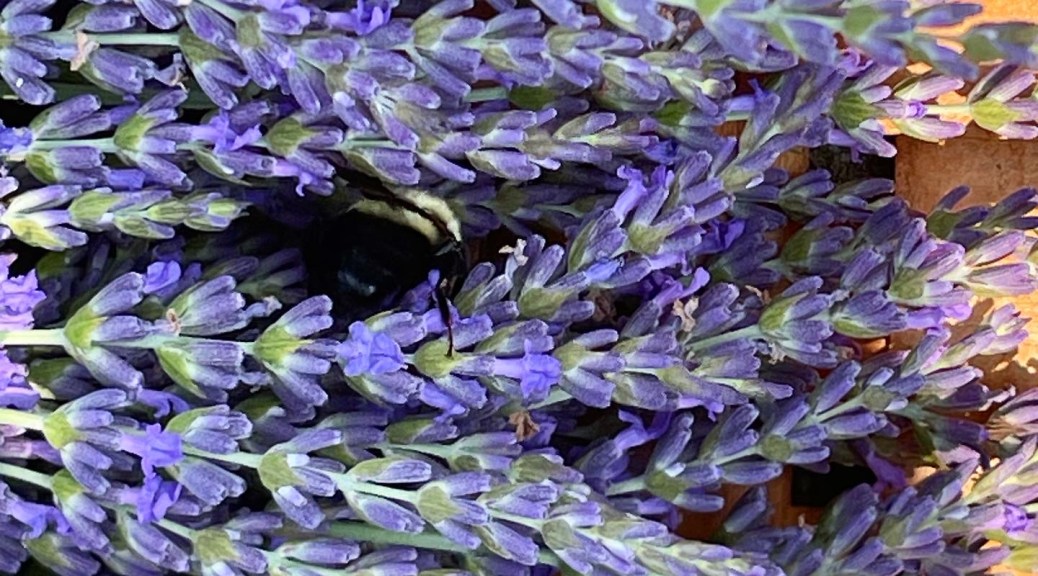
Can you see the bee?Gift shop with fresh herbal teas to drink and cool off while you enjoy the farm.
Ideas for using culinary lavender
Amy also kindly shared some ideas for using lavender to enjoy with food:
Make a lavender simple syrup and add to most any beverage (teas, juice, cocktails, or sparkling water). If you’re wanting to try making your own lavender simple syrup, you can grab the recipe here.
Make infused sugar or infused salt (add several sprigs to a jar of sugar and let it sit up to six (6) weeks
Add lavender buds to your scrambled eggs or omelette while cooking (eggs and lavender pair well together).
Add to salad dressings and marinades.
Cook in lavender when making jams and jelly.
Decorate tops of cakes, cupcakes, desserts.
Bake with lavender (for most recipes, add about 1 Tbsp ground lavender to recipe.)
Roast chicken or port with a little lavender (and rosemary , too!)
Lavender Simple Syrup Flower Essence
I first enjoyed this at White Hill Farm in Dearborn, GA with Hibiscus Tea. The owner, Amy, shared this recipe with me and it was so fun to try I wanted to share with you!
Way to Heat Purified Water
Container with lid to store simple syrup in fridge when not using
Mixing Spoon
1-cup measuring cup
1 cup sugar
1 cup purified filtered water
8 or 10 sprigs dried lavender
Add boiling water to sugar in a a 2-cup Pyrex measuring cup and stir (or boil together in small saucepan on stove.)
When sure is dissolved, break apart lavender stems and add to sugar mixture.
Let steep for 30-60 minutes until desired taste, then strain out lavender.
Lavender syrup will keep in the refrigerator for about 3 weeks.
Lavender Lemonade: 1 cup lavender simple syrup (recipe above) 1 cup fresh squeezed lemon juice from 4-6 lemons 4 cups of filtered cold water
Combine all ingredients and taste. Add more syrup or juice if desired. Serve chilled or over ice.
Beverage ideas for herbal syrups:
Make a simple syrup using fresh mint, rosemary, basil, thyme, organic rose petals, hibiscus, or your favorite herb.
Add to unsweetened black or green tea.
Add fresh fruit juice and syrup to unflavored carbonated water (such as La Croix, Perrier, or soda water) to create your own bubbly sodas.
flower essence, lavender, simple syrup, syrup
If you’re interested in visiting Amy’s lavender farm, White Hills Farm, and staying in Thomson, you can enjoy the same package we did by using this link. Be sure to let them know you heard about it from Grow Your Health Gardening! (We don’t get a kick back, but it helps them know how to best serve future interested visitors.)
Thomson, Georgia has some good local eateries
A few other highlights from the trip included eating at a barbecue place called Pigg-ah-boo’s. It was recommended by Amy whose husband liked to smoke meat as well. My husband makes amazing barbecue as well, so we love to try out other barbecue places while traveling. To be honest, when we first arrived I had my doubts. There was no one else there and the place lacked ambiance. But we sat down and soon others started to arrive to get food as well. Everything tasted fantastic!
Pigg-ah-Boos was worth the stop if you like good barbecue.
The next day we tried Fernanda’s Grill and Pizzeria because it was one of the few restaurants opened (and was also one of the recommendations Amy gave us. The food there did not disappoint either and we ate well! The above pizza pictured is called the “Fahgetaboutit” and was super filling. The service was good and we didn’t have to wait long to get our food on Father’s Day even though the place was busy.
Travel midweek and call ahead for tour of Georgia’s first all-robotic Dairy Farm
We tried to check out the first robotic dairy farm in Georgia, but you have to organize a tour in advance and minimum is $100 for them to even give a tour. They only tour through the week, so if you’re a week-end traveler, skip this option or call in advance to make arrangements.
Fun shopping, but shop before 3 pm on Saturday!
We did find some cool vintage stuff at a place called Aunt Tique and Uncle Junks. It was so nice that they stayed open until 6 pm as most of the shops in town closed at 3 pm and were closed on Sunday. I picked myself up a few vintage medicine glass pieces to put herbal tinctures in at a later date.
Aunt Tique and Uncle Junks is worth the stop (closed Sundays).Check out E.T. hanging out in the VW in front of the store.Vintage goods high and low, but easy to shop. We found some treasures!
All in all, a fun week-end getaway. If we were to go again, I would research places on our interest list and when they are open/closed because we missed out on some neat looking gift shops because of our Saturday morning plans and didn’t realize most of the stores shut down at 3 pm on a Saturday and then are closed on Sunday. I also wish the hotel’s pool had been open, because our kids would have really enjoyed swimming. But we were glad to know that fishing wasn’t too far away, because the guys really were able to relax lakeside for a few hours each day which was nice. I also loved the farm tour and am planning where I can plant some of the cultivars that Amy recommended. I would eat at the same places again and try to squeeze in a few more local restaurants instead of opting for familiar chain eats near the hotel our first night.
Part of the fun of traveling is trying new foods and seeing new things, so getting our game plan ahead of time would be helpful. If you want to visit Thomson, GA, check out this page they have created for out-of-towners visiting. If you live in the Atlanta area, be sure to check it out sometime! And don’t forget to plant some lavender this year!
If you’re looking to grow really big — I mean REALLY BIG — tomatoes… the kind you might even break a state record size of tomato, you’ll need to start with good seed DNA. There are certain tomato varieties that tend to grow to a larger size when given proper nutrients, pH, and pruning.
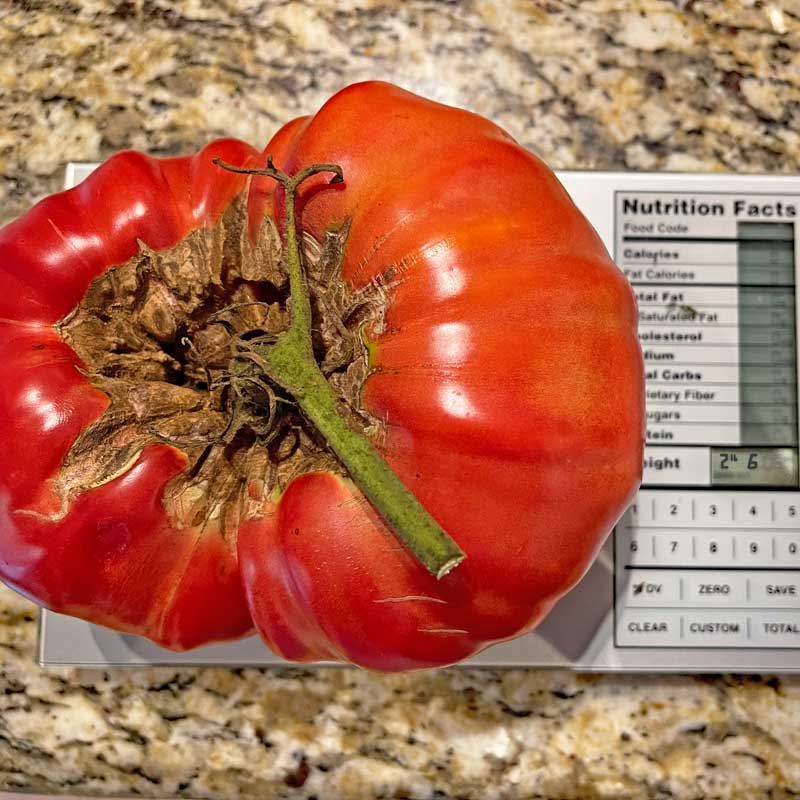
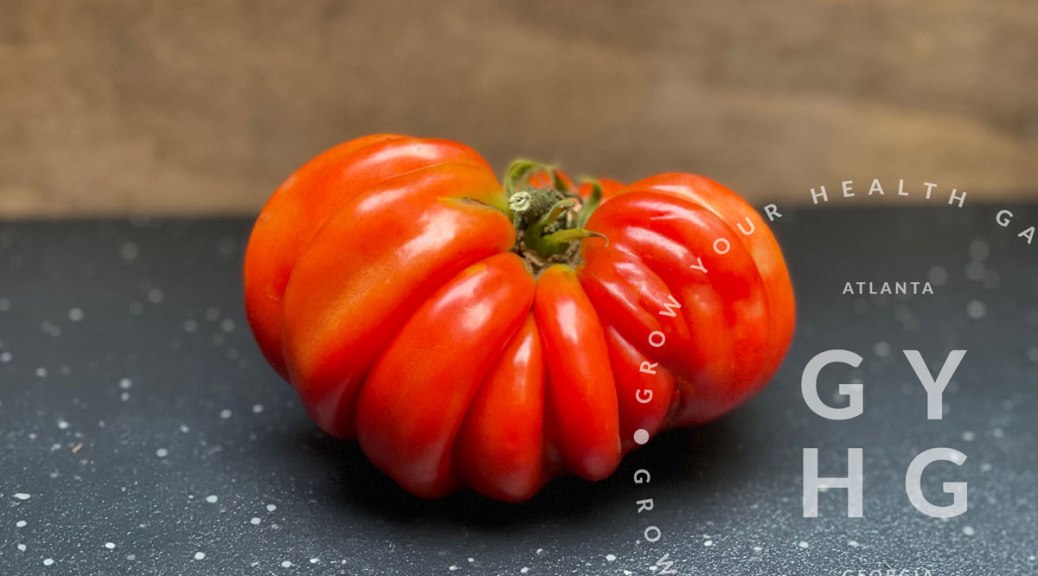
Pomodoro Farina Gigante is a great tasting BIG tomato slicer that is reputed to break records from Italy.
At the time of publication, the current 2021 Guinness Book of World Records for the heaviest tomato was grown by Dan Sutherland (USA). His monster tomato was of the “Domingo” variety and weighed 10 lb 12.7 oz (4.896 kg) when measured in Walla Walla, Washington, USA, on 15 July 2020. The achievement was authenticated by the Great Pumpkin Commonwealth (GPC).
It had a circumference of 33 in (83.8 cm), contributed to by a number of outgrowths on the fruit known as “dingleberries” — something that can be common among giant tomatoes. This is the second time that Sullivan has held this Guinness record. He grew a 3.906-kg (8.61-lb) tomato in August 2016. According to Guinness, “the mother seed for this new record-breaker was derived from the previous record plant.”
No matter if you’re wanting to grow a record breaking monster-size tomato to win titles or simply wanting a nice big tasty slicer for your summer time BLTs, these are the varieties that typically grow larger in girth.
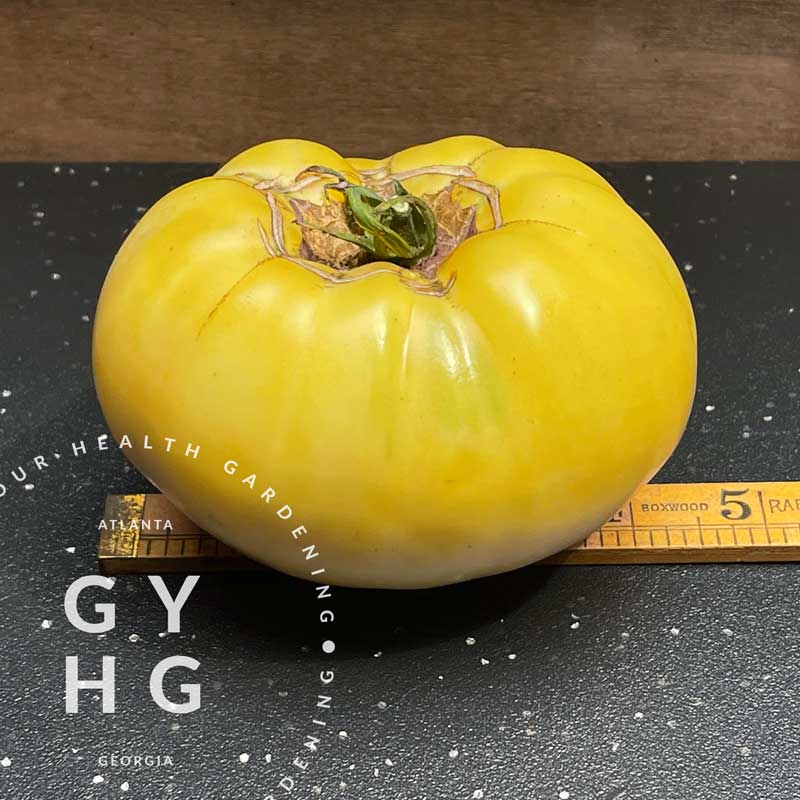
Big Rainbow Heirloom Tomato is a great producing bi-color slicer. As you can see, she produces thick stems to easily handle the weight of big fruit in clusters of 4-6 buds.Great White Heirloom Tomato is a low-acid tomato that produces big slicers almost 5″ wide.Apricot Brandywine Tomato is a large slicer producing not only great tasting tomatoes but a good crop of them. This particular variety produced the most weight overall when compared to our other cultivars.
Happy New Year! As we look forward to the year ahead, it’s time to start thinking about what kind of nutritious food can be grown!
We’ve wrapped up our trials from 2021 and data and out of all the many cultivars grown of tomatoes, I’ve settled on these being my favorites to try in 2022.
When growing tomatoes, it’s always a good idea to think about HOW you plant to consume and use them. It will be a big help to you to evaluate this as it will determine what kind of tomato you should grow. And the BEST part of growing tomatoes is you can enjoy great taste as well that surpass anything that can be found at your local grocery store!
Here’s Erin’s tried and tested picks:
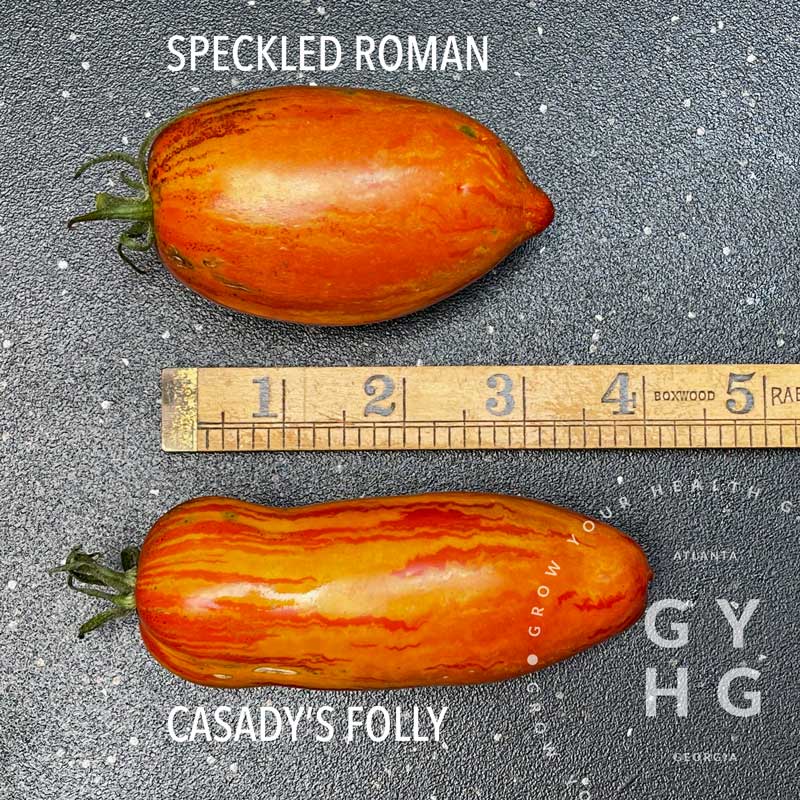
Casady’s Folly Paste Tomato(Sauce or Slicing) Why Erin chose it: “This variety is from tomato and potato breeder, Tom Wagner, of Washington State. It is a fantastic producer and beautiful on and off the vine. It is super versatile as well… you can slice it and add to any recipe that asks for a chopped tomato. It excels for making sauce. When compared to equal number of plants, it even out-performed 3.65x times the popular similar Speckled Roman paste variety. Casady’s Folly had more bud production and peaked in mid-July, but just kept pumping out the tomatoes until the end of September earning its spot as my top pick this growing season.”
Cancelmo Family Heirloom Paste Tomato(Sauce or Slicing) Why Erin chose it: “Cancelmo Family Heirloom Paste Tomato is a wonderful oxheart-type tomato variety. It steadily produces good size meaty fruit making it a wonderful option for great tasting sauce, but can also make a nice slicer for BLT sandwiches as the size fits a slice of bread well and has low seed/pulp ratio. Because doesn’t produce as many seeds, we may swap in another variety once we sell out of our inventory with another variety that also performed well, so grab it while it’s part of the collection while you can.”
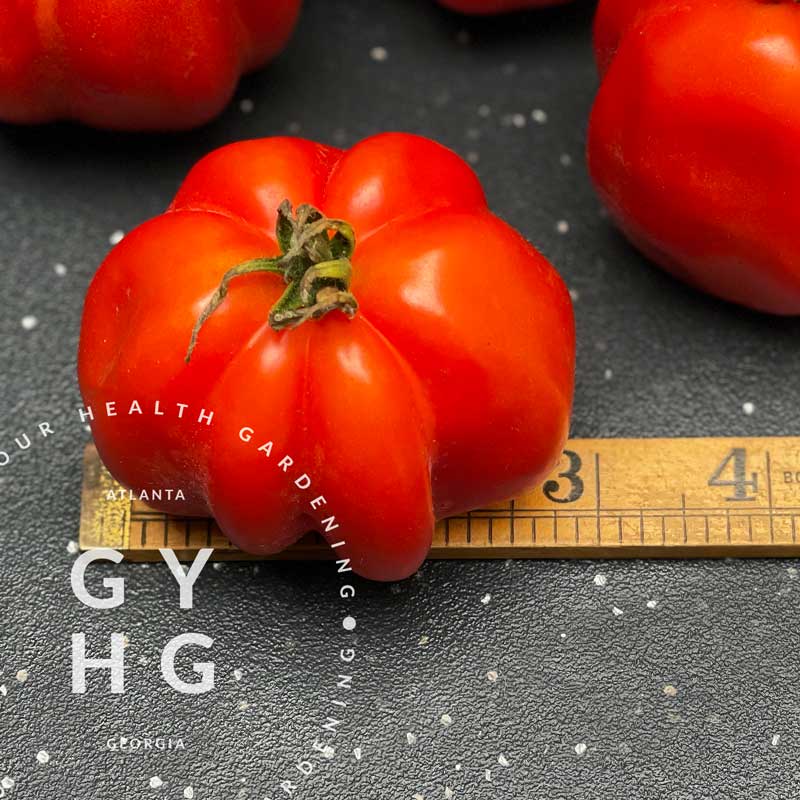
Charlie Chapman Heirloom Tomato(Slicing or Stuffer) Why Erin chose it: “I was originally attracted to Charlie Chapman Heirloom Tomato for it’s ruffled mid-size appearance and that it was touted as a good stuffing cultivar. I think part of the fun of growing food you can’t find in the store is using it in new ways in the kitchen. It’s a great way to add interest to what you’re eating and delights younger children as well. It did not disappoint and actually produced well throughout the growing season. This is a red tomato, but an orange-tinted red. I love how they look like miniature pumpkins.“
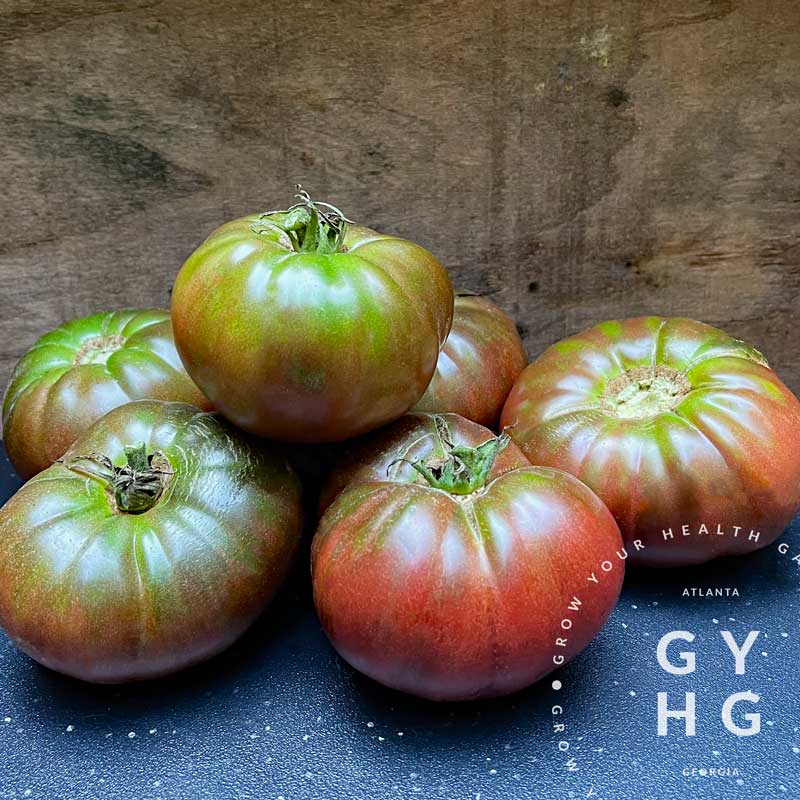
Cherokee Purple Tomatoor Paul Robeson Tomato ((Sauce or Slicing) Why Erin chose it: “Cherokee Purple is one of our favorite tasting tomatoes. It’s not our biggest producer, but I chose this variety based on its flavor profile. Our seed comes from local stock and has been adapted over several generations. In fact, when I compared my seed to other seed providers, our seed was larger and more plump — these are traits that World Guinness Book Record holder, Charles Wilber, recommends looking for in seed with good DNA.“
Wagners Salad Green Tomato (aka: Green Elf) (Sauce or Slicing) Why Erin chose it: “We love fried green tomatoes and this determinate variety just pumped out nice firm green tomatoes much to our delight. The multiple buds it produced and actually set was amazing. I did have to prune it a bit for the Southern climate and for airflow, but I loved the thick sturdy stalk it had and the amount of production we got out of it. It’s a versatile tomato that looks pretty when added to red varieties in diced salsas or topping tacos or salads as well. “
Nostrano Grasso Italian Tomato(Sauce or Slicing) Why Erin chose it: “I was drawn to this variety because of the rariety of it in the United States as an Italian variety. I also thought the slight ruffled look of it was pretty and it did not disappoint. The production was wonderful and the tomato taste true Italian tomato flavors rang through checking all the boxes for me for a fantastic cultivar to grow. “
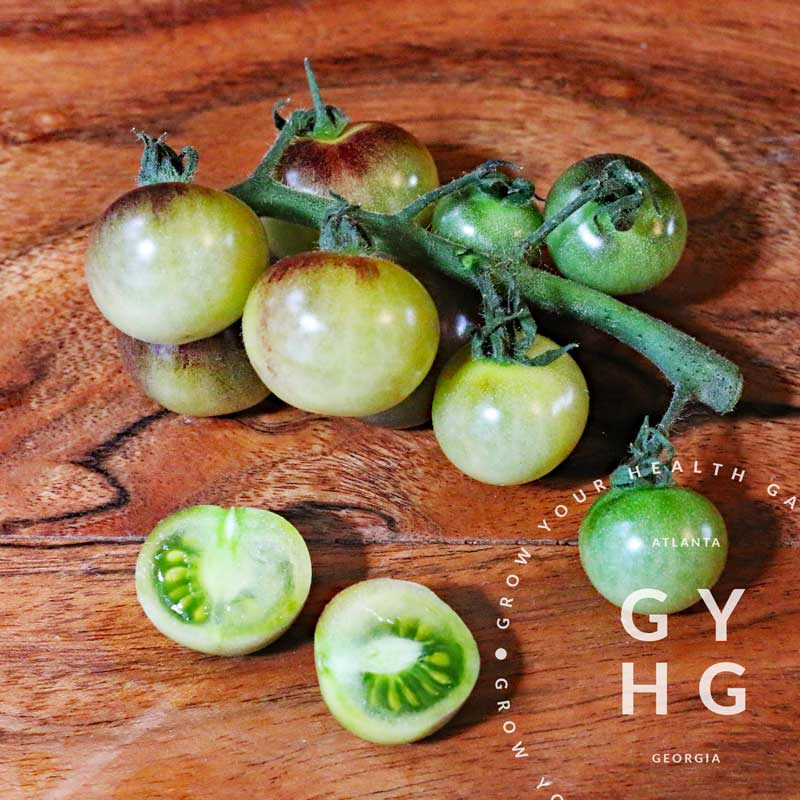
Blue Cream Berries Cherry Tomato(Salad Topper or Snacking) Why Erin chose it: “This is a most unusual tomato. It looks unimpressive on the vine, but I always love to share it with my guests that come to the garden, just to see their look of surprise when they taste it. Your mind thinks it’s going to tart, but it’s not. It’s unlike any other tomato I have tried to date and the fact that it is known to also have those purple shoulders containing anthocyanans, well, it’s a tomato we should all be enjoying on salads or for snacking. What’s interesting is that the second year of adapting this variety the first fruits that came on where actually bigger than the previous year. This will be one I continue to grow out and adapt through hydroponics in the Southeast.“
Black Cherry Tomato(Salad Topper or Snacking) Why Erin chose it: “Our entire family loves the Black Cherry Tomato variety. Cherry Tomatoes are also easier to grow in the Southeast, so it’s a good starter tomato for anyone who hasn’t grown tomatoes before from seed. Like our other cultivars that have been adapted through hydroponic growing conditions, Black Cherry Tomatoes were larger and super tasty — especially early on in the season. These can be used for snacking, salads, sliced for tacos, or even sun-dried. “
+ Bonus: Naughty Marietta French Marigold(Co-planting and other beneficial uses) Why Erin chose it: “I wanted to include a marigold to encourage new growers to think of co-planting beneficial plants near one another. The marigold is fantastic for keeping some pest pressure down. You can grow and place in-between and around your plants that are growing, but the real benefit will be if you harvest some leaves and petals and make a biological tea and spray on your tomato plants once a week as a pro-active pest deterrent. “
If you want to learn more about this collection, feel free to click here. We wish you the best and a wonderful 2022 Growing Season! Be sure to let us know in the comments below what your favorite tomato variety was from your last growing season. We all learn from each other through sharing!
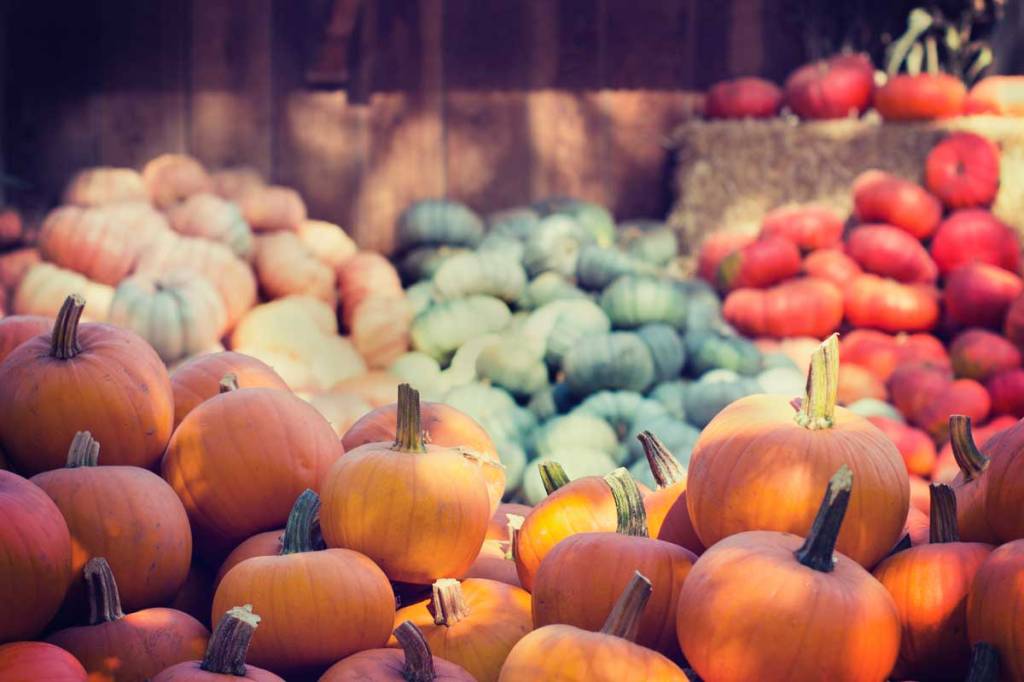
There are some fantastic faux pumpkins you can find at the craft store these days, but there’s nothing quite like having a fresh pumpkin for the front porch. If you’re heading out to your local pumpkin patch to pick out the perfect pumpkin, be sure to pick up three additional items from the store to help preserve your pumpkin (if you don’t have these already): bleach, dish soap and matte paint spray sealer.
When you return home with your freshly harvested pumpkin, before placing your treasure on the front porch, do this:
In a large sink or tub, prepare a mixture of bleach, water and dish soap: one (1) gallon of water, 2 tablespoons bleach, and a two drops of dish soap. Soak the pumpkin(s) in the mixture for 15-30 minutes.
Next, rinse the pumpkin(s) with cool water and dry completely.
After the pumpkins have dried all the way around them, take outside and give it a coat of spray matte sealer which will help preserve them even longer!
Have fun picking out your pumpkins! And be sure to share pics of your pumpkins with us on social media! Tag us at #gyhg or #growyourhealthgardening on Instagram, Gab, Google My Business, or Facebook.
Beauty Lottringa growing on the vine. Such a pretty tomato!
We are loving eating BLTs (Bacon, Lettuce + Tomato with Mayo on a slice of bread) fresh from the garden with tasty hydroponically-grown heirloom tomatoes! (So juicy!)
And this rare variety from Russia called Beauty Lottringa makes a tasty AND beautiful plating! Can you believe that each tomato has less than five seeds in it?! WOW! I personally love how each slice looks like a red flower.
Slice of Beauty Lottringa on a BLT Sandwich. This variety only has about 5 seeds or less on average in each tomato!
BLT Sandwich with Black Passion and Beauty Lottringa featured in photo above. To shop all our hydroponic-adapted exclusive line of seeds visit store.growyourhealthgardening.com
I’m still debating on whether to sell this variety because of the low seed count, but I may end up doing a giveaway, so be sure to visit store.growyourhealthgardening.com and sign-up for our email updates and tips to be the first to hear when our new hydroponically-adapted line of seeds release or if we do a give-away on this particular variety.
Do you love BLTs as well? What is your favorite slicer variety?
We have been busy seeding tomatoes this week inside in preparation for the 2021 growing season and we look forward to bringing you hydroponic adapted seeds once our trials have completed. I search far and wide for unique varieties that cannot be found at the grocery store or big box gardening centers and even from large seed producers. We even have some rare varieties we are excited to try and share with you if they do well in our trials.
Every season, I feel it’s important to have FUN while you grow food for you and your family, so here are some of my personal FUN goals…
In particular, this year, I think I’m going to try and tackle growing the largest tomato I’ve ever grown. I’m thinking like, state fair size. My seed stock for this challenge comes from a private grower in Italy and we shall see how it adapts to our growing region.
I’m also focusing on more plum varieties this year, so we can make some amazing sauce and preserve it for the winter to feed our family of seven. I did some extra research and selected varieties that were favored by other tomato connoisseurs.
I’m also particularly excited about our new line-up of micro-dwarf tomatoes that don’t require a trellis and have usually one or two flushes of tomatoes before they complete their growing cycle. Because of their compact habit, they are ideal for growing in the vertical Tower Garden and for those who want to grow in small spaces like in the Aerogarden, Farm Stand, or even in a pot on your back patio or deck.
Our seed is adapted to hydroponic growing conditions in Zone 7 just west of Atlanta, Georgia. I share this info not because tomatoes are a perennial (which is typically the reason for looking at growing zones), but instead to help our home growers know where their seed is grown, so they can match it to their own growing conditions for success. Our tomatoes are all grown outdoors in heat and humidity and hand-pollinated with the exception of our micro-dwarfs which are grown indoors to limit cross-pollination.
We give our mature tomatoes a PPM range of 1400-2000 and a pH of 6.0-6.5 for maximum nutrient uptake. We recommend using the Tower Garden Mineral Blend for healthy plants and maximum growth. If you’re wondering what grows well with tomatoes in a hydroponic system, we encourage you to visit this page on our Grow Your Health Gardening Web site for more information.
If you wonder why tomato seeds can cost more than other seeds, know that tomatoes are very time-and-labor intensive to grow and require a lot of personal management with seed starting, pruning, scouting for any pest pressure, or any efforts to boost immune system through foliar application of comfrey tea and molasses tea (which helps to bring out flavor).
15 Slicer Tomato Variaties:
Apricot Brandywine Tomato
Black Passion Tomato
Big Rainbow Tomato
Delice De Nevilly Tomato (Rare)
Genovese Tomato (Rare)
Great White Heirloom Tomato (Low-Acid)
Green Elf (Tom Wagner Variety)
Merveille Des Marches Tomato (Rare)
Nostrano Grasso Tomato (Rare)
Orange Orangutan Tomato
Paul Robeson
Pineapple Tomato
Pomodoro Gigante Farina Tomato (Rare)
Thornburn’s Terra Cotta Tomato (Rare)
Wagner Blue Green Tomato (Tom Wagner Variety)
8 Paste Tomato Variaties:
Black Plum Paste Tomato
Cancelmo Family Ox Heart Tomato
Cassidy’s Folly Plum Tomato (Tom Wagner Variety)
Cream Sausage Plum Tomato (Tom Wagner Variety)
Dwarf Sneaky Sauce Micro-Dwarf Plum Tomato
Goatbag Plum Tomato
San Marzano Plum Tomato
Speckled Roman Plum Tomato
8 Cherry Tomato Variaties:
Black Cherry Tomato
Blue Cream Berries Cherry Tomato
Brad’s Atomic Grape Cherry Tomato
Green Doctor’s Frosted Tomato
Matt’s Wild Cherry Tomato
Red Pear Cherry Tomato
Sweetheart Cherry Tomato
Yellow Pear Cherry Tomato (Low Acid)
24 Micro-Dwarf Cherry Tomatoes:
Annie’s Singapore Micro-Dwarf Cherry Tomato
Bonsai Micro-Dwarf Cherry Tomato
Dwarf Suzy’s Beauty Tomato
Gold Pearl Micro-Dwarf Cherry Tomato
Fat Frog Micro-Dwarf Cherry Tomato
Florida Petite Micro-Dwarf Cherry Tomato
Hahms Gelbe Micro-Dwarf Cherry Tomato
Hardins Miniature Micro-Dwarf Tomato
Inkspot Micro-Dwarf Cherry Tomato
Kookaburra Cackle Micro-Dwarf Cherry Tomato
Little Red Riding Hood Micro-Dwarf Cherry Tomato
Mo Micro-Dwarf Cherry Tomato
Monetka Micro-Dwarf Cherry Tomato
Olga’s Round Chicken Micro-Dwarf Cherry Tomato
Peachy Keen Micro-Dwarf Cherry Tomato
Pigmy Micro-Dwarf Cherry Tomato
Purple Reign Micro-Dwarf Cherry Tomato
Regina Red Micro-Dwarf Cherry Tomato
Regina Yellow Micro-Dwarf Cherry Tomato
Snegirjok Micro-Dwarf Cherry Tomato
Vilma Micro-Dwarf Cherry Tomato
Wherokowhai Micro-Dwarf Cherry Tomato
Willa’s Cariboo Rose Micro-Dwarf Tomato
Yellow Canary Micro-Dwarf Cherry Tomato
What do you look for in a tomato? What are your tomato aspirations for the upcoming growing season? Drop us a line in the comment section below!
I was listening to a podcast by one of my favorite market growers from Alabama, Noah Sanders, and he had a guest on from Kaleva, (Northern) Michigan, Craig Shaaf, from Golden Rule Farm who mentioned that he put red dye in an empty soda bottle and it helped his tomatoes mature earlier than anyone else’s tomatoes in the area while also sighting a Clemson University Study.
So, being that we drink a lot of sparkling water in our house, I had an empty liter lying around (we typically repurpose these for terrariums in cold hardy annuals but that’s a something to discuss for another day), so I filled it with some water and added several drops of red food coloring to it and sat it on my indoor Tower Garden near some micro dwarf unripened cherry tomatoes I was growing. Low and behold, two days later, the cherry tomatoes closest to the red-colored water began to ripen from the bottom up!
Red reflective Far-Red light encourages tomatoes to ripen.
Studies using Red Plastic Selective Reflecting Mulch (SRM) Show Increased Yields for Certain Plants
Research originally started during the 1980s and led to development of SRM-Red, a selective reflecting mulch that has been available commercially since 1996. Plant physiologist Michael J. Kasperbauer, who retired from the Agricultural Research Service‘s (ARS) Coastal Plains Soil, Water and Plant Research Center at Florence, S.C. found that plastic colored-mulch’s controlling factor is not the colors themselves, but how the colors adjust the amount of blue light and the ratio of far-red (FR) to red light that plants receive reflecting from the ground upwards.
The studies used a red plastic mulch (also referred to as Selective Reflecting Mulch, or SRM for short). It is similar to black plastic mulch used frequently by growers to help warm the soil, prevent erosion, and retains moisture. The red plastic mulch is often thinner than most black weed block and allows more light (and sometimes weeds) through it.
But red plastic mulch’s true strength is in its ability to reflect certain red light waves back onto the growing plant, thereby accelerating fruit production and increasing overall yields. Past ARS work showed that red plastic mulch produced larger tomatoes and produced 20% more than black plastic mulch counterparts and the red plastic mulch also sweeter-smelling, better-tasting strawberries.
Similar results were found on peppers and eggplants as well as with lettuce.
ARS’ also tried the red plastic mulch with cotton, carrots and basil. They found that color of the plastic mulch can affect the roots, stems, leaves and seeds, as well as the fruits, of many other food and crop plants.
Research on cotton showed that cotton fibers grew longer in bolls exposed to increased FR-to-red light ratios. Another study, on carrots, showed that concentrations of nutrients and compounds such as vitamin C and beta carotene in the roots of food crops could be changed by reflecting the right waves of color onto the plants’ leaves.
What’s more, in studies with basil, the amounts of blue, red and FR light reflected onto developing leaves affected their size, aroma and concentration of soluble phenolics. The phenolics are natural compounds, including tannins and pigments that can induce color, some flavors and odors, and antioxidant activity.
Basil leaves developing above red mulches had greater area, succulence and fresh weight than those developing above black mulch. When grown above yellow and green mulches, basil leaves developed significantly higher concentrations of aroma compounds and phenolics than did those of plants grown above white and blue mulches.
The concept of colored mulch sprouted when Kasperbauer wondered whether phytochrome was equally distributed in leaves. He became curious about what would happen if light impinged on the leaf’s lower, rather than upper, surface. “The plant response was the same, no matter which surface received the light,” says Kasperbauer. “Although that experiment seemed somewhat unconventional in 1962, it became highly relevant about 22 years later, when we determined that red and FR reflected from the soil surface could act through the plant’s phytochrome system to enhance yield and quality. That led to our colored-mulch work.”
Red Plastic Selective Reflecting Mulch (SRM) helps to Deter Nematodes
What’s more, tests done by USDA’s plant physiologist Michael J. Kasperbauer and Clemson University nematologist Bruce Fornum showed that nematode damage can be lessened by red plastic mulch. They did an interesting study where they planted tomatoes into sterile soil — some rows covered in black plastic mulch and some covered in red plastic mulch. They then inoculated both rows with 0-200,000 nematode eggs. Their findings showed the black mulch produced 8 pounds of tomatoes whereas the red mulch produced 17 pounds! That’s roughly a 113% increase in yield battling the same conditions.
USDA’s Agricultural Research Service found that red plastic mulch suppresses root nematode damage to tomatoes because the light reflection keeps more of the plant’s growth above ground. The plant’s energy goes into developing fruit and foliage, rather than roots. Nematodes feed on roots. The far-red light reflection to the above-ground plant draws away nutrients from the roots – and nutrients away from the nematodes. Fewer roots mean less food for nematodes. Less food = fewer nematodes.
Things to Consider When Using Red Plastic Selective Reflecting Mulch (SRM)
Carefully secure red plastic selective reflecting mulch underneath your plants so that there is at least a foot on every side of the plant in it’s mature stage of growth.
Do not place the red plastic selective reflecting mulch in walking paths as it is thinner than other weed blocking materials.
Consider placing a weed block material underneath your red plastic SRM to help limit weeds from growing underneath.
Drip irrigation will be necessary underneath
Two other Bonus Tips for Boosting Flavor in Tomatoes:
Place 1-2 TBSP of pure natural Molasses in a gallon of water and stir well to dilute it down and place into a spray bottle and spray your leaves. This will aid in bringing out flavor in your tomatoes.
When your tomatoes are about 18″ tall, a little bit of stress at times can really boost flavor as well. Spray your plants about every 2 weeks with 1 standard strength 325 mg uncoated aspirin tablet mixed in a gallon of water and mix well until the aspirin is completely dissolved and then spray the tomato leaves with the aspirin solution (Salicylic Acid) to trigger tomato defenses. This will especially really beef up your Beef Steak varieties and boost the flavor profile as well.
Find Red Plastic Selective Reflecting Mulch for your Tomato, Pepper, Eggplant, Basil, Cotton, and Lettuce (and more) Crops
As committed Seed Stewards, we understand the importance of good quality seed, because strong seed means strong plants that can better fight-off pest pressure and diseases … and strong plants also mean the best nutrition possible for your body. It’s important to know where your seed comes from because the plant that seed came from has adapted to its growing environment — and if it’s different than your environment, that plant may struggle which means you struggle.
But it doesn’t have to be a struggle to grow your own food — in fact, we think it is FUN to be connected to your food from seed to harvest! Our seed for sale has been cultivated from seed and nurtured using organic growing methods on through to harvest by our family of seven. We take great pride in our seed stock knowing each generation of plants we grow only strengthens our exclusive line of seeds. We are thrilled we can now share our extra seeds with you!
We are unique in that we have thoughtfully chosen heirloom and open source varieties of vegetables, herbs, and greens (and sometimes extremely rare seed) and have grown these varieties out in one season adapting them to hydroponic, aeroponic, and aquaponic growing conditions in the Southeast region of the United States.
As a friend of GYHG and follower, enjoy today through November 14, 2021, 21% off your first seed order! Enter code: GYHG-LOVES-ME-21 when you check out.
Thanks and we hope that this year is the year you especially grow your health gardening!
July is just around the corner and it’s time to start thinking about the fall garden if you can believe it! Here in the SE, we are blessed to have two growing seasons if the timing is planned right.
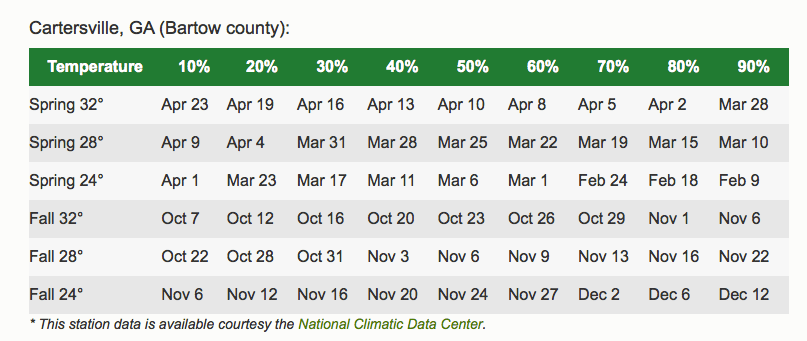
THINKING ABOUT WHAT YOU WILL PLANT FOR YOUR FALL CROP AND WHEN TO PLANT IT: All it takes to maximize your growing season is to know when your frost dates are for spring and fall. You’ll want to google what your last frost or freeze date is for your area. There is the traditional Farmer’s Almanac you can use, or I like Dave’s Garden’s resource as it gives a range of dates based on statistical data of when the first and last frost date has occurred. You’ll want to check this date each season prior to planning when to start your seed. I tend to lean on the 30-40% dates as my target date to plan off of and watch as the time gets closer. For our purposes, we will be looking at a freeze possibly happening between Oct 16-Oct 20, so I’ll split the difference and use Oct 18th as my first frost date and count back from this date based on the number of days (found on seed packet) for the plant will reach maturity and add in a 20 days for the plant to produce and bring a harvest in before a cold snap hits.
FINAL PLANTING OPPORTUNITY OF WARM SEASON PLANTS: If you are growing in the southeast (we are in Atlanta in planting zone 7B), plant the following vegetables no later than July 20th to allow time to mature before frost: tomatoes, okra, corn, pole beans, lima beans, cucumbers, squash and snap beans. If you have a sucker growing on one of your existing tomato plants, now is the time to start a new tomato plant which will continue to grow and fruit until hit with a freeze. Toward’s the end of July, start your final crop of snap beans as these can be planted by August 15 as seedlings into the garden for fall harvest.
Now is the time to also plant Zinnia seed. These heat loving annuals sprout in six days and bloom in a few weeks in the heat of the summer. Plant more Caladiums and Coleus as they’ll look better in the fall than the plants often started in May.
You can also plant another crop of Gladiolus for another flush of blooms for summer and into fall. Now is also a good time to divide Daffodils using caution not to cut into the bulbs as you dig into the ground.
AN EASY TASK TO LIMIT PESTS AND DISEASES: As you are harvesting your crops and cleaning off any dead leaves or removing leaves that have been attacked possibly by insect pressure, be sure to place these leaves in a 5 gallon tote to toss at the end of the day. You don’t want to leave dead leaves on the ground next to your growing plants as they will attract insects and promote disease which can transfer to your healthy growing plants. Keeping the ground around your plants tidy is a simple way to keep your plants thriving through the growing season.
CONTINUE TO FERTILIZE: For annuals, you’ll want to continue to fertilize at two-to-six-week intervals. When using granular products, make sure to water afterwards to encourage the nutrients to filter down to the root zone of your plants. For soil, you can use “organic” fertilizers like manure (cattle or chicken), blood meal, and/or fish emulsion. Dr. Tim Smalley, horticulture professor at the University of Georgia, has shown that composted hen litter continues to release food for four years after a 2-inch layer is worked into flower beds. Patio tomatoes (in a container) need to be fed consistently because constant watering rinses fertilizer out of the soil.
WATERING PLANTS: Be sure to keep tabs on watering soil-based plants. If you have had a good heavy rain, your watering tasks are probably eased for the day, but if it hasn’t rained, you’ll want to make sure you water deeply as needed to prevent drought stress. You can prevent root rot by watering deeply once per week and mixing plenty of organic amendments into the soil before planting and adding mulch to the soil surface beneath growing plants.
For plants growing in a hydroponic or aeroponic vertical gardening Tower Garden system, be sure to check your reservoirs at least twice a week as things warm up outside. If you’re growing tomatoes, tomatillos, eggplant, squash, kale, or beans, you’ll want to check your reservoir daily (or every other day) and top off the reservoir and add nutrients as these are “heavy feeders” meaning they take up a lot of nutrients when they are producing fruit, veggies, or legumes. Even though you are adding water to your system, it will be substantially less than the soil-based garden as hydroponic growing trials have been shown by NASA that these growing methods grow plants three times faster and produce 30% greater yields on average while using only 10% of the water a traditional soil-based garden would use to grow the same food.
INCREASE PLANT PRODUCTION: As your bush beans are growing, be sure to pick each day to encourage growth and plant output. Same is true with tomatoes… as they begin to ripen, pick often to encourage further fruit set.
PUMPKIN PLANTING TIME: Plant that big pumpkin for Halloween this month and give it plenty of room to sprawl. If you have a fisherman in your family, save a fish head and toss in to the hole before planting your pumpkin seedling into the ground.
JULY PLANTING CALENDAR: And finally, here is a quick cheat sheet you can print off and reference for what you can plant each week through either direct sowing (DS) into the ground or sowing indoors (SI).
Tips for Hydroponic, Aquaponic, and Soil-based Gardening Methods

































 Grow Your Health Gardening