Tag Archives: georgia

Lavender Growing Tips from a Professional Lavender Farmer in the Southeast

I love lavender. It’s one of my go-to essential oils and a good lavender foot soak with salt is THE BEST! So, when my husband surprised me with a special mother/daughter lavender farm tour and workshop in Thomson, Georgia I was thrilled! Of course, it is more fun to travel as a family so I asked if he and one of our sons could tag along.

When we arrived at our hotel Friday evening, we were given two wonderful gift bags full of information on what we could do during our stay as well as treats and Thomson, GA swag (like a fun tumbler, luggage tags, vinyl stickers, and a drink cozy) and a couple of gift cards to use in the area (which we were delighted to take advantage of to stretch our dollars!

I’ve never been to Thomson before, but it’s a quaint town just outside of Augusta that is evidently known for a local music event called the Blind Willie McTell Music Festival (note: this Jazz festival is coming up Sept 23, 2023) and the Belle Meade Hunt Opening Meet which it hosts annually the first Saturday in November. There are also some large nurseries in the area that grow and ship out to the local region that used to have a large plant sale once a year, but when I checked out the event Web site, they hadn’t had the event the past three years for some reason. Bummer. Love me a good plant sale.

McDuffie Public Fishing Area near Thomson, Georgia is stocked from the nearby fish hatchery with plenty of room to fish.

Saturday morning we enjoyed a complementary breakfast at our hotel (nice spread with plenty of options) and then headed toward the fishing area where we planned to drop-off my husband and son at the lake which was five minutes away from where our tour and workshop was to take place at White Hills Farm.

Our Tour, Workshop, and Luncheon at White Hills Farm

The owner, Amy, was friendly and made us immediately feel welcome. She has a beautiful shop on site where she hangs her lavender bundles to dry. You could smell the lavender in the air and the cool A/C was a welcome already at 10 am in the morning.

She immediately took us on a tour of her gardens where we saw not only the lavender she grew, but also rosemary and other herbs, veggies, and legumes.

Varieties to plant in the Southeast and how to plant

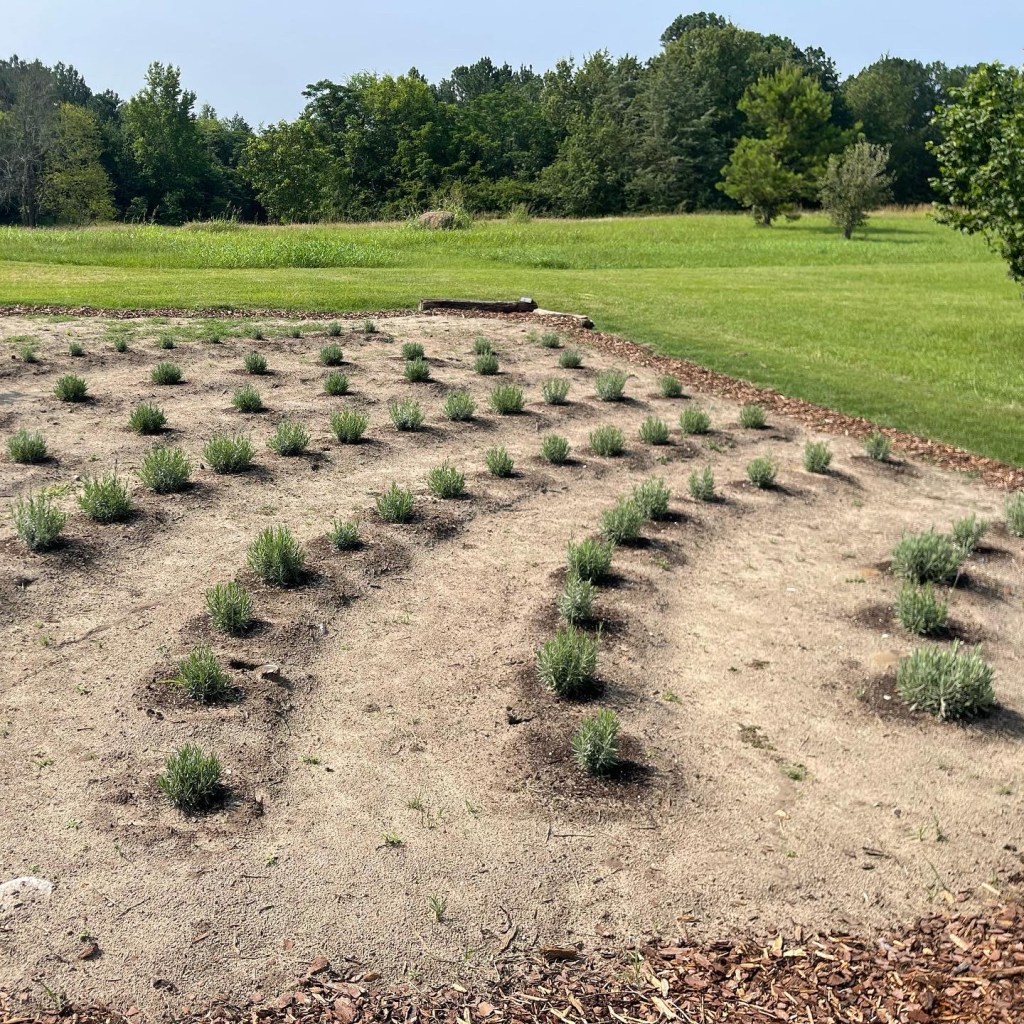
When she showed me her newly planted lavender bed, she said that lavender likes sandy soil with good drainage. She recommended a mix of 1 part sand, 1 part potting soil, & 1 part compost. She recommended to water daily at first & then wait a day, water, & then 2 days, water, & then 3 days, water, and so forth until established continuing to spread time out between waterings while watching the young plant for any stress. In the Southeast, you will want to look for varieties that tolerate heat and humidity of course. She likes the varieties “Grosso” and “Lavendula X Intermedia” (aka: Provence) for cuttings & “Lavendula Angustifolia” aka: English Lavender for culinary use.
We grabbed a refreshing cool drink of Hibiscus Tea with lavender simple syrup and went out to harvest some lavender from her established hybrid lavender plants which were buzzing with busy bees. Amy showed us how to harvest, focusing only on stalks with larger flower bud heads and cutting the stem low, but where it was still green. If you cut down into the woody area, it will not continue to grow stalks from that area.

Workshop on how to make your own bundles to dry

We sat down to make bundles of our lavender to dry and a little vase to fill with culinary herbs Amy had collected while we walked and talked earlier on the garden tour. We were then treated to a nice lunch under two 100 year old pecans. The shade was lovely and the spread was beautiful and tasty as well!

Rosemary and lavender bundles to dry and a sweet little culinary herb bouquet to take home.
Rolls, chicken salad, pimento cheese, garden-to-table cucumber, and grape salad with yogurt, pecans and brown sugar (YUM!)
Strawberry cup cake on pretty floral plates.

My daughter and I had quite the laugh when one of the farm cats jumped up onto the table to try and sample our chicken salad. Another farm cat came along and soon the two were vying to compete for the food they knew was close by. Lunch and entertainment! LOL

Tips for Drying Lavender for Herbal Use in Tinctures, Salves, Sachets, and More

When drying herbs, you can make bunches to hang and secure them with a rubber band, but don’t make too large or you may get fungal issues in the center of the bunch. Your lavender needs warm air circulating around it to dry well. Amy also had some screens positioned to dry other herbs she was growing in her garden in her workshop and store area. If you use screens, just make sure you don’t use metal screens, but nylon. If you have a dehydrator (how I dry mine) lay out (flowers still on stem, without overlapping) & keep heat circulating 90°-100°F for 24-48 hrs until stem is crispy dry. Defoliate (strip) petals from stem and store in an amber jar with a lid that seals in a cool dry place until you are ready to use.

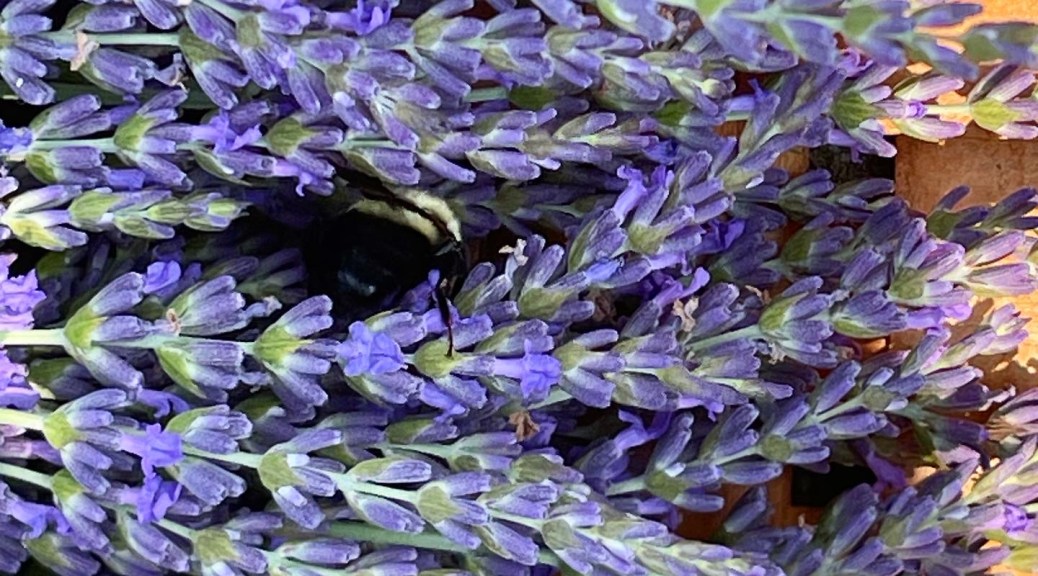
Can you see the bee?
Gift shop with fresh herbal teas to drink and cool off while you enjoy the farm.

Ideas for using culinary lavender

Amy also kindly shared some ideas for using lavender to enjoy with food:

  • Make a lavender simple syrup and add to most any beverage (teas, juice, cocktails, or sparkling water). If you’re wanting to try making your own lavender simple syrup, you can grab the recipe here.
  • Make infused sugar or infused salt (add several sprigs to a jar of sugar and let it sit up to six (6) weeks
  • Add lavender buds to your scrambled eggs or omelette while cooking (eggs and lavender pair well together).
  • Add to salad dressings and marinades.
  • Cook in lavender when making jams and jelly.
  • Decorate tops of cakes, cupcakes, desserts.
  • Bake with lavender (for most recipes, add about 1 Tbsp ground lavender to recipe.)
  • Roast chicken or port with a little lavender (and rosemary , too!)

Lavender Simple Syrup Flower Essence

I first enjoyed this at White Hill Farm in Dearborn, GA with Hibiscus Tea. The owner, Amy, shared this recipe with me and it was so fun to try I wanted to share with you!

  • Way to Heat Purified Water
  • Container with lid to store simple syrup in fridge when not using
  • Mixing Spoon
  • 1-cup measuring cup
  • 1 cup sugar
  • 1 cup purified filtered water
  • 8 or 10 sprigs dried lavender
  1. Add boiling water to sugar in a a 2-cup Pyrex measuring cup and stir (or boil together in small saucepan on stove.)

  2. When sure is dissolved, break apart lavender stems and add to sugar mixture.

  3. Let steep for 30-60 minutes until desired taste, then strain out lavender.

  4. Lavender syrup will keep in the refrigerator for about 3 weeks.

Lavender Lemonade:
1 cup lavender simple syrup (recipe above)
1 cup fresh squeezed lemon juice from 4-6 lemons
4 cups of filtered cold water

Combine all ingredients and taste. Add more syrup or juice if desired. Serve chilled or over ice.

Beverage ideas for herbal syrups:

  • Make a simple syrup using fresh mint, rosemary, basil, thyme, organic rose petals, hibiscus, or your favorite herb.
  • Add to unsweetened black or green tea.
  • Add fresh fruit juice and syrup to unflavored carbonated water (such as La Croix, Perrier, or soda water) to create your own bubbly sodas.
flower essence, lavender, simple syrup, syrup

If you’re interested in visiting Amy’s lavender farm, White Hills Farm, and staying in Thomson, you can enjoy the same package we did by using this link. Be sure to let them know you heard about it from Grow Your Health Gardening! (We don’t get a kick back, but it helps them know how to best serve future interested visitors.)


Thomson, Georgia has some good local eateries

A few other highlights from the trip included eating at a barbecue place called Pigg-ah-boo’s. It was recommended by Amy whose husband liked to smoke meat as well. My husband makes amazing barbecue as well, so we love to try out other barbecue places while traveling. To be honest, when we first arrived I had my doubts. There was no one else there and the place lacked ambiance. But we sat down and soon others started to arrive to get food as well. Everything tasted fantastic!

Pigg-ah-Boos was worth the stop if you like good barbecue.

The next day we tried Fernanda’s Grill and Pizzeria because it was one of the few restaurants opened (and was also one of the recommendations Amy gave us. The food there did not disappoint either and we ate well! The above pizza pictured is called the “Fahgetaboutit” and was super filling. The service was good and we didn’t have to wait long to get our food on Father’s Day even though the place was busy.

Travel midweek and call ahead for tour of Georgia’s first all-robotic Dairy Farm

We tried to check out the first robotic dairy farm in Georgia, but you have to organize a tour in advance and minimum is $100 for them to even give a tour. They only tour through the week, so if you’re a week-end traveler, skip this option or call in advance to make arrangements.

Fun shopping, but shop before 3 pm on Saturday!

We did find some cool vintage stuff at a place called Aunt Tique and Uncle Junks. It was so nice that they stayed open until 6 pm as most of the shops in town closed at 3 pm and were closed on Sunday. I picked myself up a few vintage medicine glass pieces to put herbal tinctures in at a later date.

Aunt Tique and Uncle Junks is worth the stop (closed Sundays).
Check out E.T. hanging out in the VW in front of the store.
Vintage goods high and low, but easy to shop. We found some treasures!

All in all, a fun week-end getaway. If we were to go again, I would research places on our interest list and when they are open/closed because we missed out on some neat looking gift shops because of our Saturday morning plans and didn’t realize most of the stores shut down at 3 pm on a Saturday and then are closed on Sunday. I also wish the hotel’s pool had been open, because our kids would have really enjoyed swimming. But we were glad to know that fishing wasn’t too far away, because the guys really were able to relax lakeside for a few hours each day which was nice. I also loved the farm tour and am planning where I can plant some of the cultivars that Amy recommended. I would eat at the same places again and try to squeeze in a few more local restaurants instead of opting for familiar chain eats near the hotel our first night.

Part of the fun of traveling is trying new foods and seeing new things, so getting our game plan ahead of time would be helpful. If you want to visit Thomson, GA, check out this page they have created for out-of-towners visiting. If you live in the Atlanta area, be sure to check it out sometime! And don’t forget to plant some lavender this year!

Until later,

—Erin

Warning to those purchasing kale from Kroger

I just read this announcement (which I will also share with you, because it could affect anyone purchasing these items from the produce aisle…), but before I share, let me just say that there is no reason in my opinion on why individuals cannot grow their own greens. Enlighten me — tell me in the comments below why greens cannot be grown. My inquiring mind wants to know.

I literally just planted a tray of kale seeds yesterday to grow out into our cool fall days. In fact, fall and winter here in Zone 7B is a fantastic time to grow kale, because there is less pest pressure.

If you have never grown kale, you are missing out on one of the most convenient and easiest plants you can grow. You just harvest leaf-by-leaf from the bottom of the stem upwards as it grows and it keeps giving more-and-more leaves to nourish you week-after-week through the cool season.

When we get down to freezing temps, just cover with a row cover material of some sort or if in a planter, roll it in at night into the garage and back out in the day time. Some kale actually tastes sweeter it seems with frost. Or, like me, you could invest in a Hydroponic vertical garden growing system with grow lights like the Tower Garden and grow kale or greens 24/7/365.

Self-sufficiency is not only the healthiest option for you and those you love, but it’s a wonderful feeling to just enjoy the work of your hands. If you have a moment, check out EWG’s Dirty Dozen list. Notice what is on it? And if you’ve been purchasing produce from Kroger — specifically kale — take note of this important announcement just released moments ago from the Georgia Department of Agriculture Food Recall:


The Kroger Co. (NYSE: KR) is recalling its 16-ounce Kroger bagged kale product, produced by Baker Farms, due to possible listeria monocytogenes contamination. This action is being taken in cooperation with the US FDA. To date, no illnesses related to this product have been reported.

This recall includes 16-ounce bags of Kroger branded Kale (see picture below), with the UPC 11110-18170 with a best by date of 09-18-2021, which is printed on the front of the package below the light blue bar. All affected products were pulled from the Produce departments on Sept. 16, 2021.

Baker Farms is recalling their Baker Farms, Kroger & SEG Grocers brand names of Kale, 1 lb plastic bags with BEST BY 09-18-2021107020-21832 due to contamination of Listeria monocytogenes. Products affected by this recall can be found here

On 9-15-2021 the firm was notified by a customer that the product test positive for Listeria monocytogenes. The products were distributed between 8/30/2021 – 9/1/2021. These products were packaged in clear plastic and sold primarily in retail stores located in the States of: AL, AR, FL, GA, LA, MO, MS, NC, NY & VA. No illnesses have been reported to date. 


So in summary, grow kale. Especially now. And eat what you grow. You might just fall in love with growing your health gardening in the process.

Kale harvest from kale grown in our hydroponic/Aeroponic TowerGarden growing system.

Happy growing,

—Erin

Our Son’s Journey Becoming a Master Gardener

I wanted this space here on Grow Your Health Gardening to be focused on how to grow food for the gardening novice, but today I wanted to pause and just reflect on something (or should I say someone) that is near and dear to my heart.

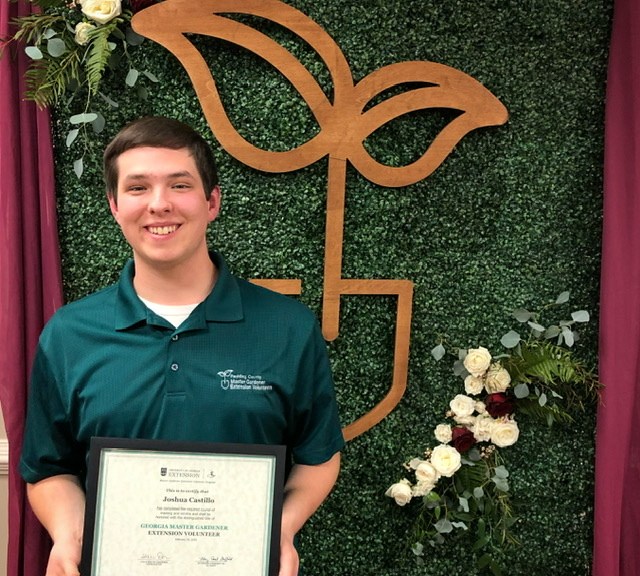
Last night, our family attended a beautiful catered banquet through our local County Extension Office Master Gardener Organization where our oldest son, Joshua, received his official Master Gardener Certificate and official name badge. He is the youngest Master Gardener in our county of 164,044 people (at the time of writing this post.) It was definitely a proud moment for me, his Mama, having watched him grow (pun intended) over the years in his passion and skills.

Joshua receiving his Master Gardener Certification

Of my five children, Joshua is the one that noticed me saving a seed every now and then. Soon, I was finding other seeds next to my collection and now he is a better seed saver than I am! He gets it. He understands that within that seed is life and the potential to keep giving life-giving food to others he loves.

I sometimes call him “Farmer Josh” out of love because he loves to play in the dirt and grow things. We come from a long line of wheat farmers. Joshua’s middle name is fitting, because he is actually named after his Great Grandfather who was a dry land wheat farmer. (Growing wheat definitely isn’t Joshua’s future because we learned he was allergic to wheat dust one year while helping out with the harvest.) Every summer, my family would help bring in the wheat harvest. My grandmother had a large garden and instilled in me from a young age the value of a garden. My parents continued to teach me through growing our own family garden for years and then the busyness of life demanded the need for convenience over preparedness and the garden fell to the wayside and eventually our plot of dirt became grass and then a garage was built over the location.

copyright 2020 Erin Castillo
Our boys in the wheat field as 2 year olds during harvest. Joshua is pictured on the left and Jason is pictured on the right.

When my twins were three years old, my husband got a consulting job in the Southeast, and we moved 3,000 miles across country to Atlanta, Georgia. Our soil profile changed from grey-ash-like soil to red dirt full of clay. I would put rich compost down into my garden beds only to find them return to hard clay by fall. My growing mojo had come to a screeching halt. (I would later learn what to do to re-build the soil profile thanks to new friends made in Georgia and other Master Gardeners.)

Feeling discouraged, I kept thinking there had to be a better way. That’s when I stumbled across a video of a guy on YouTube who was growing tomatoes hydroponically in Bato Buckets. I was fascinated by his methodology and soon I was pouring myself into any resource I could find about how to grow food hydroponically. It was also about this time, that my oldest two sons were studying the difference between human cells and plant cell structures. Since we were homeschooling, I decided to dive deeper into teaching them more about plant biology (botany) and together we were going to learn about hydroponics and how to grow food. My husband helped me guide the boys in building a Bato Bucket system like the one I saw on YouTube and I went down to my local nursery and bought 10 different tomato plants and we transplanted them into our new system. The boys would monitor the pH level and nutrient level of the plants and write down observations. It was a lab of sorts for us to learn from and boy did we learn!

The following year, my husband had a heart attack. It was then that I realized we were not doing enough about eating wholesome vegetables. In my research the previous years, I had narrowed my next hydroponic system to two options. But when our need became more urgent, I knew I didn’t want a DIY system — I needed something out of the box that would just work. (My last DIY system cost as much as the one out of the box.)  He agreed to getting three Tower Gardens by JuicePlus+. Here was our first year’s crop (pictured below).

9996B4F9-1DC7-4CC4-95E9-269B7B12AF98

I was amazed at how easy it was to fit it into my busy lifestyle. No weeding. No effort to build up soil. No nematodes to eat my crop. No irrigation system to monitor or standing there day in and day out to water plants for a half hour while our water bill took a hit. I would just watch the reservoir every week and check pH and nutrients — it was right up my alley. I needed low-maintanence gardening. Joshua dove in with me and helped monitor the growing system as well.

7230F528-A8DE-4B1E-B00B-42E324602593

I also learned of our local Master Gardener program through our Extension Office that shared space with 4H. I took the kids to any free program they had to offer on growing things or even one was on bee keeping. In fact, Joshua won the door prize at one of these meetings and he and my youngest son walked away with some free plants! It was around this time (I think Joshua’s Junior year) that I turned to him and planted the seed-thought of him becoming a Master Gardener. He had the time now to make that happen and then could use the skills he learned for the rest of his life instead of waiting to the end of his life when he retired to enjoy it. He was excited by the thought of that idea and inquired only to find that you had to be 18. He wouldn’t be able to do it as his senior year project. But he didn’t give up on the goal.  He applied for the Master Gardener program that was to begin around the time of his 18th birthday.

908C0205-974C-404D-8426-DCE1736A5E5E

What probably many don’t know is that during this time, our family went through a difficult time. My mother, who lived 3,000 miles away, needed help getting through a situation she found herself in and I had to leave for several weeks to help her. This unfortunately coincided with Joshua starting his Master Gardener training. He took an Uber each day and paid $20 out of his own pocket to get to his classes until other arrangements could be made on his behalf.

One of the great things that I love about the Master Gardener program is the wisdom of those who are involved. I’ve tried to teach my children to reach out to those with grey hair as they are a library of untapped resources. Joshua was blessed to have these amazing individuals come along side him and help him. They loved him because with his youth brought much needed muscles! lol I really wish there could be more young people involved because they are missing out on such a great resource. I want to see what can be done to bring these two groups of people together.

1C7A7BC7-4352-4F17-88D0-44CFBD04E776

Joshua juggled working his required 50-hours of volunteer hours around with working a job. I saw him increasingly frustrated when he would miss a Master Gardener meeting (often held during the day) because he had to work. But it showed me what he truly enjoyed. Thankfully, he came to realization himself and asked if he could work for me and help me instead of continue in the electrical program he was pursuing. I really needed his help knowing that my own goals included the possibility of growing our crops to the point where we could take it to the local farmer’s market to sell. So here we are today, working on our upcoming growing season and it is such a joy to work alongside my son. He’s smart and helps things get done when I don’t have the bandwidth to get to it. Currently, he’s helping me clear some land to do an herb garden installation. He is put in charge of his younger siblings who help him clear out ivy that has overrun the space we plan to utilize. He also is good at cleaning out Tower Gardens and sanitizing them (as well as our cutting tools). We hope to also propagate some of the beautiful resources on our property to sell at the upcoming Master Gardener event this spring. And his favorite thing to grow indoors — orchids!

Joshua Master Gardener

So, last night’s award dinner was truly special and I felt so proud of him for pursuing what he loved. And I feel so blessed to be his Mama and thankful that we have something in common to share over the years. I am praying for Joshua and that the Lord will continue to direct his steps as one day he will have his own family to provide for (and possibly me in my old age, Lord willing!)

Thanks for letting me share from my heart. And if I can encourage any of you with children… learn together! You don’t have to have all the answers or be an expert to be qualified to teach a child. It’s through the process of learning together about something that your children will come to understand that anything is possible to learn about if you just pursue it.

Happy Growing —

Erin

PS: If you ever read this post, Joshua, know that I am proud of you and can’t wait to see what you do next! Never stop dreaming and learning! Love you, Mom


How to Test Germination Rates in Seeds … Did our six year old lettuce seeds germinate?

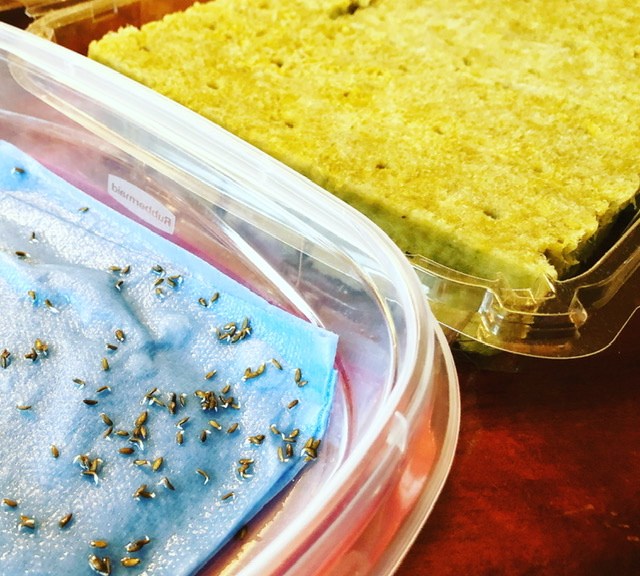
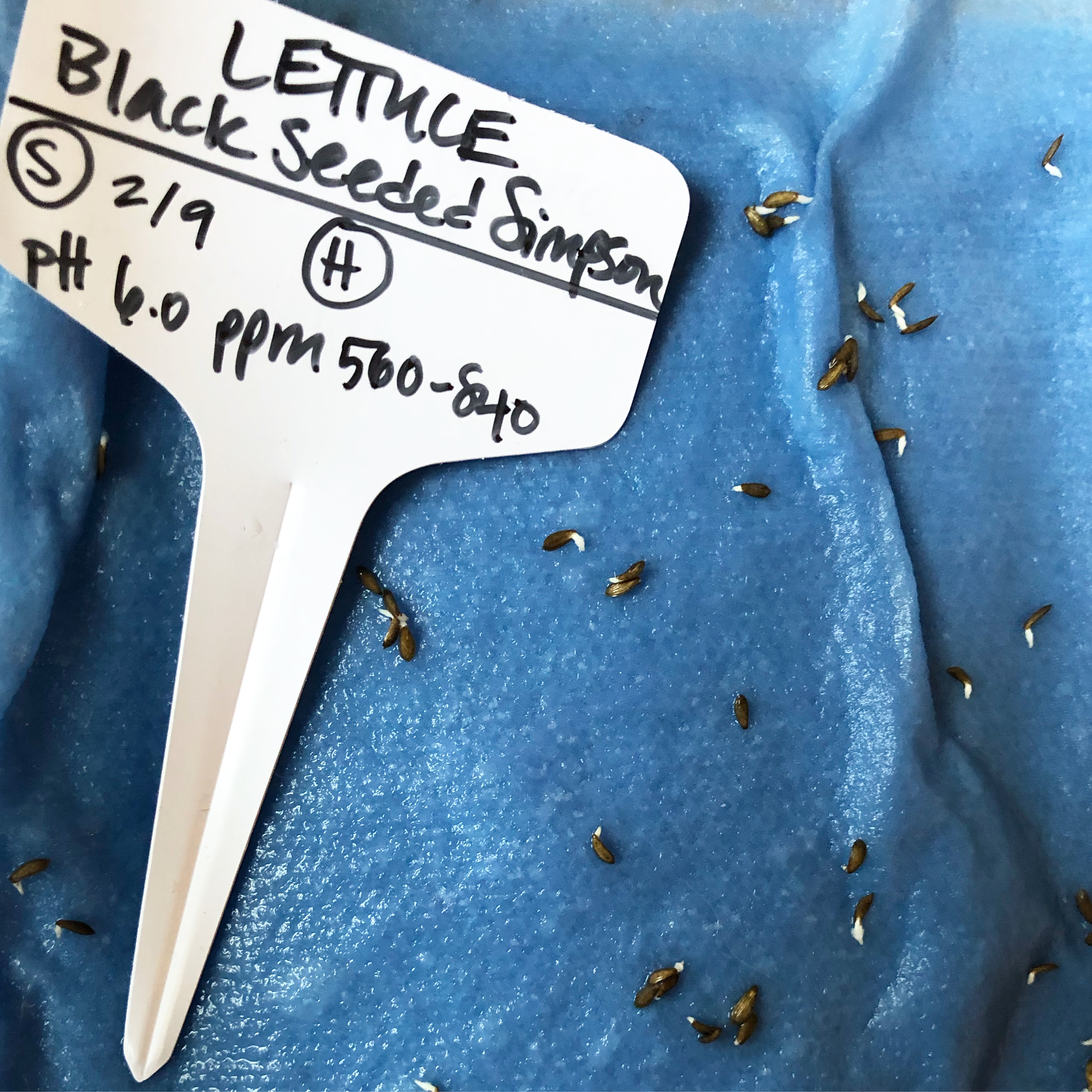
Seed germination rate testThis Black Seeded Simpson seed was packaged in 2014 and we just did a germination test. We placed on a wet paper towel under bright light (lettuce needs light to germinate) at 70°F for 24 hours, covered in darkness overnight and found germination! Six-year-old lettuce seed properly stored germinated! It amazes me the life that is contained in one little seed.
Doing a quick germination test like this prior to ordering seed can save you the hassle and money of purchasing new seed. To calculate your germination rate, take the number of seeds that germinated (evident by the radical root emerging from the seed casing) and divide by the total number of seeds you put in your tray — that will give you the germination rate of your seed.

Because I use rockwool for hydroponics, we can use seeds from this germination test and transfer them into wetted rockwool and continue to grow them in ideal seed started conditions (warming mat to 70°F and bright lights). No seed is wasted! This also helps me conserve my rockwool.

Germinated seed awaits going into rockwool

To transfer germinated seeds, I take a tweezer with (the kind with a flat edge) and clean them with rubbing alcohol and finish off with a quick rinse of water. I gently pick up each germinate seed with the tweezer and drop it into the hole of my rockwool making sure to not plant the seed too deep. General rule of thumb whether sowing soil or into another planting medium like rock wool is to plant seed as deep as it is wide. I sometimes use the plastic tip of my nearby plant marker to slide it off of the tweezer tip as we don’t want to crush the seed embryo (still inside seed casing). I also plant two seeds per rockwool cube (in case one doesn’t make it for some reason.) I can always thin out to one plant as the seed grows into a seedling.

If you want tips on how long seeds can last when properly stored, check out our handy guide here.

Happy Growing!
— Erin


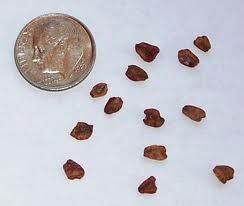
PS: Food for thought… Jesus said you need only to have faith in Him — even if it’s as small as a mustard seed… Think of how much life is just within a little tiny seed. The giant redwood tree, for example, comes from something that is so tiny… if God can create a magnificent and awe-inspiring tree, how much MORE amazing and beautiful are you who is made in His own image.

Redwood Seeds Scale to a Dime giant-redwoods

“He told them another parable: “The kingdom of heaven is like a mustard seed, which a man took and planted in his field. Though it is the smallest of all seeds, yet when it grows, it is the largest of garden plants and becomes a tree, so that the birds come and perch in its branches.””
‭‭Matthew‬ ‭13:31-32‬ ‭NIV‬‬
https://www.bible.com/111/mat.13.31-32.niv