If you’re looking to grow really big — I mean REALLY BIG — tomatoes… the kind you might even break a state record size of tomato, you’ll need to start with good seed DNA. There are certain tomato varieties that tend to grow to a larger size when given proper nutrients, pH, and pruning.
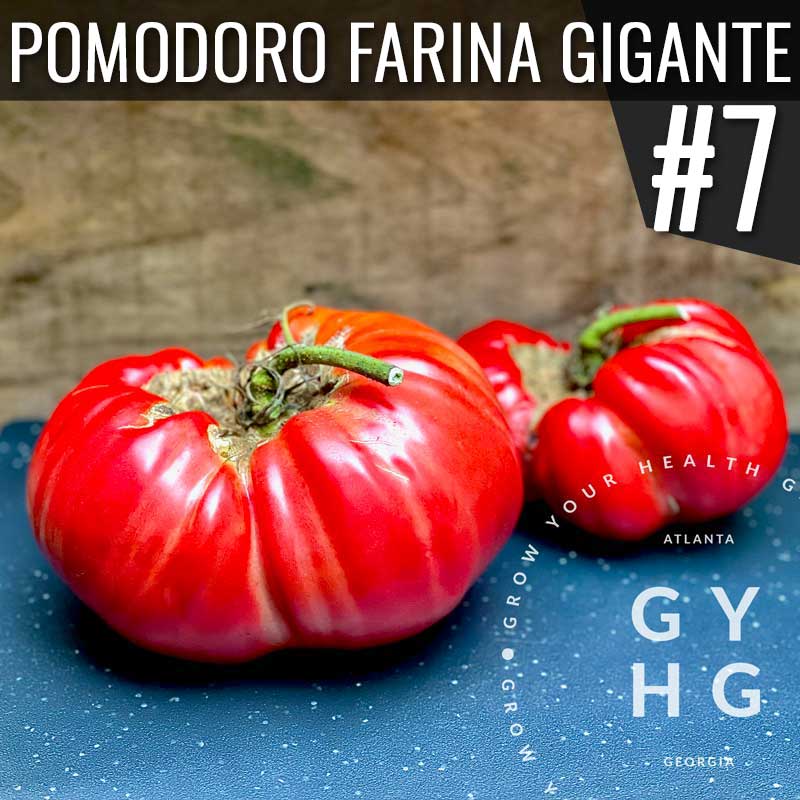
Pomodoro Farina Gigante is a great tasting BIG tomato slicer that is reputed to break records from Italy.
At the time of publication, the current 2021 Guinness Book of World Records for the heaviest tomato was grown by Dan Sutherland (USA). His monster tomato was of the “Domingo” variety and weighed 10 lb 12.7 oz (4.896 kg) when measured in Walla Walla, Washington, USA, on 15 July 2020. The achievement was authenticated by the Great Pumpkin Commonwealth (GPC).
It had a circumference of 33 in (83.8 cm), contributed to by a number of outgrowths on the fruit known as “dingleberries” — something that can be common among giant tomatoes. This is the second time that Sullivan has held this Guinness record. He grew a 3.906-kg (8.61-lb) tomato in August 2016. According to Guinness, “the mother seed for this new record-breaker was derived from the previous record plant.”
No matter if you’re wanting to grow a record breaking monster-size tomato to win titles or simply wanting a nice big tasty slicer for your summer time BLTs, these are the varieties that typically grow larger in girth.
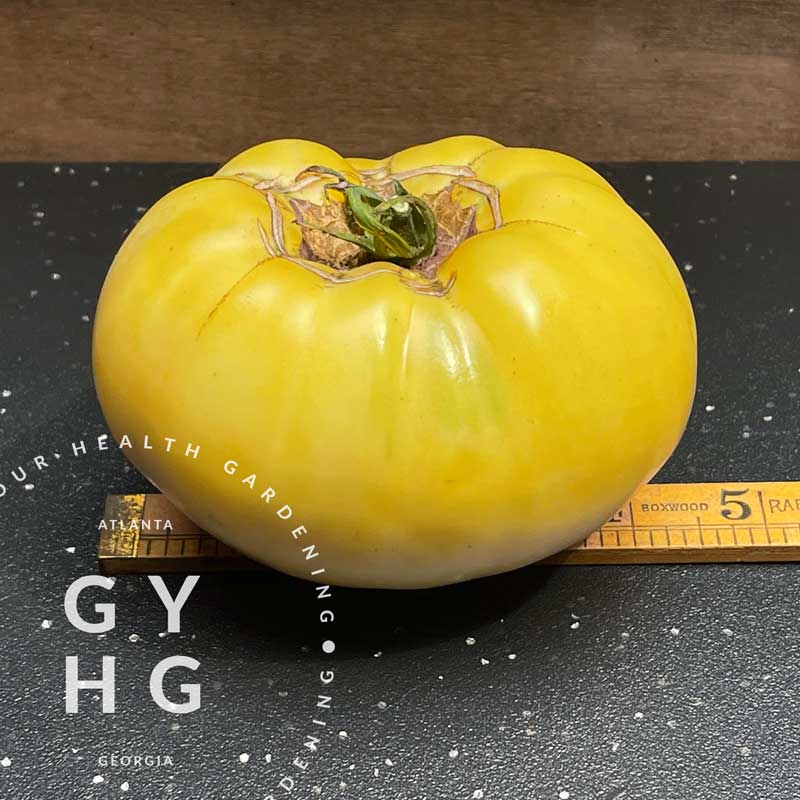
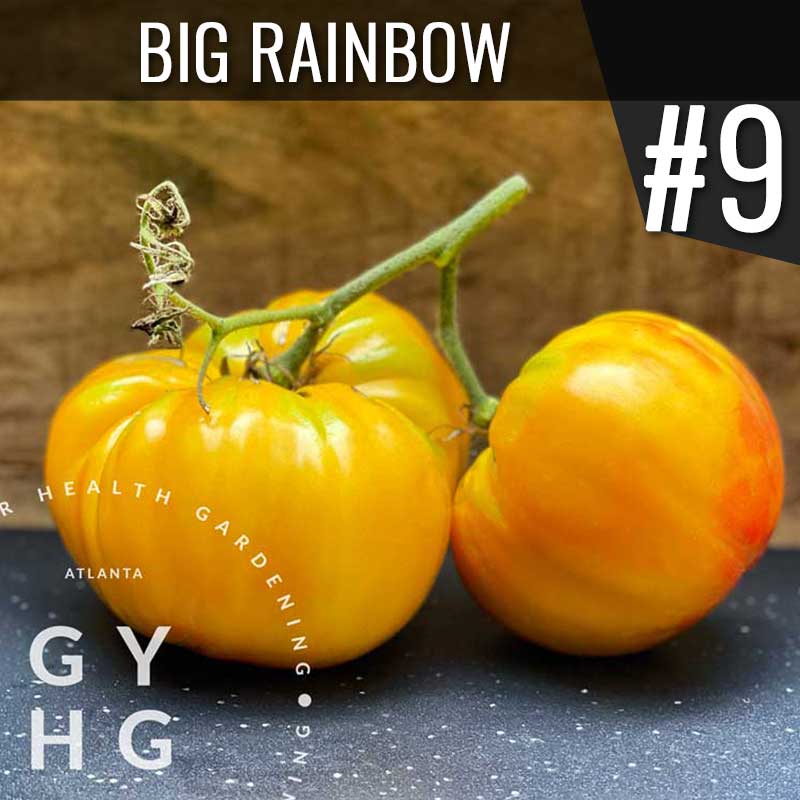
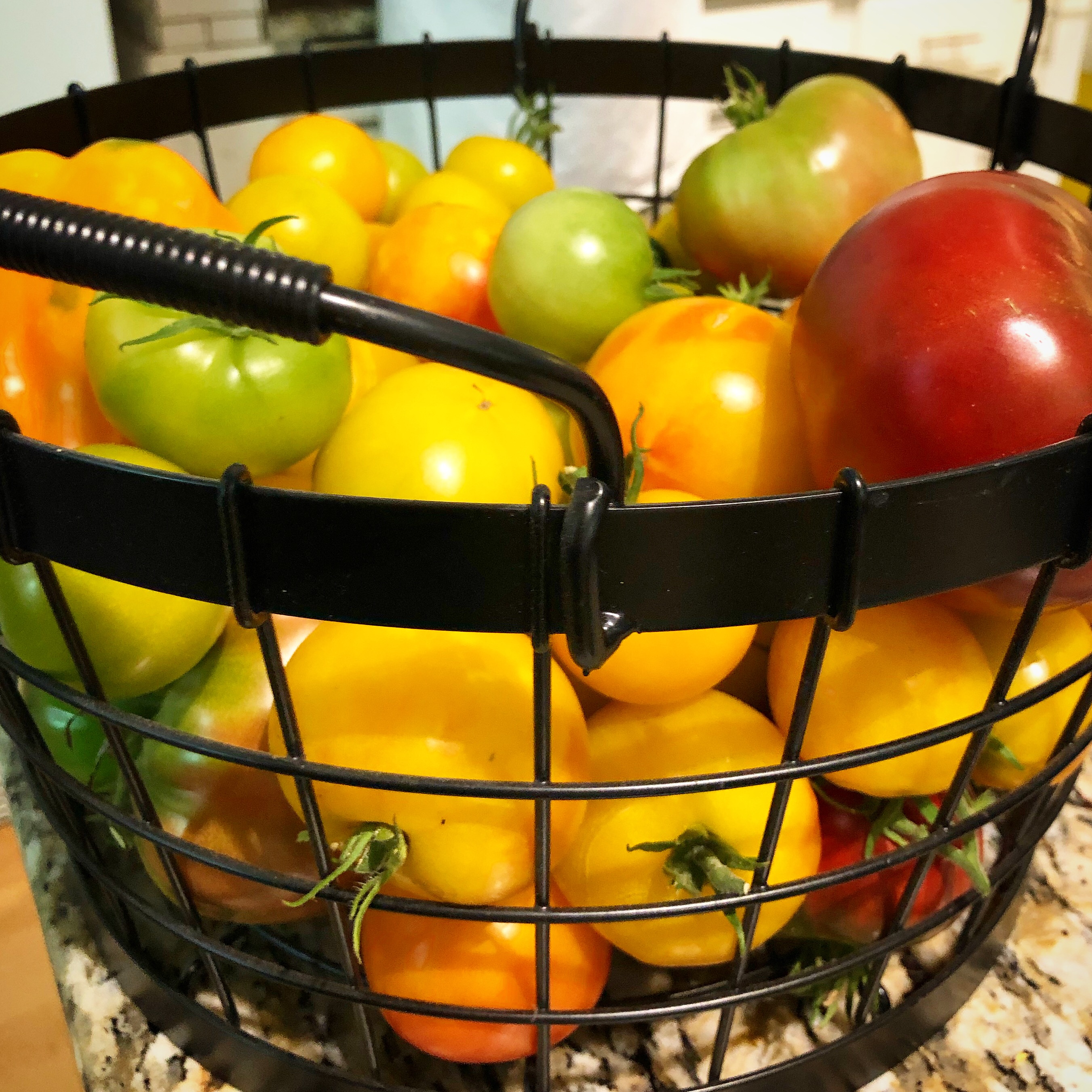
Big Rainbow Heirloom Tomato is a great producing bi-color slicer. As you can see, she produces thick stems to easily handle the weight of big fruit in clusters of 4-6 buds.Great White Heirloom Tomato is a low-acid tomato that produces big slicers almost 5″ wide.Apricot Brandywine Tomato is a large slicer producing not only great tasting tomatoes but a good crop of them. This particular variety produced the most weight overall when compared to our other cultivars.
I like to know if a seed has germinated before it ever goes into soil or a piece of hydroponic Rockwool. There’s an easy way to know if you have viable seed and that is through a technique that simply requires a sheet of paper towel, a container with a lid, water and a consistently warm location 72ºF-76ºF. You can learn more about how to set up these pre-germination conditions on our blog here, but if you’re already familiar with this method, here is a quick visual of what you’re looking for with pepper seeds and when to transfer them to either soil or Rockwool (Rockwool is used for soilless hydroponic / aeroponic growing systems).
The seed that is circled in green is ready to gently transfer to soil or Rockwool using a sanitized tweezer. (To sanitize your tweezer, simply clean with rubbing alcohol.) The seed circled in yellow shows swelling and indicates that you should probably check it the next day as the root is getting ready to emerge.
The other seeds are slightly swollen showing that they are still in the process of germinating. Do not give up on seeds that are slower to germinate — sometimes they can take up to 10 days even when you are providing ideal conditions. Check moisture daily and if paper towel smells funky, swap out for a new paper towel and rewet and put back into germination chamber container.
Below is a photo showing germinated seed that has been placed into Rockwool (see number one below). If you are growing in a hydroponic growing system such as a Tower Garden or Aerogarden, you’ll want to place your seed in Rockwool instead of soil. (Coco Coir is also a good alternative growing medium for hydroponics or aeroponics assuming it has support to hold material together such as in a mesh net.)
I like to cover my seeds with vermiculite. Some hydroponic growers insist that this step isn’t necessary, but I like to make sure my seeds receive adequate moisture throughout these early stages of growth especially. Strong healthy seedlings, make for strong healthy plants. I use this process for pepper, tomato, and eggplant seeds and any seeds that are not super small. Remember, some seeds need light to germinate (like lettuce), so be sure to reference our cheat sheet before starting seeds to know if your seed needs light, no light, or if it doesn’t matter.
Rockwool is a fantastic growing medium as it has air pockets and is good at holding water. Keep moist, but not sitting in water.
Hope that helps! Remember, we have a great assortment of hydroponic-adapted tomato and pepper seed available in the seed store. Be sure to check it out!
Grow Your Health Gardening (GYHG) Seed Co. has been identified as February Star Seller on Etsy for the second consecutive month of 2022 and received a perfect score of 100 percent in every category for exemplary customer service.
To achieve “Star Seller of the Month” status, orders had a perfect score offering on-time shipping guidelines 100% of the time (a one day turn-around with USPS tracking on every order), communication response within 24 hours was 100% of the time, and Grow Your Health Gardening Seed Co. received 100% 5-Star Ratings from customers who received their seed orders. We provide the same wonderful service on our online store! (Which is our primary store.)
Here’s some of what our customers are saying about Grow Your Health Gardener Seed Co.’s service and quality grow with organic methods seeds:
★★★★★ “These small seeds arrived in great shape. I planted just a few of them right away. They are already coming up! I am so happy with these rare tomato seeds!” — Sully
★★★★★ “My seeds came perfectly marked with a lovely thank you note and a helpful chart of past repelling plants. I could not be happier with my purchase and cannot wait to plant my little seeds with my kids and watch them grow. Thank you!!!” — Crystal
★★★★★ “Got here really quickly! Would buy form again! Can’t wait to start growing ^_^!” — xstiney
★★★★★ “Wonderful seed company with lots of information that comes with your seed order. Also check out the website. They have tone of wonderful seeds and information on it.” — Royal W
To purchase hydroponic-adapted seeds and seeds grown in the soil in the Southeast Zone 7B, you can order on Etsy.com or better yet, for the latest updates and product releases visit Grow Your Health Gardening‘s online store.
Live screenshot of Etsy Star Seller Dashboard for Grow Your Health Gardening
The Star Seller badge is Etsy’s way of recognizing sellers with a proven record of providing a great customer experience. To become a Star Seller, your store must meet certain criteria for messages, shipping, ratings, orders, and sales. If these core fundamentals of delivering great customer service are achieved, a shop may receive a badge that shows buyers that a shop has consistently provided an excellent customer experience.
{We shared this info with our followers via email at the end of December, but wanted to share on Grow Your Health Gardening as well. If you want to get our emails (where we share information first on new releases and other tips first) you can do that here: https://store.growyourhealthgardening.com (page down just a little bit and you’ll see the spot to enter your email.)}
The results are in! Last season (2021) we counted and weighed every tomato that came off the vine and was harvested. Totals reflect equal number of plants per variety. If you’re looking for varieties that produce a multitude of blossoms and tomatoes, then this is YOUR LIST to grab. We will also include links to each tomato variety if you’re interested in getting homegrown seed grown using organic methods. All of this tomatoes were grown hydroponically meaning the tomato plants received the perfect pH level and ideal nutrients throughout the season.
If you have any questions, feel free to ask in the comments below. (But remember, our data is propiertary and we cannot share specific weights.) So here we go… ready? And the top ten biggest producers out of 75+ varieties (by weight) are…
It was originally bred by Tom Wagner and is a determinate variety. It only gets a couple of feet tall and needs only a little support making it ideal for containers and small space gardening. It grows nicely in 5 gallon felt containers or Bato Bucket systems and is a heavy producer — boy does it produce blooms! Wowza! If you plant this variety every two weeks in the first part of the growing season, you will have a bushel load of tomatoes that can be used for slicing, salsa, salad, sandwiches, canning, drying, Fried Green Tomatoes… you name it! This is one I can’t wait to grow again!
We were drawn to this tomato for it’s beautiful coloration when sliced open! Big Rainbow Tomato is a beautiful bi-color slicer tomato variety with early tomatoes weighing 2+ pounds with very little cat facing or deformities. It has good resistance to foliar disease and is an indeterminate.
Big Rainbow Tomato variety will ripen with color shades showing green on the should, yellow in the center, and red towards the bottom. When cut open, it will have bi-color shading of yellow and red making it a beautiful slice on the plate or sandwich. It has more flesh than seed ratio, so also serves well for using to make sauce.
We have adapted this seed to grow in a hydroponic system using organic methods and so even though it will grow in soil just fine, it is especially suited for hydroponic home growers using a Tower Garden, Bato Bucket system, or the Farmstand.
Thornburn’s Terra Cotta Heirloom Tomato is a joy to grow! Not only does it taste wonderful, but it’s color looks beautiful mixed in with other sliced standard red tomatoes. It’s outer skin and inside flesh of the tomato has a most unique color — it’s a mix of a chartreuse green and terra cotta — some call it a honey-brown shade, but our trials seemed to be more colorful than that.
If you especially love history, you’ll want to grow this tomato to preserve the seed for future generations because it is now 129 years old! It was originally introduced in Thornburn’s 1893 Seed Catalog. This is one easy slicer you won’t find in the grocery store aisle and will want to try!
In all fairness to Pomodoro Farina Gigante Tomato, we were pruning this plant to get an exceptionally large tomato, so the overall weight for production may have been affected as it didn’t put out as many blossoms as it would have normally produced. With that said, this cultivar still weighed in making the Top 10 and is definitely a BIG TASTY classically robust Italian tomato!
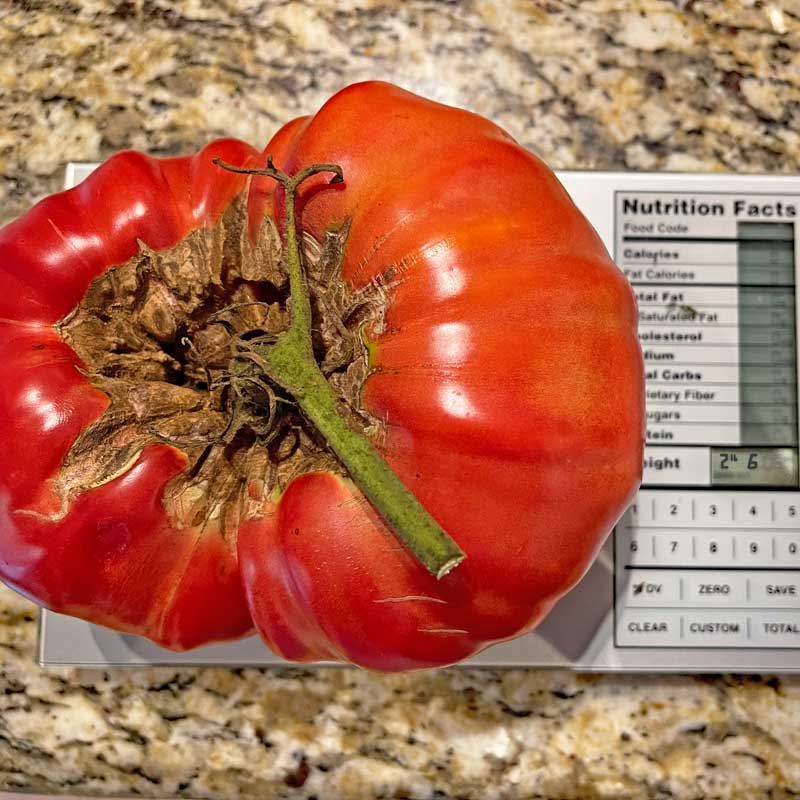
This line of Pomodoro Farina Gigante Tomato seed DNA comes from the work of Mario Quattrocchi from Cuneo, Italy and originally from Remo Farina, a retired truck driver originally from Bleggio, Italy. Mr. Farina holds the record for the largest tomato in Italy and worked tirelessly for years to acheive his record breaking tomato. Our trials produced a 2 pound, 6 ounce tomato and others that followed ranged from 1.5-2 pounds. If you want to grow a large tomato, then this variety is the one to try!
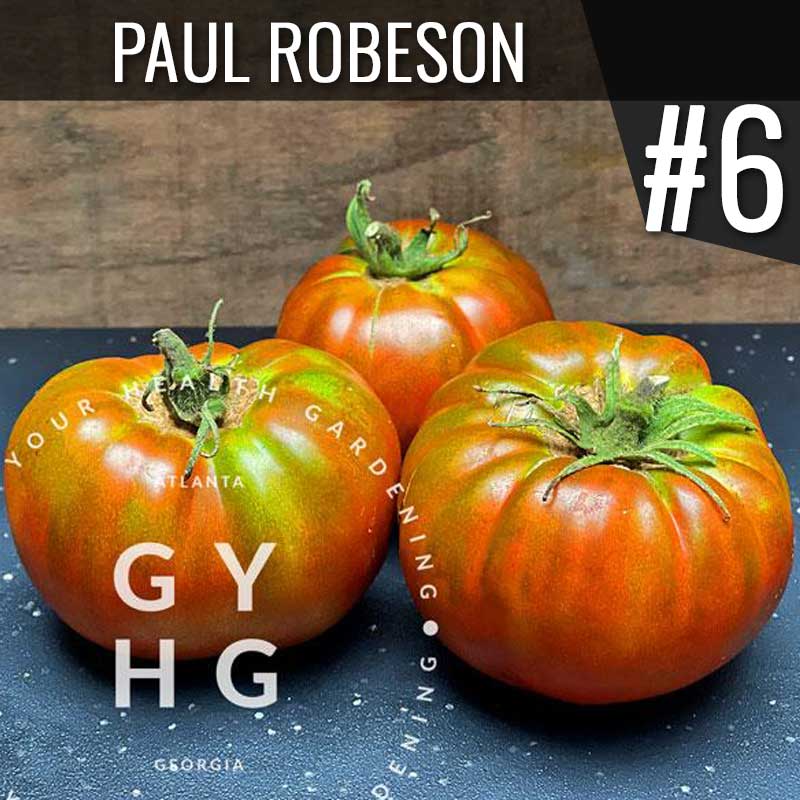
#6 MOST PRODUCTIVE 2021 SLICER TOMATO VARIETY: PAUL ROBESON HEIRLOOM TOMATO
Paul Robeson Heirloom Tomato is a nice slicer variety with a low seed count making it ideal for BLT sandwiches or it can even be used for making tomato paste. It has less acidity than traditional past varieties and a mild sweetness to it (though not as sweet as Cherokee Purple in our opinion). If you love Cherokee Purple, then you’ll enjoy this very similar, but more productive tomato variety. (At least grow the two varieties side-by-side and decide for yourself which one you like the best and share your opinion in the comments below.) Want to learn more about who Paul Robeson was in history? Click here
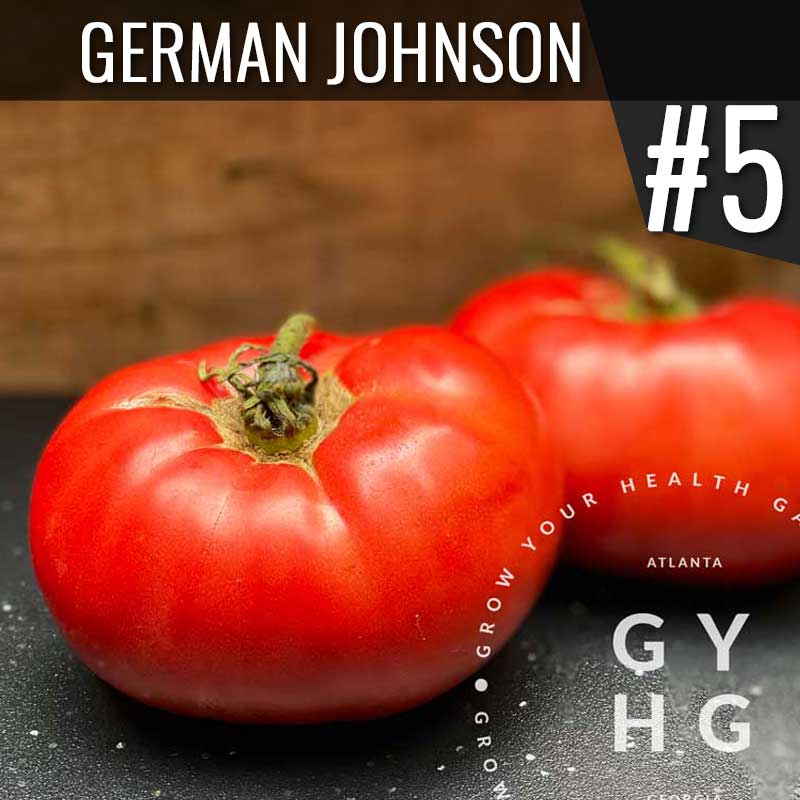
German Johnson Heirloom Tomato is a highly productive and excellent tasting pink heirloom. It is slightly smaller than a Brandywine and it has a deep acidic classic tomato flavor. It is a gorgeous tomato on and off the vine! This is a regular-leaf strain which can tend to come in earlier and is more productive than the potato-leaf strain. Can be used as a slicer or as a paste tomato. Very versatile and one of our favorites from this past growing season!
Nostrano Grasso Italian Heirloom Tomato is a very rare heirloom from Italy and mainly unheard of in the United States. It produces medium-sized tomatoes and is duo-purposed as a smaller slicer, but also a great sauce tomato. It has superb tomato flavor with a hint of sweetness. It just kept pumping out the tomatoes and didn’t get flower drop even in higher Hotlanta summer temps here in the Southeast. If you’re looking for authentic Italian flavor and a good producer, this is your tomato! Such a pretty tomato on the vine and on the plate!
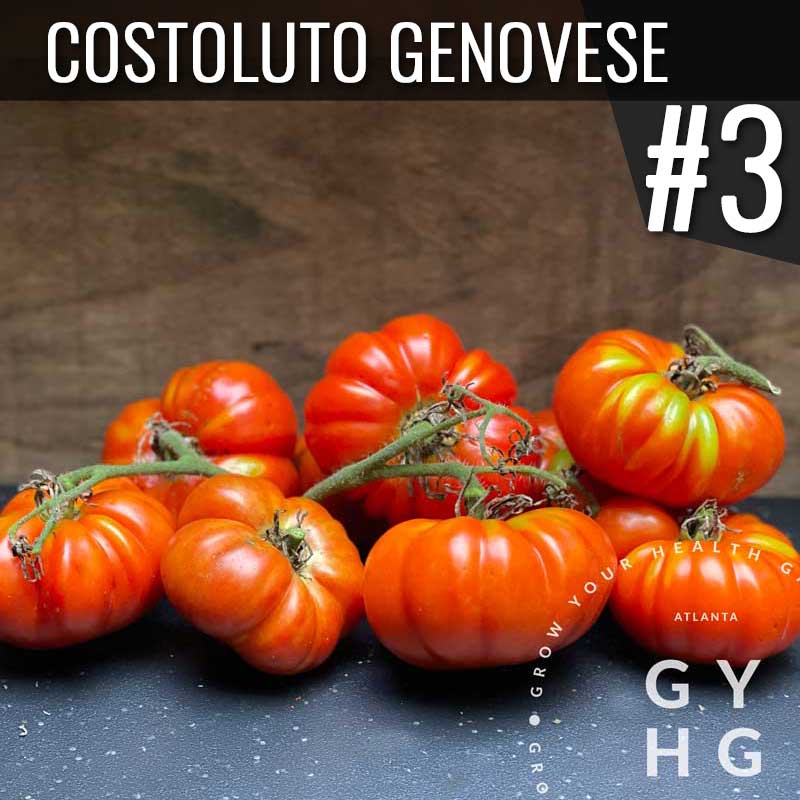
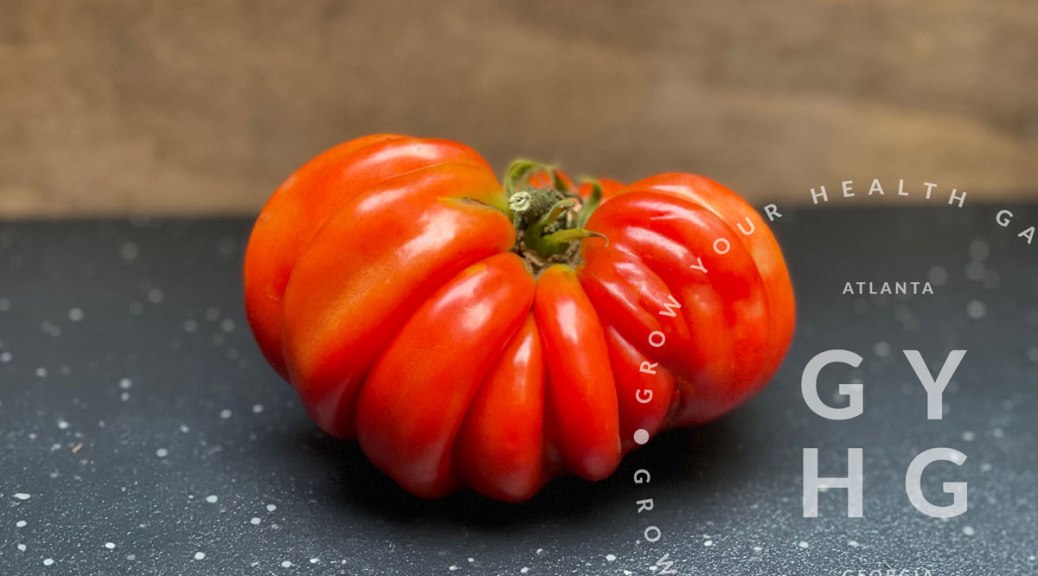
This variety pleasantly surprised us as well with it’s consistent production and final weigh-in totals. Costoluto Genovese Italian Heirloom Tomato is popular with chefs and a standard in Italy for both eating and preserving and we can see why! It has beautiful ruffled ribbing, so when it’s sliced, it looks pretty on the plate. Classic intense Italian tomato flavors. It was productive all season long no matter the temp. Definitely a keeper!
Olga’s Round Chicken Tomato is a heavy producer of almost perfectly round globe-shaped tennis-ball sized tomatoes. Not only does this tomato variety have a funny name (which truth be told is what drew us to explore and grow it), but it’s also super tasty and looks great diced in salsa or sliced on a sandwich!
I can see why Brandywine cultivars are a favorite among many tomato grower enthusiasts! They consistently produce big slicers through high heat when other cultivars wane. Apricot Brandywine Heirloom Tomato is a wonderful yellow-orange beefsteak type of slicing heirloom tomato. It has a leaf that mimics a potato leaf and produces beautiful apricot-colored tomatoes that weight a pound or so. This variety is perfect for sandwiches and has a fantastic aroma as well! It’s a gorgeous and tasty tomato that produces all season long. Check out what the inside of this tomato looks like in the video below:
If only we could also let you taste it! If you want a lot of big juicy tomatoes, this is one to try!
And that’s how the slicer-type tomato trials went last growing season! We will tuck away this data and refer back to as we continue to grow out and adapt other cultivars in growing seasons to come.
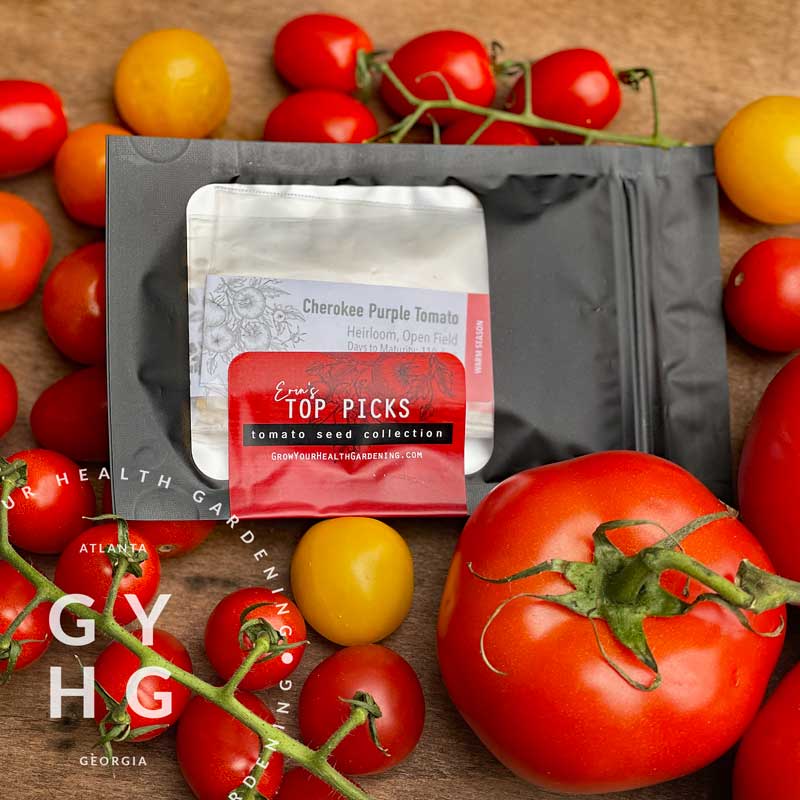
If you like trying unique tomatoes you can’t find in any grocery store or Farmer’s Market, we’ve put together a collection and discounted it for our customers. Be sure to check out “The Tomato Lovers” Collection and as well as “Erin’s Top Picks” in the shop! Which new variety will you choose to grow this coming year?
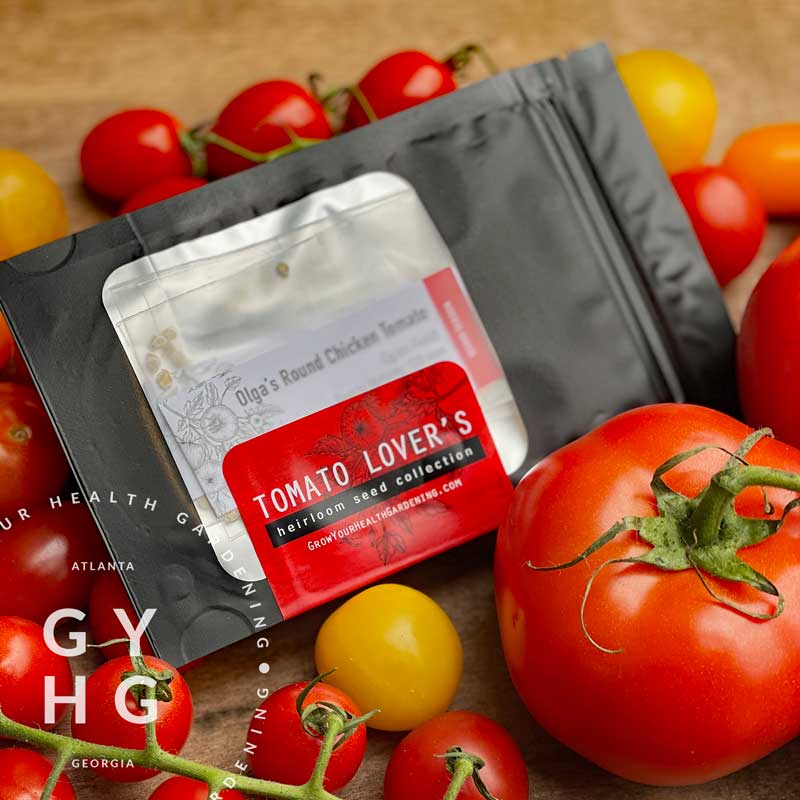
Grab several varieties of heirloom and open source tomato cultivars at a discounted price compared to purchasing individually with our Grow Your Health Gardening Tomato Lover’s Heirloom Seed Collection pack.
I’m scheduled to give a “Tomato Talk” to a local group of community members who are interested in growing their own tomatoes from seed in the next 10 days and in the process for preparing for this talk, I thought I’d do a little soil test for what makes for a strong seedling and share it with y’all as things grow so that you can grow your health through gardening and learn tips for what I learn along the way. 😉
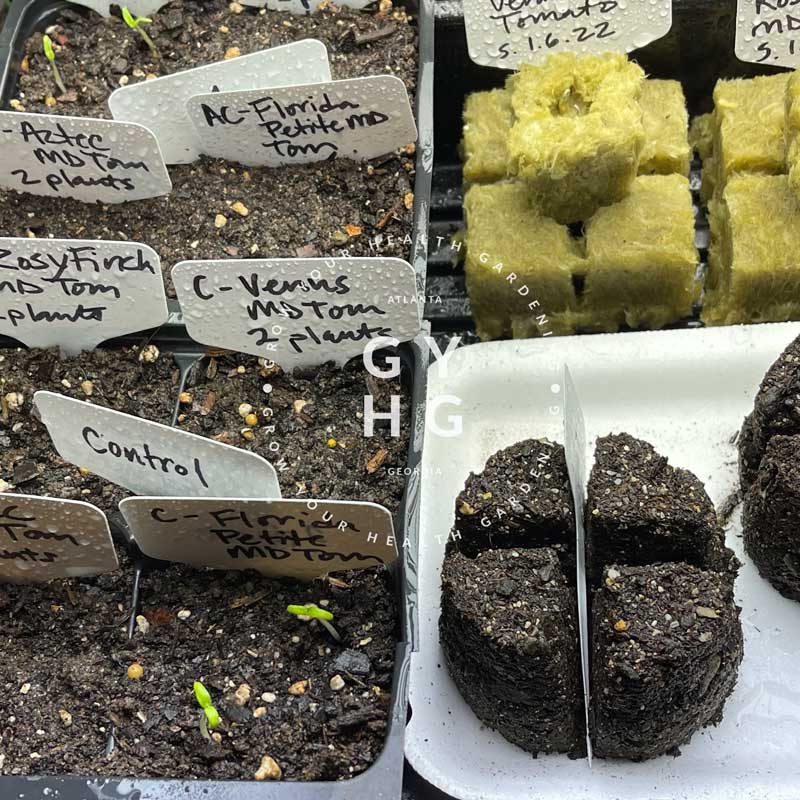
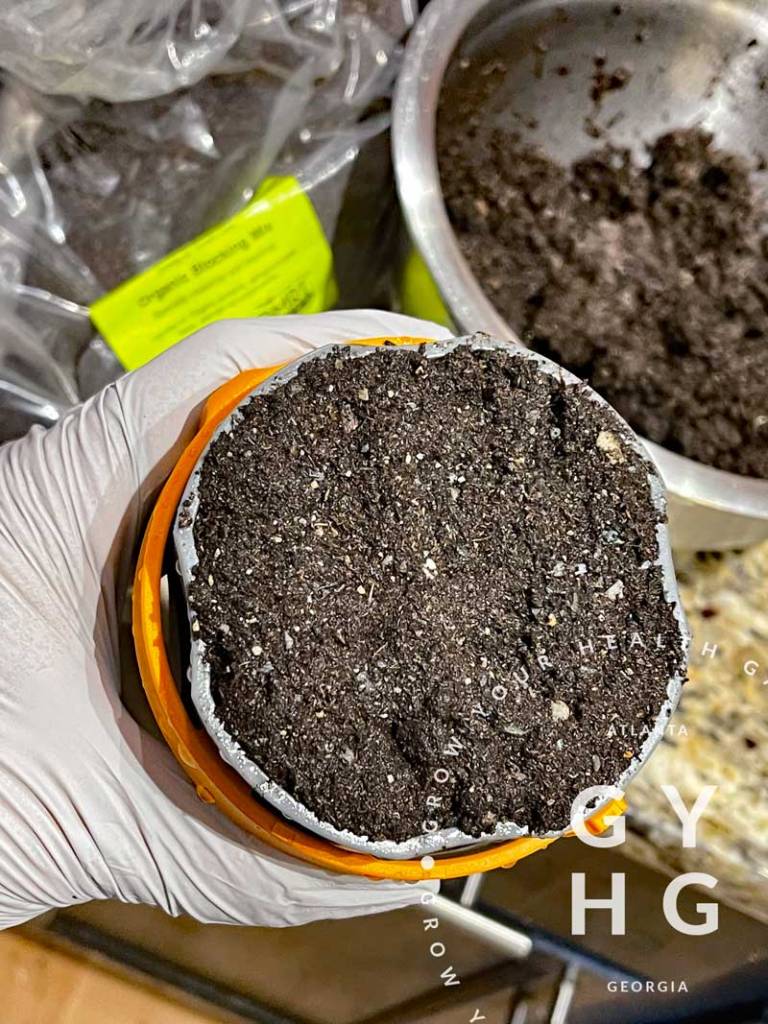
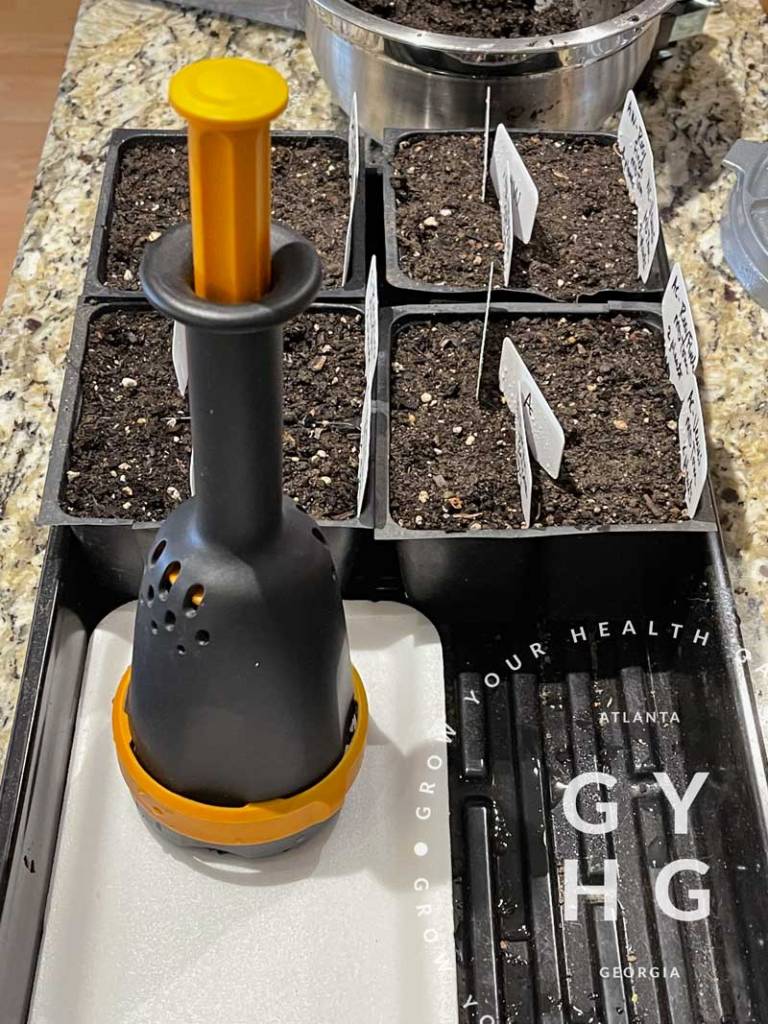
I took four (4) 4-pack planting trays and used the same batch of sifted soil for all four packs. The control 4-pack is straight up soil only. The second 4-pack I amended the soil with worm castings only. The third 4-pack I amended the soil with activated charcoal from a company I heard about and am trialing their product before bringing it to sell in our store and online. The fourth 4-pack soil is amended with the same ratio of worm castings as the second 4-pack as well as the same ration of the third 4-pack of soil with activated charcoal (so this final 4-pack has both amendments in it.)
A glimpse of our current seedling test subjects.
I then repeated the same amendments in another batch of similar soil, but put it in a soil block and amended certain soil blocks with worm castings only and activated charcoal castings only and a mix of both worm castings and activated charcoal. I also included rock wool just to compare growth of seed in this substrate as well. The rock wool will need to have kelp diluted and added to it as the seedlings grow as the rock wool is pH neutral and is devoid of nutrients.
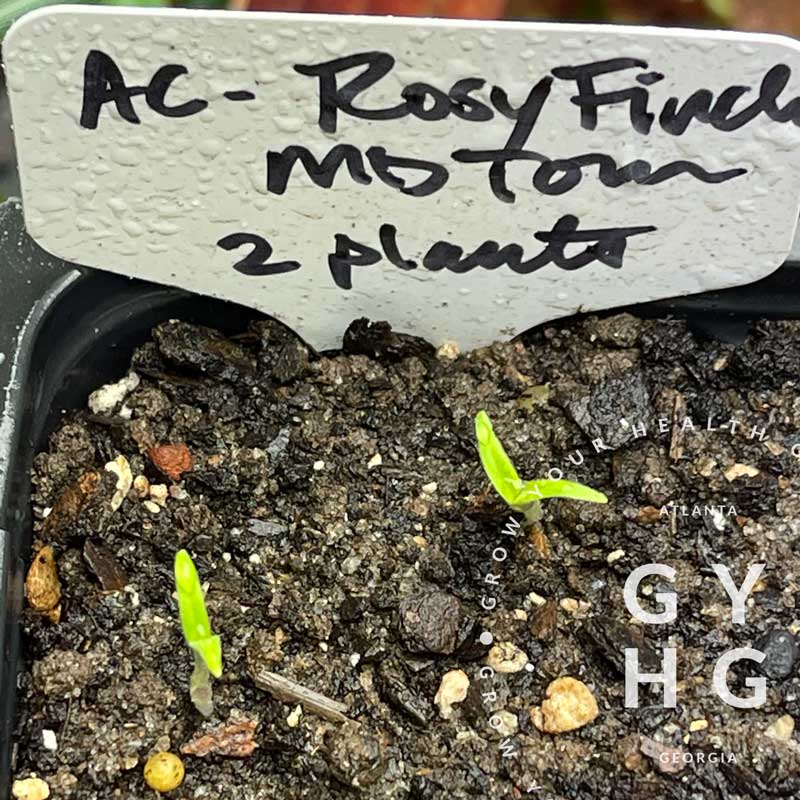
For plants, I chose seed that was from the same lot, same harvest, same parent plant. All seed is our homegrown line of seed that we’ve saved and developed season after season, so I am confident that we have good strong seed stock to run the test. I chose to plant microdwarf tomatoes, because we are in the middle of winter here in Atlanta, Georgia and I can grow micro-dwarf tomatoes indoors under lights and evaluate results before our busy season of the summer harvest begins. We selected different micro dwarf tomato cultivars including Florida Petite Microdwarf Cherry Tomato, Rosy Finch Microdwarf Cherry Tomato, Aztek Microdwarf Cherry Tomato and Venus Microdwarf Cherry Tomato.
Rosy Finch Micro Dwarf Tomato Seedlings pop out of the soil ready to reach for the light.This is a Fiskars Soil Block that is a plunger style and easy to use. You can make soil blocks of four or one larger soil block.Setting the first soil block with the other four 4-pack trays already finished and planted.Small bits of Activated Charcoal in equal parts and mixed thoroughly in each 4-pack of soil as well as equal parts of worm castings mixed well in 4-packs of soil keeping things as consistent as possible. We are testing to see if the activated charcoal makes any significant difference before carrying a product in our store. Stay tuned!
To gauge results, we will weigh all produced fruit and count the number of blossoms and the number of final fruit set by each tomato plant. I will do my absolute best to give equal amounts of water by first measuring what each plant is given and offering the same amount to each plant.
My hypothesis is that the air pruning action of the soil blocked starts will produce stronger seedlings for transplanting in the long run because when that root hits the air, it will signal to the plant to produce roots on the interior of the soil elsewhere. More roots will mean the plant has more opportunities to take up moisture and nutrients in the long run. I also think the soil block with BOTH worm castings and activated charcoal will perform the best because the worm castings will further any biological activity that may be happening within the soil and “cling” to the activated charcoal which the plant can tap as it needs.
That’s my best guess, but I could be wrong! We shall see what plays out in our little science experiment. What do you think will perform the best and why? Tell us in the comments below!
Happy New Year! As we look forward to the year ahead, it’s time to start thinking about what kind of nutritious food can be grown!
We’ve wrapped up our trials from 2021 and data and out of all the many cultivars grown of tomatoes, I’ve settled on these being my favorites to try in 2022.
When growing tomatoes, it’s always a good idea to think about HOW you plant to consume and use them. It will be a big help to you to evaluate this as it will determine what kind of tomato you should grow. And the BEST part of growing tomatoes is you can enjoy great taste as well that surpass anything that can be found at your local grocery store!
Here’s Erin’s tried and tested picks:
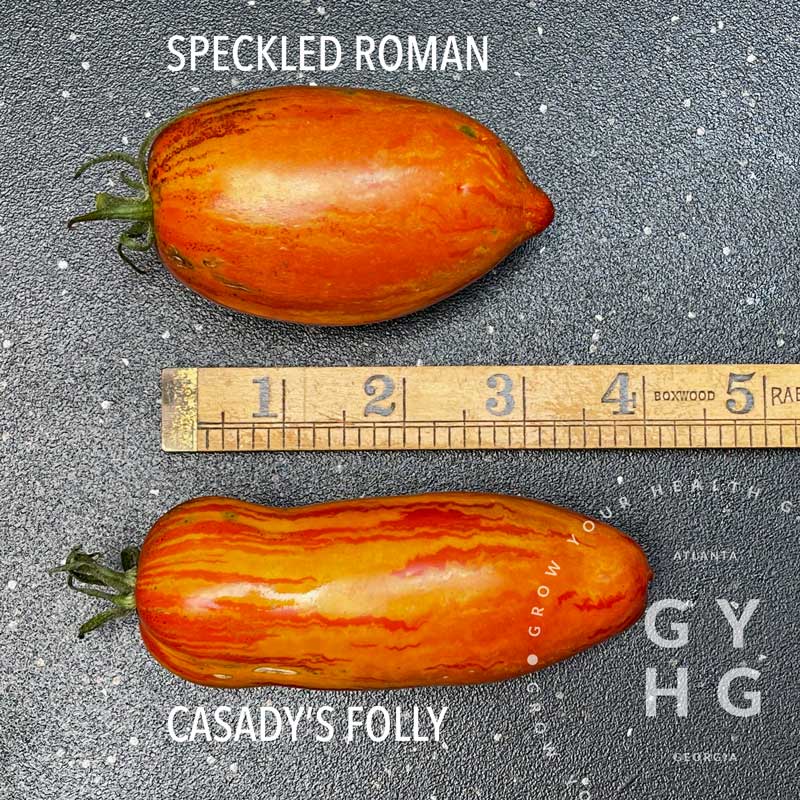
Casady’s Folly Paste Tomato(Sauce or Slicing) Why Erin chose it: “This variety is from tomato and potato breeder, Tom Wagner, of Washington State. It is a fantastic producer and beautiful on and off the vine. It is super versatile as well… you can slice it and add to any recipe that asks for a chopped tomato. It excels for making sauce. When compared to equal number of plants, it even out-performed 3.65x times the popular similar Speckled Roman paste variety. Casady’s Folly had more bud production and peaked in mid-July, but just kept pumping out the tomatoes until the end of September earning its spot as my top pick this growing season.”
Cancelmo Family Heirloom Paste Tomato(Sauce or Slicing) Why Erin chose it: “Cancelmo Family Heirloom Paste Tomato is a wonderful oxheart-type tomato variety. It steadily produces good size meaty fruit making it a wonderful option for great tasting sauce, but can also make a nice slicer for BLT sandwiches as the size fits a slice of bread well and has low seed/pulp ratio. Because doesn’t produce as many seeds, we may swap in another variety once we sell out of our inventory with another variety that also performed well, so grab it while it’s part of the collection while you can.”
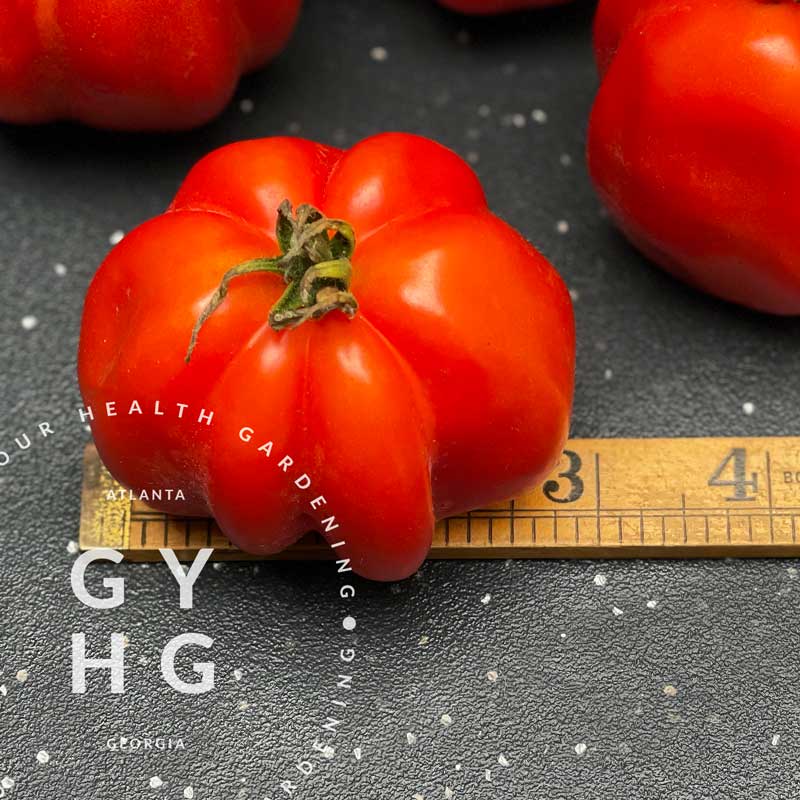
Charlie Chapman Heirloom Tomato(Slicing or Stuffer) Why Erin chose it: “I was originally attracted to Charlie Chapman Heirloom Tomato for it’s ruffled mid-size appearance and that it was touted as a good stuffing cultivar. I think part of the fun of growing food you can’t find in the store is using it in new ways in the kitchen. It’s a great way to add interest to what you’re eating and delights younger children as well. It did not disappoint and actually produced well throughout the growing season. This is a red tomato, but an orange-tinted red. I love how they look like miniature pumpkins.“
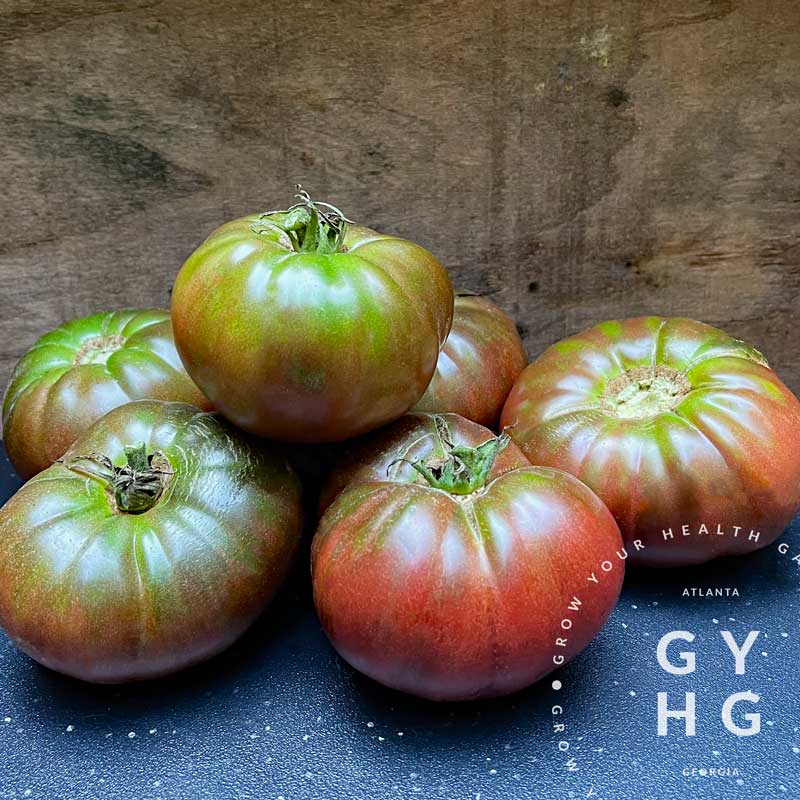
Cherokee Purple Tomatoor Paul Robeson Tomato ((Sauce or Slicing) Why Erin chose it: “Cherokee Purple is one of our favorite tasting tomatoes. It’s not our biggest producer, but I chose this variety based on its flavor profile. Our seed comes from local stock and has been adapted over several generations. In fact, when I compared my seed to other seed providers, our seed was larger and more plump — these are traits that World Guinness Book Record holder, Charles Wilber, recommends looking for in seed with good DNA.“
Wagners Salad Green Tomato (aka: Green Elf) (Sauce or Slicing) Why Erin chose it: “We love fried green tomatoes and this determinate variety just pumped out nice firm green tomatoes much to our delight. The multiple buds it produced and actually set was amazing. I did have to prune it a bit for the Southern climate and for airflow, but I loved the thick sturdy stalk it had and the amount of production we got out of it. It’s a versatile tomato that looks pretty when added to red varieties in diced salsas or topping tacos or salads as well. “
Nostrano Grasso Italian Tomato(Sauce or Slicing) Why Erin chose it: “I was drawn to this variety because of the rariety of it in the United States as an Italian variety. I also thought the slight ruffled look of it was pretty and it did not disappoint. The production was wonderful and the tomato taste true Italian tomato flavors rang through checking all the boxes for me for a fantastic cultivar to grow. “
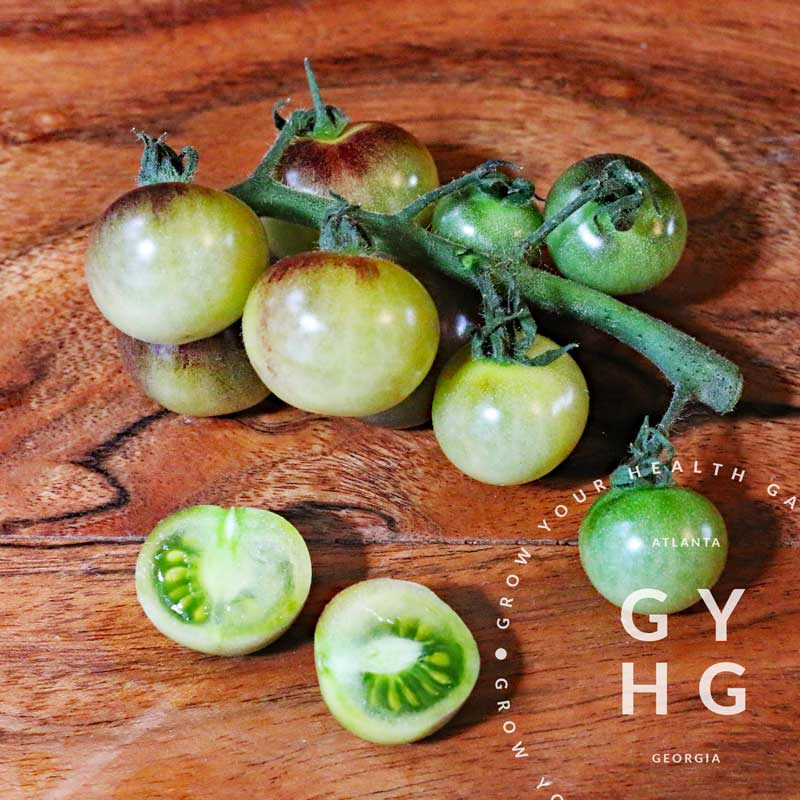
Blue Cream Berries Cherry Tomato(Salad Topper or Snacking) Why Erin chose it: “This is a most unusual tomato. It looks unimpressive on the vine, but I always love to share it with my guests that come to the garden, just to see their look of surprise when they taste it. Your mind thinks it’s going to tart, but it’s not. It’s unlike any other tomato I have tried to date and the fact that it is known to also have those purple shoulders containing anthocyanans, well, it’s a tomato we should all be enjoying on salads or for snacking. What’s interesting is that the second year of adapting this variety the first fruits that came on where actually bigger than the previous year. This will be one I continue to grow out and adapt through hydroponics in the Southeast.“
Black Cherry Tomato(Salad Topper or Snacking) Why Erin chose it: “Our entire family loves the Black Cherry Tomato variety. Cherry Tomatoes are also easier to grow in the Southeast, so it’s a good starter tomato for anyone who hasn’t grown tomatoes before from seed. Like our other cultivars that have been adapted through hydroponic growing conditions, Black Cherry Tomatoes were larger and super tasty — especially early on in the season. These can be used for snacking, salads, sliced for tacos, or even sun-dried. “
+ Bonus: Naughty Marietta French Marigold(Co-planting and other beneficial uses) Why Erin chose it: “I wanted to include a marigold to encourage new growers to think of co-planting beneficial plants near one another. The marigold is fantastic for keeping some pest pressure down. You can grow and place in-between and around your plants that are growing, but the real benefit will be if you harvest some leaves and petals and make a biological tea and spray on your tomato plants once a week as a pro-active pest deterrent. “
If you want to learn more about this collection, feel free to click here. We wish you the best and a wonderful 2022 Growing Season! Be sure to let us know in the comments below what your favorite tomato variety was from your last growing season. We all learn from each other through sharing!
Beauty Lottringa growing on the vine. Such a pretty tomato!
We are loving eating BLTs (Bacon, Lettuce + Tomato with Mayo on a slice of bread) fresh from the garden with tasty hydroponically-grown heirloom tomatoes! (So juicy!)
And this rare variety from Russia called Beauty Lottringa makes a tasty AND beautiful plating! Can you believe that each tomato has less than five seeds in it?! WOW! I personally love how each slice looks like a red flower.
Slice of Beauty Lottringa on a BLT Sandwich. This variety only has about 5 seeds or less on average in each tomato!
BLT Sandwich with Black Passion and Beauty Lottringa featured in photo above. To shop all our hydroponic-adapted exclusive line of seeds visit store.growyourhealthgardening.com
I’m still debating on whether to sell this variety because of the low seed count, but I may end up doing a giveaway, so be sure to visit store.growyourhealthgardening.com and sign-up for our email updates and tips to be the first to hear when our new hydroponically-adapted line of seeds release or if we do a give-away on this particular variety.
Do you love BLTs as well? What is your favorite slicer variety?
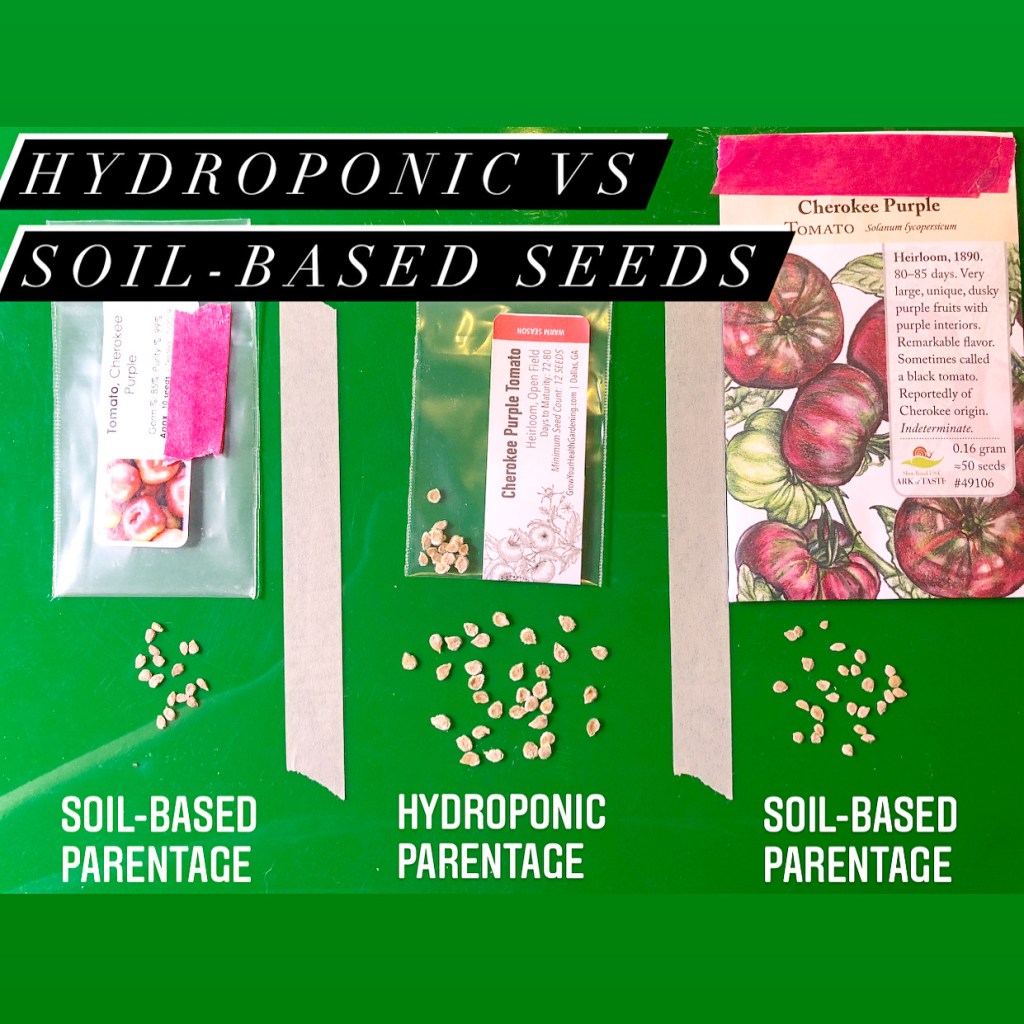
Same variety (Cherokee Purple), but the two on the left and right are soil-based seed. Our hydroponic seed is in the middle. We think there’s not only DNA Epigenetic differences that you can’t see, but also a noticeable visual difference.
Copyright 2021 Grow Your Health Gardening
Tomato World Guinness Record holder, Charles Wilber, talks about the importance of starting with good seed stock. Do you know who grows your seed?
The more plants you begin to grow, you’ll begin to realize the importance of staying organized. As the plant begins to mature, knowing when you started the seed and when it should be mature will aid you in gauging when to begin harvesting or even how old a plant may be and if you should pull it and replace it with another.
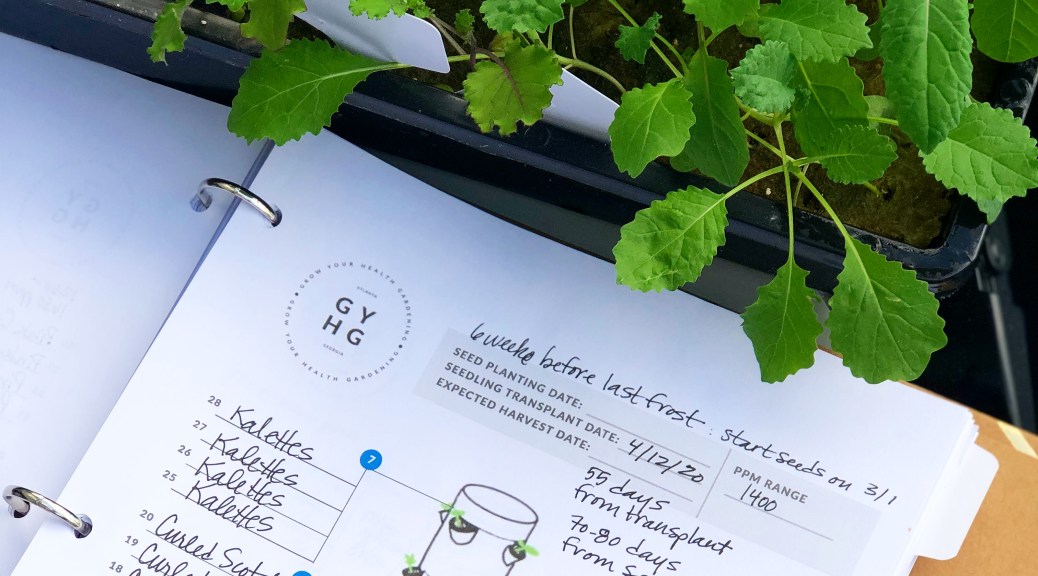
We grow hundreds of varieties of plants per season on our property and have found that labeling is essential. Even if you are not planting many plants, knowing what you planted and having a quick reference will be essential to knowing and learning more about your plants. Here’s what we include on our labels and some tips that help along the way:
Use a label that offers space enough to record data/info
Record plant variety and kind
Record start of seedling date
Record anticipated maturity date for when you should be able to begin harvest
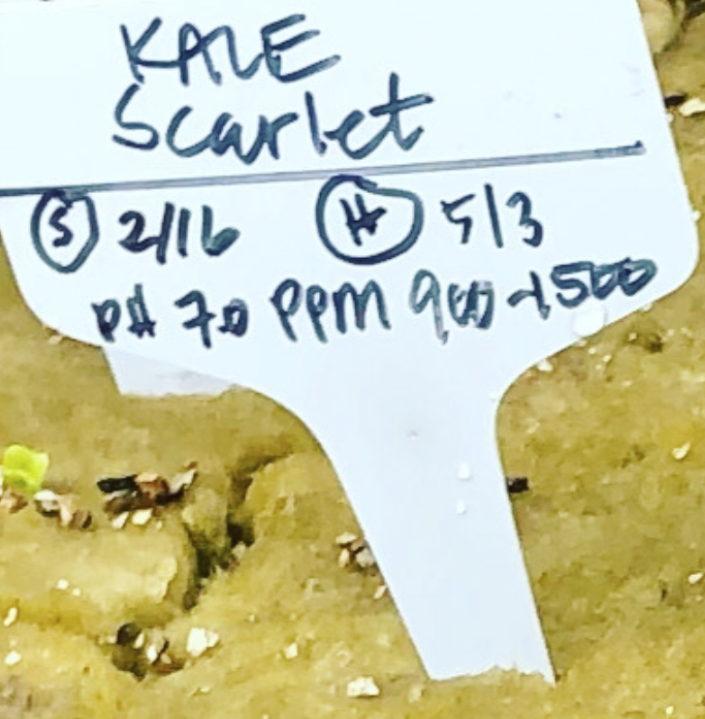
Optional: Record any special characteristic that helps to identify it — especially if you have more than one variety growing of the same kind of plant (ie: seed stock source, ppm range)
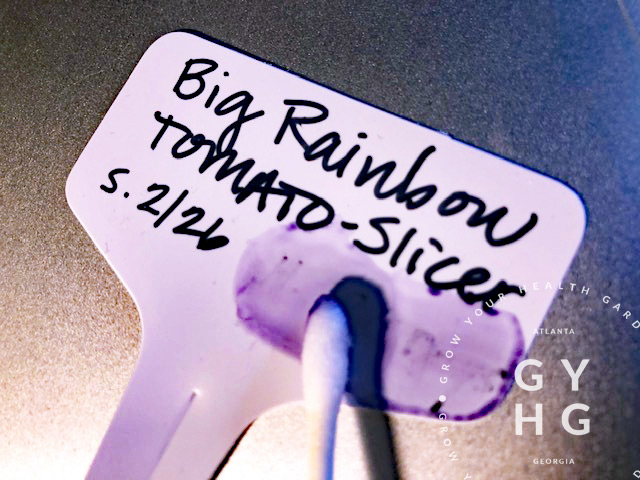
We love the look of bamboo labels, which is a recyclable material, so if your budget allows, this is a great option. This is cost-prohibitive on a larger scale for our seed production, so we opt to use plastic labels and recycle them. When we are finished using the label, we give them a quick rinse with soap and water and then place them in a sealed jar of 91%-94% rubbing alcohol to soak and process them (clean them) during the winter months. After a bit of soaking in 91%-94% Rubbing Alcohol, you can strip off the permanent ink pen writing when you rub with a cotton ball or paper towel and apply a little bit of pressure.
For those growing in soil, if you have access to an old white window covering blind (the kind you put in the window to shade your home interior from the sun), many Master Gardeners like to cut these down and use them as plant markers / labels using a permanent marker or wax pencil.
Tip: If you use plastic labels like the ones shown above and a permanent marker and you make a mistake, simply use 91%-94% isopropyl rubbing alcohol to remove marker.
Use rubbing alcohol to remove permanent marker (Sharpie).
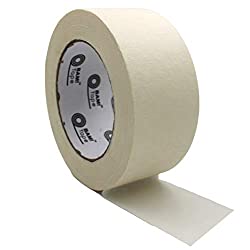
Some Tower Garden or Lettuce Grow Farmstand hydroponic / aeroponic home growers will use painter’s tape and write info on that and stick it to the actual vertical garden growing system. We’ve found that if it is outdoors, it can weather and come off if you have a longer season of growth, but it works great if you’re growing indoors. We like this tape and use it for our Grow Order Client Orders that are grown indoors. We like that it is 2″ wide so we can write our client’s name as well as the plant variety, start date, and harvest date all on the same short strip.
Click photo above to find on Amazon
Tip: When placing tape on your vertical garden growing system, try to place ABOVE the port as sometimes water can drip downwards from a leaf. And try to only use tape if growing indoors as weather can cause removable tape to loose it’s adherence to your grow tower.
Do not, I repeat, DO NOT use duct tape on your hydroponic / aeroponic vertical growing system. It may be difficult to remove and will leave a sticky residue.
We’ve also heard of some people writing directly on their Tower as well. The challenge with using an erasable marker is if the Tower Garden gets bumped in any way, you may lose valuable information. The other challenge is that a vertical garden like the Tower Garden or Lettuce Grow Farmstand will need weekly maintenance of wiping down the exterior so that you don’t get minerals building up in the nooks and crevices. The other factor is if you’re growing outside, you may want to periodically spray down your plants with a shower level of pressure of water to not only rinse off the exterior of your hydroponic growing system. This not only cleans your tower but also helps to knock-off any aphids or bugs that may be hiding underneath leaves or in plant crevices. If you were to have removable ink on your growing system, you would lose valuable information with the introduction of water.
So, when looking at your foundation of the kind of plant tag or plant label you plan to use, consider how the weather (rain and sun) is going to affect it as well as water and routine cleanings around where it will remain.
Record Plant Variety and Kind
We always list variety first and plant kind in caps on the second row. This makes for a quick visual check when grouping similar plants together as seedlings or when placing in a growing area or hydroponic system.
Record Start of Seedling Date
We like to put our seed start date in the left-hand corner of our label and the harvest date on the lower right. The key here is just to be consistent as it speeds up efficiency when you’re in the garden checking on plants. Our eyes scan when they read and having information in the same spot on every plant tag or label will save you time in the long run. Consistency is your friend when your looking to make things efficient in your garden.
Record the Anticipated Days to Maturity Date
Often you will see in seed catalogs or on seed packets “Days to Maturity” noted. This notation is not determined from seed start date, but is intended as what to expect from the date of transplant. To figure out days to maturity, use the following loose formula:
Days to Germination + 2 weeks + Days to Maturity = When you can expect to harvest
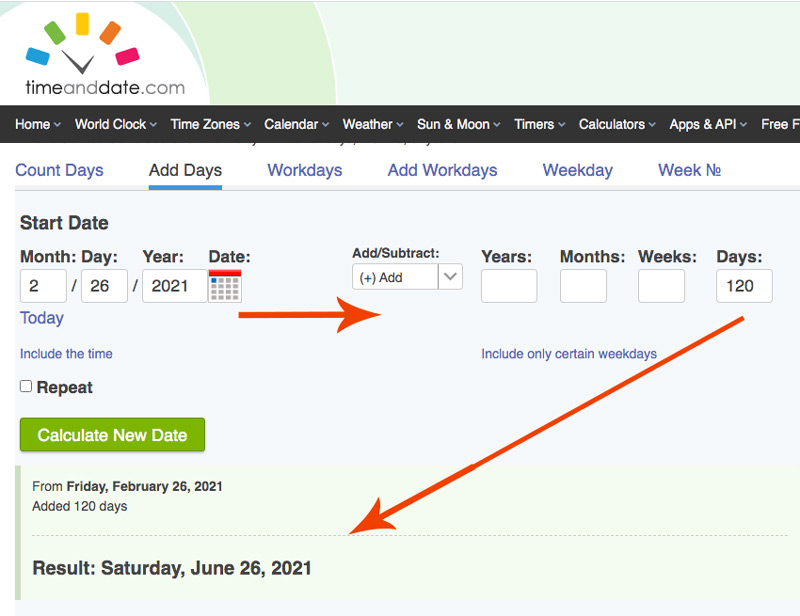
To quickly calculate your harvest date, use the formula above and enter that number into this handy date calculator. (Make sure you use the tab for “Add or Subtract Date”. (See blue line under “Add Days” in example screen shot below.) Begin by entering your date of seed starting and calculate days of germination, plus two weeks for seedling growth, plus days to maturity from seed packet or catalog description. This will give you total number of days. Make sure the Add/Subtract drop down has selected “(+) Add” and then enter a numerical value under “Days” and hit “Enter” on your key pad. Below, you will be given the “Result” date. This is what you will write on your label.
Granted, each plant and growing condition is different (i.e.: plant receives more light and more nutrients and may grow faster than standard days to maturity. Note: If you’re growing hydroponically, realize that plants in general grow 30% faster, so don’t be surprised if you check your anticipated maturity date and your plant is already maturing before that date has arrived.
Record Any Special Characteristic that you want to Remember for Future Reference
When I was starting out growing food hydroponically, I would put PPM ranges on my tag to make sure I grouped plants together that liked the same range. Then I sat down one day and did some figuring and came up with these handy charts for reference. Now, I simply refer to the charts to know what plants go best with each other depending on whether it is a cool growing season or warm growing season. I no longer need to put that information on my label and can use that space for other information.
If I am growing a special collection (ie: Tom Wagner Varieties of tomatoes), I may want to grow those plants together so I can observe their growth patterns and development. An indeterminate or determinate tomato would grow differently from one other, so knowing the growing habits of the seedling I’m holding helps me to quickly place it in the best suitable spot in my garden. A micro-dwarf tomato can grow at the top of a vertical garden growing system like the Tower Garden because it is a determinate and will stay a certain small size that doesn’t need support whereas an indeterminate tomato will need to be trellised from the side and grown towards the lower part of the Tower Garden.
Sometimes we grow the same variety using two different seed stock sources. Diversity is good for strengthening seed stock. So sometimes, I will designate the seed stock source so I can compare plants while in the garden to see which line perhaps has more rigor before I do any cross pollination. In these situations, I just use the first letters of the seed stock sources name as a reference (ie: “SSE” would be Seed Savers Exchange).
You may not realize, but some permanent markers are not very permanent when those UV light waves begin to hit them day after day. My sweet son had gotten me some permanent markers from the dollar store with his own money as a Mother’s Day gift and I used them on a few labels and they faded within months. I had to go over them with another type of permanent marker. Here are some options that should last through the season:
Another easy thing you can do to prolong your tag’s writing is point it away from the sun — at least until the plant has developed leaves to shield it from the sun’s rays.
The other good practice you can do is implement a secondary label. I’ve heard of some gardeners who grow in soil, bury a second label under the soil level near the plant for future reference. I tend to forget where I bury things if they are not marked, so instead I like to use these Tyvek wrist bands to loop around the plant as it gets big enough. This is especially helpful on plants that take a good while to mature like tomatoes, peppers, and eggplants. You can create a system of your liking using different colors, but I tend to just stick with neon yellow, because it’s quick to find when I need to find it.
As you tackle your seed starting, I hope this has inspired you to consider what information your plant will need to follow it in it’s journey towards harvest. With just a few simple considerations, you can be set up for success and at the end of the growing season have the information you need to make decisions for the next growing season!
We have been busy seeding tomatoes this week inside in preparation for the 2021 growing season and we look forward to bringing you hydroponic adapted seeds once our trials have completed. I search far and wide for unique varieties that cannot be found at the grocery store or big box gardening centers and even from large seed producers. We even have some rare varieties we are excited to try and share with you if they do well in our trials.
Every season, I feel it’s important to have FUN while you grow food for you and your family, so here are some of my personal FUN goals…
In particular, this year, I think I’m going to try and tackle growing the largest tomato I’ve ever grown. I’m thinking like, state fair size. My seed stock for this challenge comes from a private grower in Italy and we shall see how it adapts to our growing region.
I’m also focusing on more plum varieties this year, so we can make some amazing sauce and preserve it for the winter to feed our family of seven. I did some extra research and selected varieties that were favored by other tomato connoisseurs.
I’m also particularly excited about our new line-up of micro-dwarf tomatoes that don’t require a trellis and have usually one or two flushes of tomatoes before they complete their growing cycle. Because of their compact habit, they are ideal for growing in the vertical Tower Garden and for those who want to grow in small spaces like in the Aerogarden, Farm Stand, or even in a pot on your back patio or deck.
Our seed is adapted to hydroponic growing conditions in Zone 7 just west of Atlanta, Georgia. I share this info not because tomatoes are a perennial (which is typically the reason for looking at growing zones), but instead to help our home growers know where their seed is grown, so they can match it to their own growing conditions for success. Our tomatoes are all grown outdoors in heat and humidity and hand-pollinated with the exception of our micro-dwarfs which are grown indoors to limit cross-pollination.
We give our mature tomatoes a PPM range of 1400-2000 and a pH of 6.0-6.5 for maximum nutrient uptake. We recommend using the Tower Garden Mineral Blend for healthy plants and maximum growth. If you’re wondering what grows well with tomatoes in a hydroponic system, we encourage you to visit this page on our Grow Your Health Gardening Web site for more information.
If you wonder why tomato seeds can cost more than other seeds, know that tomatoes are very time-and-labor intensive to grow and require a lot of personal management with seed starting, pruning, scouting for any pest pressure, or any efforts to boost immune system through foliar application of comfrey tea and molasses tea (which helps to bring out flavor).
15 Slicer Tomato Variaties:
Apricot Brandywine Tomato
Black Passion Tomato
Big Rainbow Tomato
Delice De Nevilly Tomato (Rare)
Genovese Tomato (Rare)
Great White Heirloom Tomato (Low-Acid)
Green Elf (Tom Wagner Variety)
Merveille Des Marches Tomato (Rare)
Nostrano Grasso Tomato (Rare)
Orange Orangutan Tomato
Paul Robeson
Pineapple Tomato
Pomodoro Gigante Farina Tomato (Rare)
Thornburn’s Terra Cotta Tomato (Rare)
Wagner Blue Green Tomato (Tom Wagner Variety)
8 Paste Tomato Variaties:
Black Plum Paste Tomato
Cancelmo Family Ox Heart Tomato
Cassidy’s Folly Plum Tomato (Tom Wagner Variety)
Cream Sausage Plum Tomato (Tom Wagner Variety)
Dwarf Sneaky Sauce Micro-Dwarf Plum Tomato
Goatbag Plum Tomato
San Marzano Plum Tomato
Speckled Roman Plum Tomato
8 Cherry Tomato Variaties:
Black Cherry Tomato
Blue Cream Berries Cherry Tomato
Brad’s Atomic Grape Cherry Tomato
Green Doctor’s Frosted Tomato
Matt’s Wild Cherry Tomato
Red Pear Cherry Tomato
Sweetheart Cherry Tomato
Yellow Pear Cherry Tomato (Low Acid)
24 Micro-Dwarf Cherry Tomatoes:
Annie’s Singapore Micro-Dwarf Cherry Tomato
Bonsai Micro-Dwarf Cherry Tomato
Dwarf Suzy’s Beauty Tomato
Gold Pearl Micro-Dwarf Cherry Tomato
Fat Frog Micro-Dwarf Cherry Tomato
Florida Petite Micro-Dwarf Cherry Tomato
Hahms Gelbe Micro-Dwarf Cherry Tomato
Hardins Miniature Micro-Dwarf Tomato
Inkspot Micro-Dwarf Cherry Tomato
Kookaburra Cackle Micro-Dwarf Cherry Tomato
Little Red Riding Hood Micro-Dwarf Cherry Tomato
Mo Micro-Dwarf Cherry Tomato
Monetka Micro-Dwarf Cherry Tomato
Olga’s Round Chicken Micro-Dwarf Cherry Tomato
Peachy Keen Micro-Dwarf Cherry Tomato
Pigmy Micro-Dwarf Cherry Tomato
Purple Reign Micro-Dwarf Cherry Tomato
Regina Red Micro-Dwarf Cherry Tomato
Regina Yellow Micro-Dwarf Cherry Tomato
Snegirjok Micro-Dwarf Cherry Tomato
Vilma Micro-Dwarf Cherry Tomato
Wherokowhai Micro-Dwarf Cherry Tomato
Willa’s Cariboo Rose Micro-Dwarf Tomato
Yellow Canary Micro-Dwarf Cherry Tomato
What do you look for in a tomato? What are your tomato aspirations for the upcoming growing season? Drop us a line in the comment section below!
Happy Growing! — Erin
Tips for Hydroponic, Aquaponic, and Soil-based Gardening Methods
































 Grow Your Health Gardening