All posts by Grow Your Health Gardening Owner & Certified Hydroponic Grower

growyourhealthgardening.com store.growyourhealthgardening.com erincastillo.towergarden.com erincastillo.juiceplus.com pcosbites.com

Be Sure to Check this Chart Before Starting from Seed

Seed starting?

We have a FANTASTIC resource you will want to bookmark. It tells you what conditions the particular variety needs to help it germinate. Some seeds need it dark. Some seeds need bright light to germinate. Some need to be soaked beforehand. No matter the situation, this is where you want to start.

This is an active reference we update from time-to-time as we learn through researching and growing new varieties. Be sure to bookmark the page and check back for updates! https://growyourhealthgardening.wordpress.com/seeds-that-require-special-treatment/

And remember, when you start from seed, even though you are taking a bit of a gamble on some seeds, the thing that is so awesome is you can grow varieties not commonly found at big-box retail garden centers. A whole new world awaits you!

Oh — and if you’re new to seed starting, be sure to check the “Seed Starting” tab on our Web site for other helpful tips to help you in your quest to start seeds at home.

Hope this helps!

Grow a Record Breaking Tomato: 28 Tomato Cultivars that Produce Really Big Tomatoes

If you’re looking to grow really big — I mean REALLY BIG — tomatoes… the kind you might even break a state record size of tomato, you’ll need to start with good seed DNA. There are certain tomato varieties that tend to grow to a larger size when given proper nutrients, pH, and pruning.

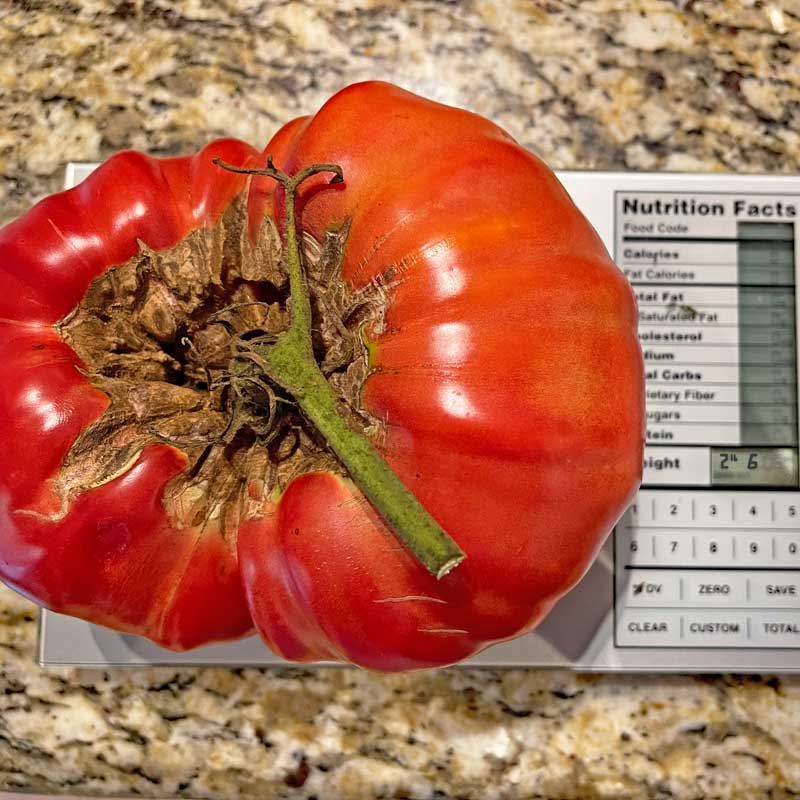
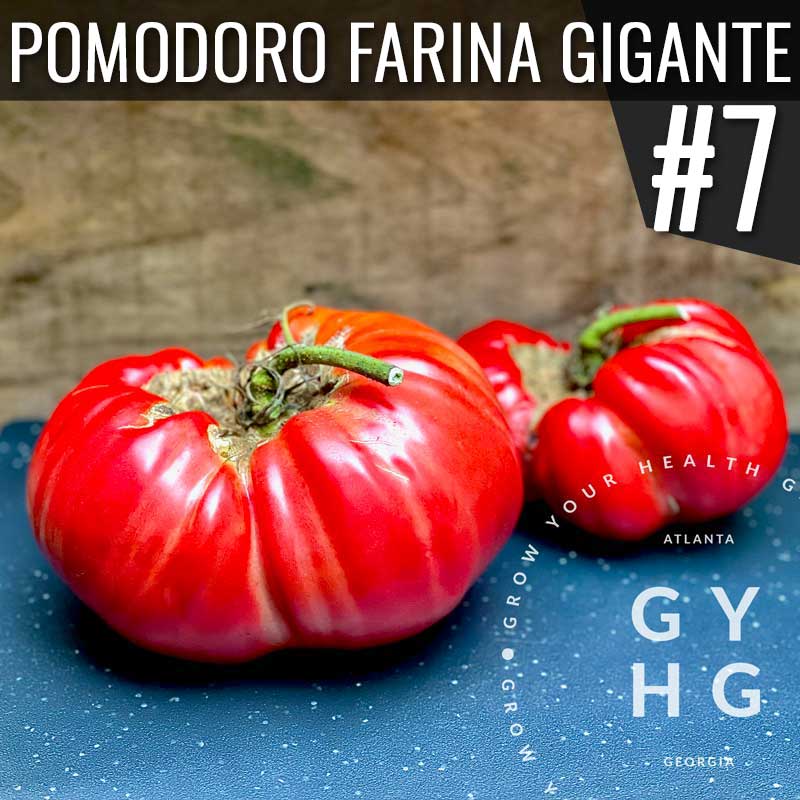
Pomodoro Farina Gigante is a great tasting BIG tomato slicer that is reputed to break records from Italy.

At the time of publication, the current 2021 Guinness Book of World Records for the heaviest tomato was grown by Dan Sutherland (USA). His monster tomato was of the “Domingo” variety and weighed 10 lb 12.7 oz (4.896 kg) when measured in Walla Walla, Washington, USA, on 15 July 2020. The achievement was authenticated by the Great Pumpkin Commonwealth (GPC).

It had a circumference of 33 in (83.8 cm), contributed to by a number of outgrowths on the fruit known as “dingleberries” — something that can be common among giant tomatoes. This is the second time that Sullivan has held this Guinness record. He grew a 3.906-kg (8.61-lb) tomato in August 2016. According to Guinness, “the mother seed for this new record-breaker was derived from the previous record plant.”

No matter if you’re wanting to grow a record breaking monster-size tomato to win titles or simply wanting a nice big tasty slicer for your summer time BLTs, these are the varieties that typically grow larger in girth.

Pomodoro Farina Gigante heirloom tomato is a variety known to be record breaking in Italy. You can find seed in our seed shop here.
Pineapple heirloom tomato is a beautiful bi-color slicer.
Goatbag Tomato is a large oxheart tomato full on meaty tomato flesh with very few seeds. It makes a good slicer but also fantastic tomato paste.
VarietyWeight
Domingo10 pounds
Big-Zac (hybrid)8 pounds
Daho8 pounds
Delicious7 pounds
MegaZac6 pounds
Clementz5 pounds
MegaDom5 pounds
6-Pound Giant4 pounds
Phil’s Fantastic4 pounds
Slankard’s4 pounds
Spaziani4 pounds
Cuostraleé4 pounds
Big Wixom4 pounds
Monster3 pounds
Italian Sweet3 pounds
Mong3 pounds
Beef Steak, Old Fashioned3 pounds
Florida Pink3 pounds
Orenberg Giant3 pounds
Verna Orange3 pounds
Chocolate Stripes3 pounds
Burpee Supersteak (hybrid)3 pounds
Big Rosy3 pounds
Pomodoro Farina Gigante2 pounds
Big Red2 pounds
Lithuanian2 pounds
Omar’s Lebanese2 pounds
Zogalo2 pounds
Brianna2 pounds
Todd County Amish2 pounds
Pineapple2 pounds
Believe It or Not2 pounds
Giant Belgium2 pounds
Neve’s Azorean Red2 pounds
Dinner Plate2 pounds
Champs of New Jersey2 pounds
Persimmon2 pounds
Garden Monster Leader2 pounds
Jerry’s German Giant2 pounds
Brandywine, Sudduth Strain2 pounds
Mortgage Lifter, Red2 pounds
18842 pounds
Mexico2 pounds
Aussie2 pounds
Provenzano2 pounds
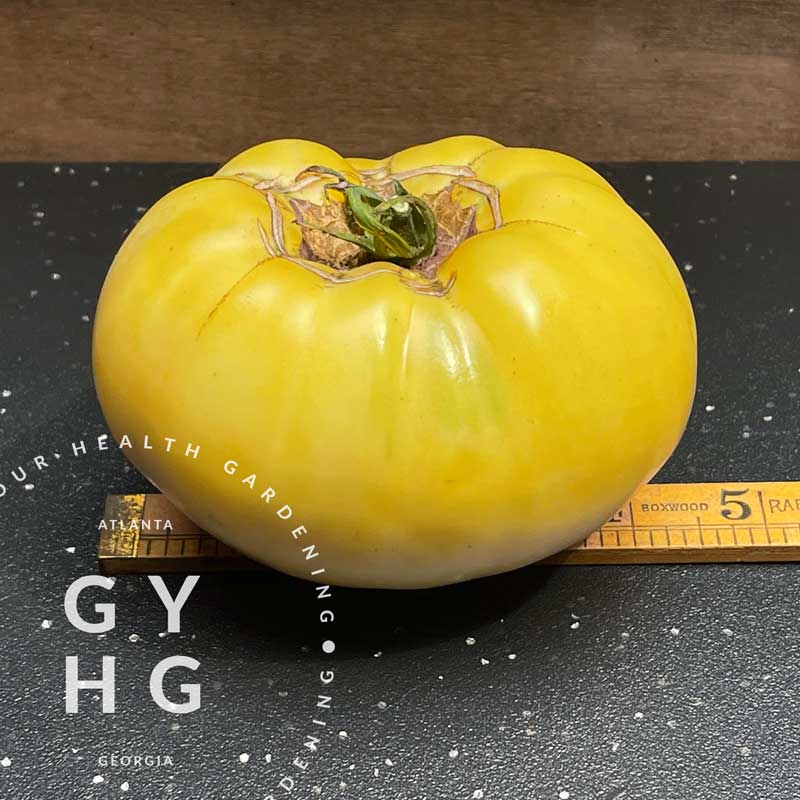
Great White2 pounds
Large Pink Bulgarian2 pounds
Watermelon Beefsteak2 pounds
Polish Giant2 pounds
Ponderosa Pink2 pounds
Goatbag2 pounds
German Red2 pounds
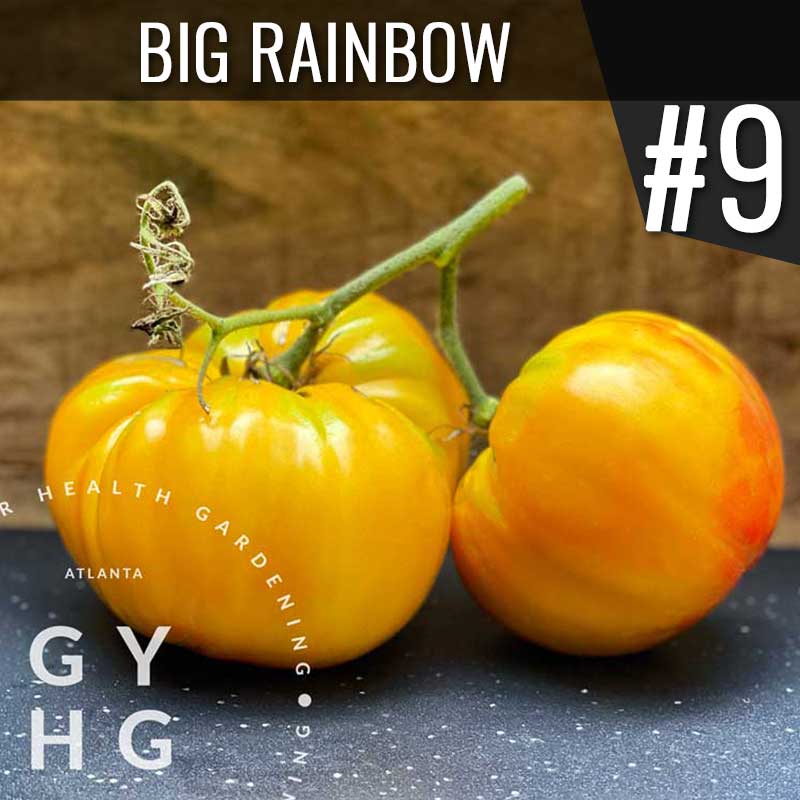
Big Rainbow2 pounds
Hillbilly2 pounds
Big Rainbow Heirloom Tomato is a great producing bi-color slicer. As you can see, she produces thick stems to easily handle the weight of big fruit in clusters of 4-6 buds.
Great White Heirloom Tomato is a low-acid tomato that produces big slicers almost 5″ wide.
Apricot Brandywine Tomato is a large slicer producing not only great tasting tomatoes but a good crop of them. This particular variety produced the most weight overall when compared to our other cultivars.

How to ensure you have Germinated Seed Every Time whether Growing in Soil or Hydroponics

I like to know if a seed has germinated before it ever goes into soil or a piece of hydroponic Rockwool. There’s an easy way to know if you have viable seed and that is through a technique that simply requires a sheet of paper towel, a container with a lid, water and a consistently warm location 72ºF-76ºF. You can learn more about how to set up these pre-germination conditions on our blog here, but if you’re already familiar with this method, here is a quick visual of what you’re looking for with pepper seeds and when to transfer them to either soil or Rockwool (Rockwool is used for soilless hydroponic / aeroponic growing systems).

Example of seed that is ready to transfer to Rockwool or soil

The seed that is circled in green is ready to gently transfer to soil or Rockwool using a sanitized tweezer. (To sanitize your tweezer, simply clean with rubbing alcohol.) The seed circled in yellow shows swelling and indicates that you should probably check it the next day as the root is getting ready to emerge.

The other seeds are slightly swollen showing that they are still in the process of germinating. Do not give up on seeds that are slower to germinate — sometimes they can take up to 10 days even when you are providing ideal conditions. Check moisture daily and if paper towel smells funky, swap out for a new paper towel and rewet and put back into germination chamber container.

Below is a photo showing germinated seed that has been placed into Rockwool (see number one below). If you are growing in a hydroponic growing system such as a Tower Garden or Aerogarden, you’ll want to place your seed in Rockwool instead of soil. (Coco Coir is also a good alternative growing medium for hydroponics or aeroponics assuming it has support to hold material together such as in a mesh net.)

I like to cover my seeds with vermiculite. Some hydroponic growers insist that this step isn’t necessary, but I like to make sure my seeds receive adequate moisture throughout these early stages of growth especially. Strong healthy seedlings, make for strong healthy plants. I use this process for peppertomato, and eggplant seeds and any seeds that are not super small. Remember, some seeds need light to germinate (like lettuce), so be sure to reference our cheat sheet before starting seeds to know if your seed needs light, no light, or if it doesn’t matter.

How to transfer pre-germinated Seed to Rockwool or Soil

Rockwool is a fantastic growing medium as it has air pockets and is good at holding water. Keep moist, but not sitting in water.

Hope that helps! Remember, we have a great assortment of hydroponic-adapted tomato and pepper seed available in the seed store. Be sure to check it out!

Happy growing,

Erin

watering can

Planning to preserve? Now is the time to gather your supplies.

Just a little tip if you’re thinking of pickling anything this summer be it cucumbers, cherry tomatoes, asparagus, eggs… you name it… NOW is the time to purchase your canning herbs and spices for pickling supplies whether it is the canning herbs and spices you’ll use or canning lids to seal the jars.

Bell Canning Jars filled with  homegrown Jalapeños made into a tasty Jelly
Homegrown jalapeños can be made into a tasty jelly that goes great on crackers with cream cheese. Yum! You can find the recipe that we like to use here!
You can find glass canning jars in your local grocery store or hardware stores. I always think buying local is the way to go because then you support your local economy where taxes go back into your own city and jobs are provided for local residents. But if you find that you need to purchase online, these wide-mouth 16 oz Mason Jars come 12 to a pack $21.99 ($1.83 each jar with free shipping as of 3/6/22.
Pickle slices in a Ball Canning Jar
Homemade Pickled Cucumbers are the best!
This is what I like to use. It stores on my pantry shelf and also makes a generous gift-giving size.
2 (12 count) packs of Ball Canning Wide Mouth Jars 16 oz $47.40 ($1.96 each jar) Price included free shipping as of 3/6/22.
Don’t forget to purchase your wide-mouth canning jar lids as well. Never re-use the same lid twice otherwise you’ll risk an improper seal and introduction of harmful bacteria.

If you’re going to do a lot of canning, I have found this common canning pickles spices option to have the best price per ounce when compared to purchasing dry canning spices / seasonings in the grocery store or elsewhere. (If you find a better deal, please let me know in the comments below so we can all be helped as inflation continues to rise.) Another good resource sometimes is a Mexican Supermarket if you have one nearby. You can often find dried seasonings for sell for less at these wonderful Mexican grocery stores.

Buying bulk is the way to go, so you won’t run out of what you need. Remember, you can store any extra seasonings in an air-tight glass jar or vacuum-sealed container and place in the freezer to extend the life of your seasonings, even to the next growing season.

Gel Pickling Spice Bulk Canning Seasoning $24.99  ($0.39 / ounce) as of 3/6/22

Don’t forget to grab pectin as well. You can purchase by the box or as a ready-to-go liquid (I prefer the later) that can be used to make jams and homemade jelly recipes.

I have found that this ready-to-go Certo Liquid Fruit Pectin makes pretty much fail-proof jelly. Make sure you follow directions on proper temp and you will be sure to have success every time. This is sold each box as a two-pack and buy buying 4 packages you can do 8 batches of jelly. $26.47  ($1.10 / Fl Oz)  as of 3/2/22

And don’t forget that you will need oxygen absorbers for any items where you simply dehydrate and store in a glass jar! Those will be needed for any type of preservation whether you are putting into vacuum packed bags or storing dry goods in a glass Mason jar in the pantry.

Oxygen Absorber for dried dehydrated herbs
Oxygen Absorbers are essential for long-term dry or freezer storage.
I have found that if I slice freshly cured red onions (or you can also buy from the store) and place them in my dehydrator at 110ºF for 24 hours and then immediately place them in a glass Ball Jar or Mason Jar along with an oxygen absorber, they stay fresh for 1-2 years in my pantry. When I want to use some, I simply put a small handful of dehydrated onion bits into my Kitchen Aid duo-Coffee and Spice Grinder and then keep in my spice cabinet for cooking. The flavor is SO AMAZING and the preferred choice over store-bought already ground onion seasoning.
I often get asked what I use for a dehydrator. I have used much smaller counter-top models than this one, but we purchased our Cabela’s Dehydrator about 5 years ago and we have been so pleased with it’s durability and performance that I don’t hesitate to recommend it to those who want to invest in a good dehydrator. It has more than paid for itself over time and I like the adjustable rack system and the dial that I can easily set for a 24-hour run cycle. A great time to get one is when you get your tax return!
Kitchen Aid Combo Coffee Grinder and Spice and Herb Grinder
I love to use homegrown organically grown herbs for all my recipes. I’ve found the flavors are so improved over anything store bough and so much cheaper! Just use the palms of your hands to crush before adding to dishes or I also like to use my Kitchen Aid Coffee and Seasoning Blender. It’s best to leave your herbs in leaf form and wait to crush them until you’re ready to use them. When you break the leaves or crush them, it releases the flavonoids and beneficial antioxidants stored in the leaves. Not to mention, as inflation continues to rise, growing your own herbs is the way to go for great-tasting dishes!

If you’re wanting to learn more about canning, there are some great resources that you can utilize. A good place to start is your local extension office. Every state has an extension program through the Universities and have Web sites. You can call your local extension office with any food preservation question. In addition, they can offer water and well-water testing, radon testing, and even testing your dial gauge pressure canner for accuracy to make sure your canner is safe ahead of canning season. This can especially be helpful with older pressure canners.

The following preservation information resources were established with funding from the Cooperative State Research, Education and Extension Service, U.S. Department of Agriculture. Here are a few quick links to information you can find if you want to deep dive on learning more:

Canning supply kit for anyone just starting out with canning! $32.99 for everything pictured as of 3/6/22.

There’s so much more that could be said about canning and food preservation, but I’ll stop there for now as those are the essentials that come to mind. The key thing is that if you’re growing your own food, get your canning and preserving supplies now before the season starts as dry canning seasonings and spices, canning jars, canning lids, and such sell out when harvests are on!

Happy growing (and planning!)

Erin

watering can
Erin Castillo
Erin Castillo

Erin is passionate about helping others learn how to grow food in order to lead healthier and more self-sufficient lives using organic growing methods, hydroponics, aeroponics and understanding how to improve soils for nutritious food.

← Back

Thank you for your response. ✨

5 Hydrangea Care Tips to Maximize Your Blooms this coming Growing Season

Erin Castillo | GYHG and Certified Hydroponic Grower, Gardening Writer
Wednesday, February 16, 2022

For those wondering when to prune hydrangeas in Georgia or in Zone 7, now is a fantastic time to think about these beautiful ornamentals and learn any basic care considerations to act on now for big blooms later in your growing season. Here we will deep dive into how to grow hydrangeas in the South and five care tips to consider.

Location depends on cultivar — Be sure to check your variety’s sun or shade needs before planting. If you messed up, you may want to move it while dormant in cold months

The Hydrangea is a perennial typically in Zones 5-9 (with a few rare varieties that are exceptions and can live in Zones 3-4 with winter protection), but this can greatly differ depending on your cultivar, so be sure to check the growing tag that comes with your plant from your local nursery or Monrovia has put together a good resource page you might want to check out as well.

The location you place your hydrangea also matters in the Southeast. You’ll want to protect your hydrangea plant from the extreme summer intensity of the sun (we don’t call it “Hotlanta” for no reason!) Note: be sure to check your cultivar as some hydrangeas do prefer full sun, part sun, or shade.

Conversely, if your Hydrangea is too exposed to extreme cold winter winds and extreme cold weather temperatures, your plant may not form adequate bud formation. Planting your hydrangea near a structure that retains heat while also offering a wind break (like a brick building or foundation) will help your plant produce the stunning of blooms for display you seek. If your temps reach down towards zero degrees or lower, you will want to carefully wrap your Hydrangea plant with a layer of thick burlap to protect forming buds from cold injury. Take wire fencing the height slightly taller than your hydrangea bush and make a circle around your plant then wrap burlap or a cover designed for protecting plants from frost around your plant. This will protect those forming buds and dramatically affect your plants ability to bloom for the following growing season.

What to Add to Your Soil and When You Should Make Adjustments

Before adjusting anything with your soil, be sure to do a soil test at the same time every year (preferably in the fall (October-November). A soil test can be submitted to your local County Extension Office and costs between $7-$12 depending on your particular extension. Be sure to note when submitting your soil test, that you want to get recommendations for hydrangeas. The County Extension will send your soil sample off for a test and you will get detailed instructions on what exactly needs to be added to your soil to feed your hydrangea plants and to keep them healthy.

While waiting for your soil test results to come back, you can do a quick test with 2 tablespoons (30 mil) soil + 1 tablespoon (15 ml) distilled water) and add vinegar. If your soil fizzes, your soil is alkaline! If there is no fizz, get a new sample. Test 2 tablespoons (30 mil) of soil + 1 tablespoon (15 mil) of distilled water + add baking soda. If your sample fizzes your soil is acidic. If it doesn’t fizz, soil is in the neutral 7.0 range most likely.

In the late fall or early winter months (when no snow is present), a top-dressing of compost will feed the soil micro-biology surrounding your plant and make nutrients available to your Hydrangea plant feeding it through the winter. You can also mix in some used coffee grounds and crushed egg shells into the soil and even a fine dusting of wood ash left over from your Green Egg (if you have one) or fire pit (just make sure any coals/ash scooped are cold). You can also add Bone Meal at this time which is slow to break down and only utilized by the plant with soil pH is below 7.0. These additions add acidity and alkalinity to the soil. But remember, these adjustments take three months or more to take effect, so act now if you haven’t prepped your soil beneath your beautiful hydrangea.

How to Get New Hydrangea Plant Starts with Little Effort

And while we are discussing fall / winter soil amendment strategies… if you take a low-lying branch from your Hydrangea and allow it to touch the soil and place a stick with a hook on the end (where you have broken off a branch from the main stem) or a metal u-pin if you have one on hand (even a light rock may do the trick) and essentially have the stem touch the soil and the “mother” plant will put down roots and create a baby plant come spring with adequate moisture. Check it again in 3-4 months and then prune that branch from the mother plant early spring (typically here in Georgia, you can see roots forming on propagated stems by late February.)

When to Prune your Hydrangea in Georgia

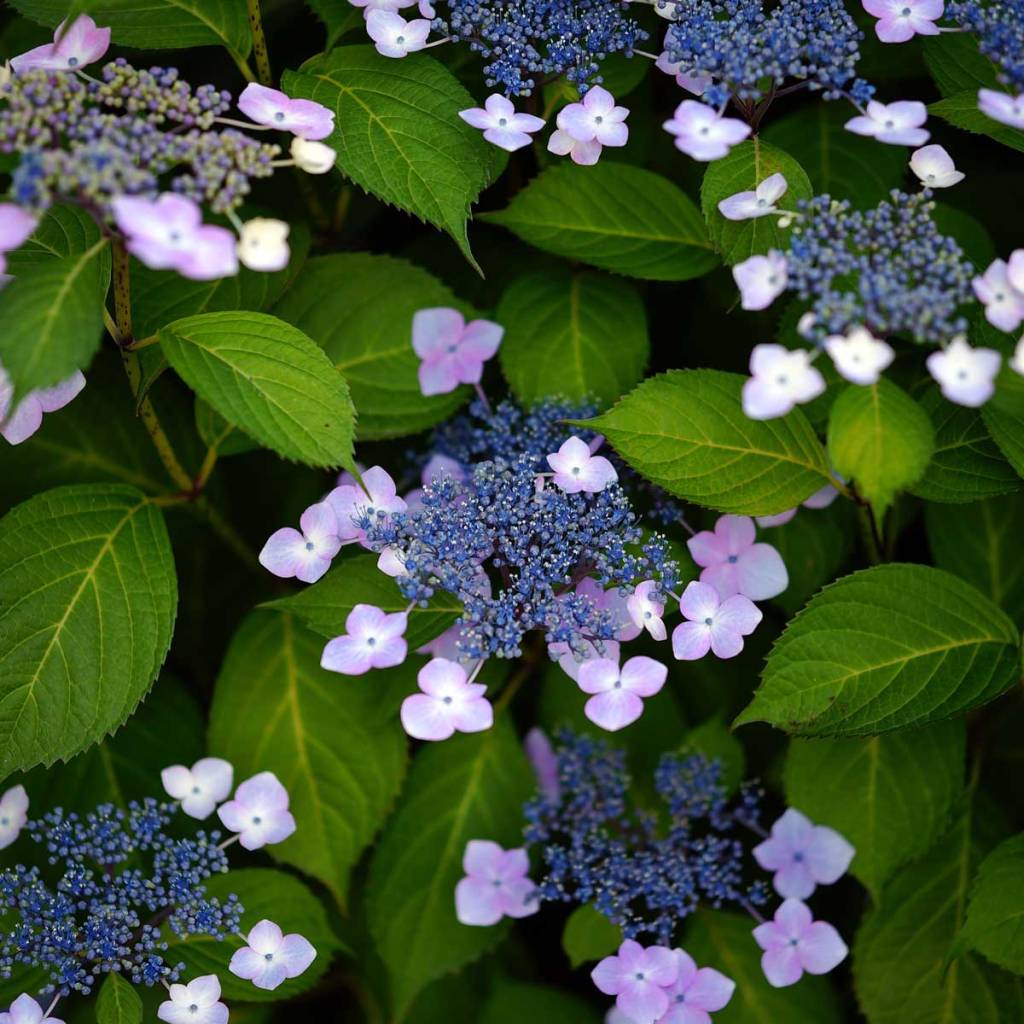
Hydrangeas (Bigleaf H. macrophylla, French, and Oakleaf H. quercifolia) flower buds from on old wood. Big Leaf cultivars include Mophead, Lacecap, Mountain hydrangeas. You want to prune these after flowering and shape your bush at that time.

If your Hydrangea is (Panicle H. paniculata, Smooth Hydrangea arborescens also called wild hydrangeas), flower buds will form on new wood, so prune when the hydrangea plant is dormant and remove spent blossoms after flowering (aka: deadhead). This will include your Snow Ball variety.

As a general rule, plants that flower before May ideally should be pruned following their bloom. Plant that flower after May can be pruned just prior to spring growth during dormancy (Jan/Feb). There are of course plants that are exceptions — those being late-flowering azaleas that bloom during May, June, or even July as well as the hydrangeas that bloom on old wood (mentioned above.)

You will want to prune away any disease, dead, stray or broken branches at anytime.

How to Change Your Hydrangea Bloom Color

Not all hydrangea species change color. White cultivars are an example of this, however, varieties such as Hydrangea macrophylla and H. serrata can range in color from pink to blue, fuchsia, plum and even periwinkle. High levels of aluminum in the sol plus having acidic soil pH will generate the coveted bright blue to purple flower shades.

For blue hues, you will want to use soil amendments like elemental sulfur and gypsum. You can also use an organic fertilizer containing cottonseed meal when feeding the plants. Adding aluminum sulfate to the soil isn’t necessary and could be harmful. Aluminum is plentiful and not an essential plant nutrient and too much of it can actually be toxic.

Recipe for blue flowering hydrangeas:
1/2 cup (120 ml) sulfur per 10 square feet (1 square meter) to alter the soil’s pH.

Recipe for pink flowering hydrangeas:
1 cup (235 ml) garden lime per 10 square feed (1 square meter) to alter the soil’s pH.

Remember, changing the pH of your soil is a gradual process that can take up to a year for the color change to take effect. You may also want to use pine straw as a mulch on top of the soil which will naturally break down over time, but will feed the micro-organism in your soil. Pine Straw, though minimal, may make your soil slightly more acidic over time and multiple applications. These hydrangea plants require plenty of moisture to get to the flowering stage, so put some sort of mulch (Pine Straw, wood chips, leaf mold, straw, or a living mulch that is a low spreading ground cover) down to help suppress weeds and maintain moisture. (Remember, you don’t want to ever have bare soil!)

How to Preserve Hydrangea Blooms to use in Home Decor

When your Hydrangea begins to bloom, pick a full new bloom in the morning and dry it slowly and hang upside down with a clothespin to a hanger in a room with good circulation (preferably indoors where humidity levels are lower due to Air Conditioning.) Allow the bloom to completely dry and then use in whatever decorating application. They are especially pretty as a wreath. Just spray with a clear craft finishing spray to preserve color. The also look pretty as a dried floral bouquet arrangement.

If you haven’t explored growing a hydrangea bush, I encourage you to give it a try! It’s a wonderful showy flowering bush that will bring enjoyment whether fresh or dried! Do you have a tip that has worked well in caring for your hydrangeas? Feel free to share in the comments below!

Happy Growing!

Erin

PS: If you are married, the Hydrangea is traditionally the fourth anniversary flower to give your love. I personally think any day and any year is a wonderful time to give a flower to someone you love. 😉

Erin Castillo is a wife and mother to five in Atlanta, Georgia. She grows food using organic methods for her family and also produces seed to sell, some of which is grown hydroponically and adapted to those growing conditions making it ideal for Tower Garden, FarmStand and Aerogarden home growers. If you want to check it out, you can find it at GYHG Seed Co. She is also certified in hydroponics and volunteers as a guest writer for her local gardening community.

Sources:

  • Dorn Ph. D., Sheri and Sawyer, Sarah. Georgia Master Gardner Handbook, 8th Edition. University of Georgia Extension. Copyright 2021 University of Georgia College of Agricultural and Environmental Sciences ISBN 978-0-528-94356-8
  • Monrovia “10 Things Hydrangea Lovers Should Know
  • Hudson, Jr., Charles. Hudson’s Southern Gardening Published by Topper and Love, Atlanta Georgia. Copyright 1953, 1958
  • My mother (God rest her soul) who shared with me what worked for her gorgeous blooms and how she would dry them and save them for me to enjoy in my own home decor.
  • For further reading: Success With Success With Hydrangeas: A Gardener’s Guides: A Gardener’s Guide Lovers

Preserved 1,000-Year-Old Corn and How to Properly Store Your Seeds

I was reading an article over on AgWeb the other day on how an unnamed Mancos rancher found an estimated 1,000 year-old 10″-tall coiled hand-pinched utilitarian-style clay pot in a cave, kept it on his mantle for several decades and then sold it to Mr. Steve Campbell who discovered it’s valuable contents.

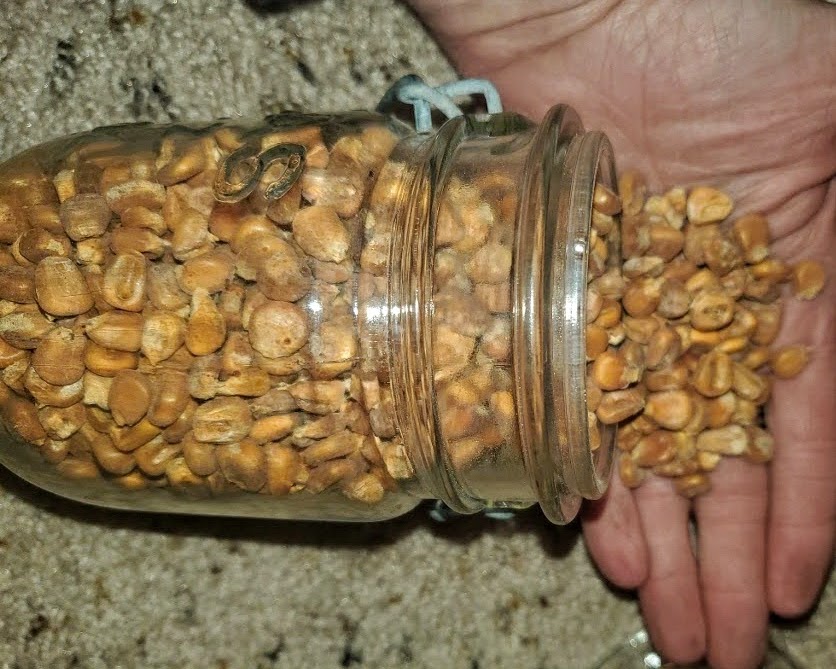
Come to find out, the clay pot held a nearly five pound cache of phenomenally well-preserved indigenous corn that contains a gene that helps the corn fix nitrogen from the air! Campbell has donated some of his corn as samples to several universities for further study.

“Unbelievable and beyond rare,” Steve Campbell says. “Never dreamed I’d see anything like this pot. No doubt, this corn was someone’s last harvest and they never came back for it.”
( Photo courtesy of Steve Campbell)
“Unbelievable and beyond rare,” Steve Campbell says. “Never dreamed I’d see anything like this pot. No doubt, this corn was someone’s last harvest and they never came back for it.”
( Photo courtesy of Steve Campbell)

The hope is that this lost trait of nitrogen fixing in corn could be possibly re-introduced into current varieties, thereby reducing the fertilizer needs of a modern crop. “The scientists want to know how this particular corn grew so well and if it’s now extinct,” Campbell says. The question will be whether this will improve GMO corn or create other issues. Hopefully some researchers will be able to adapt the corn through natural means instead of genetic manipulation.

You can read more about this amazing find on AgWeb Farm Journal.

“The corn kernels are in about perfect condition,” says Campbell. “No moisture, no sun, and sealed in that pot for 1,000 years, the corn looks like you can’t believe.” (Photo courtesy of Steve Campbell)

Just like Mr. Campbell’s corn seed example, your own personal seed supply can be kept viable for extended lengths of time given the proper storage conditions. All seed has a life-span, but with a little know-how, you can dramatically lengthen the life of your seed and preserve your investment.

Here’s what you will want to do whenever you purchase new seed from Grow Your Health Gardening or other seed stewards:

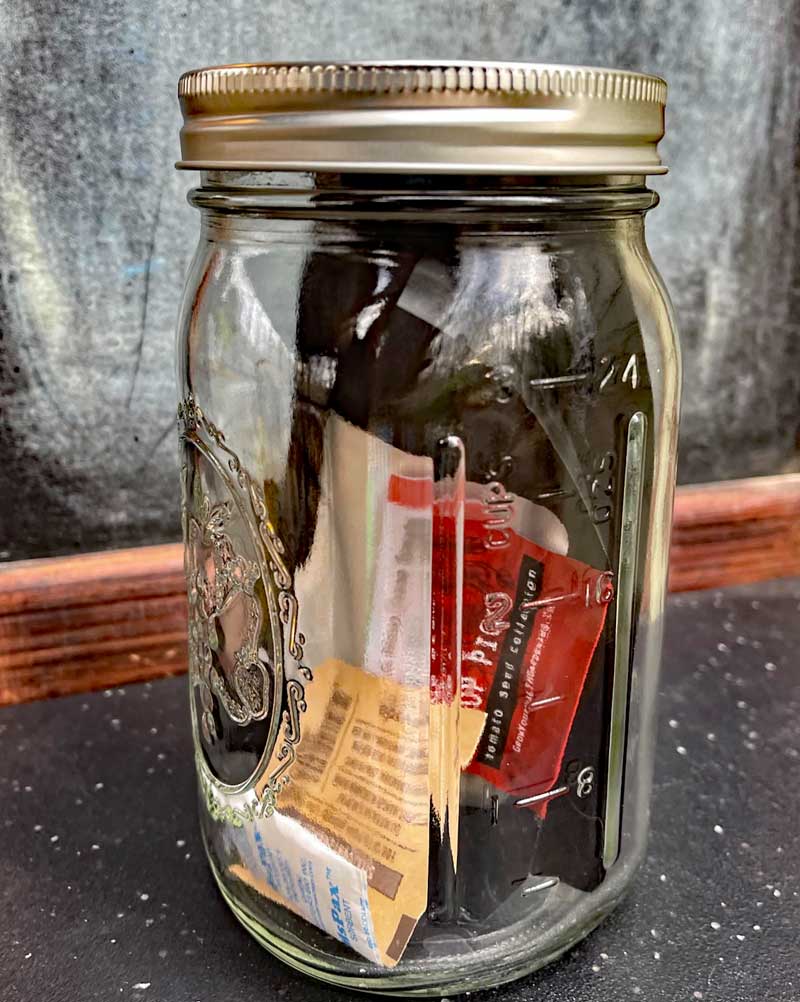
Immediately place your seed packet(s) in a sealed glass container and store in a location that is consistently cool, dark, and dry within your home. We recommend placing your seeds (along with an oxygen absorber) in a wide-mouth glass Mason jar with a screw-on lid and keep in your refrigerator until its time to plant. Humidity levels for seed storage should be below 60% at all times. A general rule of thumb is that temperature + humidity level should not ever exceed 100%. Even lowering the temp of your seed by one degree can make a world of difference.

And when it does come time to plant, do not leave seed packets out and exposed to the sun. We also recommend using glass containers that seal with a metal lid as rodents can chew through plastic lids/containers. When you are finished starting your seed, immediately return remaining seed packet(s) to a protected environment as indicated above.

Taking these steps can dramatically extend the life of your seed investment! Hope that helps! Have a fantastic growing season y’all! (And get those seed orders wrapped up now, so you don’t risk shipping seed in warm weather conditions!)

—Erin

Owner, Grow Your Health Gardening & GYHG Seed Co

Two dead, 17 sick across 13 states with another Listeria outbreak due to tainted Lettuce from a Bag

Yet another outbreak due to tainted lettuce salad in the first few months of 2022. At latest report, 17 have been sickened across 13 states and two unfortunate deaths in a recent listeria outbreak according to the U.S. Centers for Disease Control and Prevention (CDC).

The salads, which were recalled by Dole in December and are currently under an active investigation by the CDC, include a variety of different mixes. They were sold in either bags or plastic clamshell packaging, according to the agency, which said they include Caesar salads, mixed greens, and garden salads.

The salads that were tainted are sold under several different brand names such as Ahold, Dole, HEB, Kroger, Lidl, Little Salad Bar, Marketside, Naturally Better, Nature’s Promise, President’s Choice, and Simply Nature, the alert said.

The recalled salads have “Best if used by” dates between Nov. 30, 2021, and Jan. 9, 2022, the CDC said. They also have lot codes that start with the letters “B,” “N,” “W” or “Y.”

For those who suspect they may have the salad in their refrigerators, the CDC recommends to “throw them away or return them to where you bought them.” The agency further recommends that people clean their refrigerators, surfaces, or items that might have touched the recalled products as listeria can survive “in the refrigerator and can easily spread to other foods and surfaces.” If you suspect you have this in your refrigerator or have consumed this product, please reach out to the CDC immediately.

This is not the only incident. The CDC said that it is also investigating another listeria outbreak connected to Fresh Express packaged salads, which occurred in December of last year and led to 10 hospitalizations and one death. That recall includes use-by dates with the product codes Z324 through Z350. Affected brands include Bowl & Basket, Giant Eagle, Fresh Express, Marketside, O Organics, Little Salad Bar, Signature Farms, Simply Nature, Weis Fresh from the Field, and Wellsley Farms, said the agency.

According to the Mayo Clinic, a “listeria infection is a food borne bacterial illness that can be very serious for pregnant women, people older than 65 and people with weakened immune systems.” And that “healthy people rarely become ill from listeria infection, but the disease can be fatal to unborn babies, newborns and people with weakened immune systems.” Symptoms include fever, muscle aches, nausea, chills, diarrhea, while more serious symptoms can include stiff neck, headache, convulsions, and a loss of balance, the clinic’s website says. “Symptoms might begin a few days after you’ve eaten contaminated food, but it can take 30 days or more before the first signs and symptoms of infection begin.”

A harvest of hydroponic greens grown on a Tower Garden

This is not the first time outbreaks that result in the loss of life have been cause by those eating bagged salad or greens purchased from big box retailers. In the busyness of life, we trade food security and nutrition for convenience.

I didn’t learn until about five years ago, that most of our lettuce comes from Salinas, California. For those of us living on the East Coast, that means our greens have to travel approximately 3,000 miles which takes on average about 10 days to go from field to our table. When you think about nutrients lost for every day post-harvest, we are simply eating old food.

Here’s the thing… it doesn’t need to be this way. With changing a few habits, we can have greens at home in a number of ways, but the easiest by far that I have found is growing greens in my hydroponic / aeroponic growing system, the Tower Garden. I can start seeds for greens every couple of weeks and have a constant supply of greens, right in my home, 365 days a year. And when I harvest the greens, I can simply go from my vertical garden growing system to my table within literally minutes with a quick wash and spin dry if I wanted to do so! (Normally I harvest my greens in the morning when they are at their peak nutrition and the chill them after cleaning the leaves and spinning the leaves dry before fixing a salad.)

Hydroponic Aeroponic Tower Garden
Plate of greens with dandelion

I’ve heard it time and time again when people balk at the price of a hydroponic / aeroponic Tower Garden. I don’t blame them. I know I did the same thing at first. And then my husband had a heart attack and suddenly the price of that tool to grow food seemed to PALE in comparison to the medical bills that piled up and the new life of treatment we faced post-heart attack.

I remember, one of THE BEST decisions I made following his heart attack was to purchase three Tower Garden vertical garden growing systems (we got the three Family Pack). We opted for the payment plan and paid on them for only a year. We looked at it as if we were paying for insurance but instead investing in the health of our family. Boy were we right! Now, we are going into our fifth year of growing food in these full- paid-for vertical garden growing systems. They have easily paid for themselves over and again; I cannot begin to describe how many fresh greens we have eaten off of these Tower Gardens!

We learned that roots of Swiss chard match the color of the stalk!
We learned in growing our own food hydroponically, that our Rainbow Swiss Chard roots were the same color as the stalks! How cool is that?!
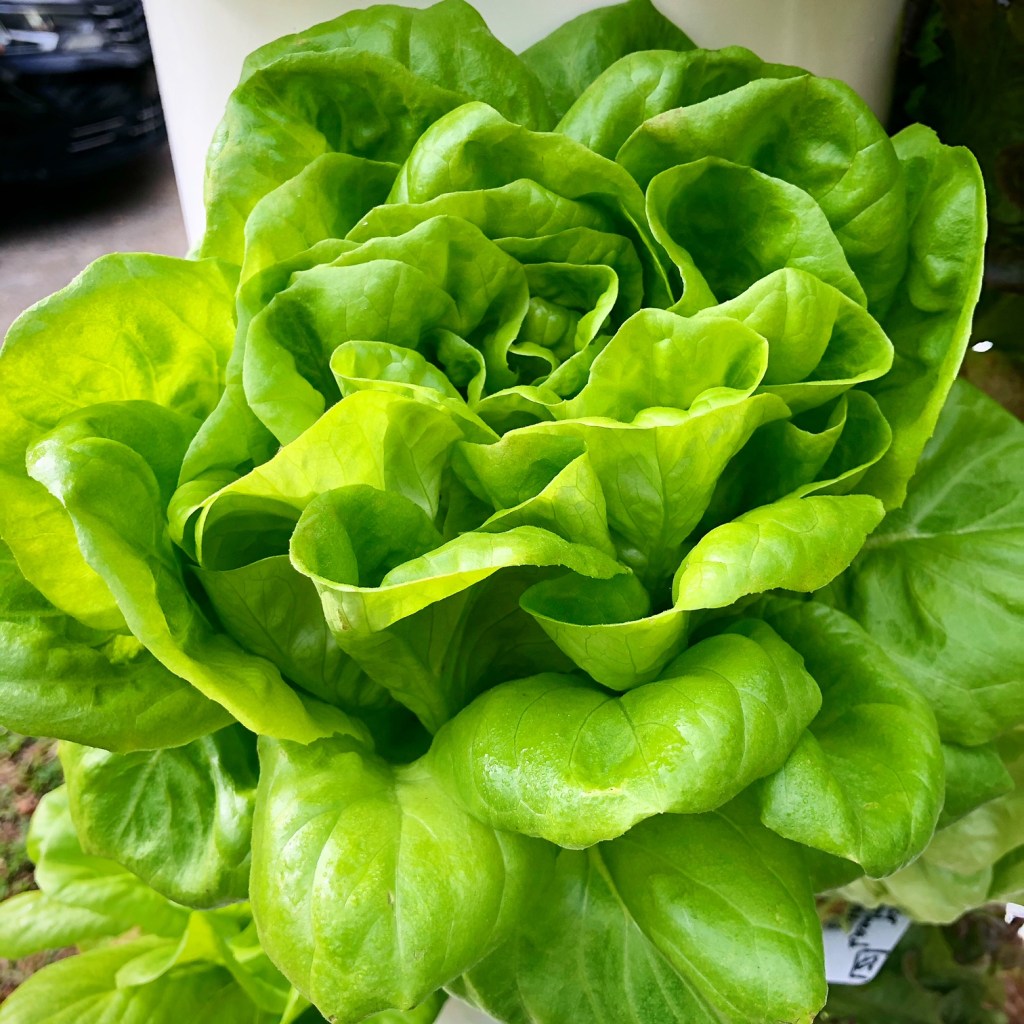
Green Bibb Lettuce growing in a hydroponic aeroponic Tower Garden
Bibb Lettuce greens growing on hydroponic Tower Garden.
Spinach Leaf from spinach plant grown on the Tower Garden vertical garden hydroponic aeroponic growing system,
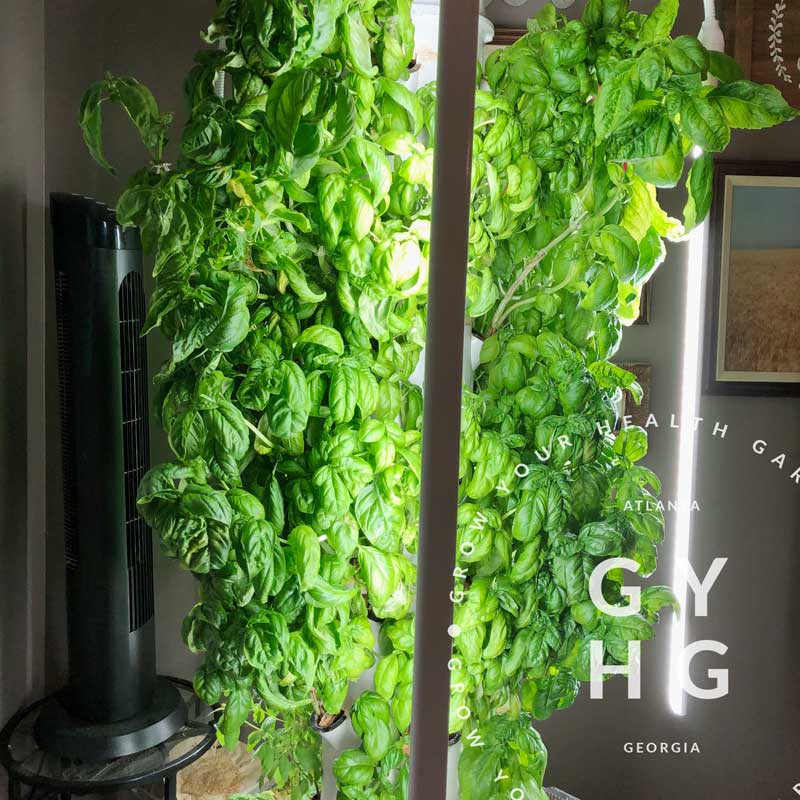
Growing basil indoors on a hydroponic aeroponic Tower Garden
Basil growing on indoor hydroponic Tower Garden growing system.

If you aren’t willing or able to invest in a growing system like this, at least start with something smaller, like an Aerogarden that can sit on your kitchen counter. There are outdoor options you can cover as well if you prefer that use soil, but I’ve found that using a growing system that circulates the same water and nutrients not only saves water, but it frees me up from having to babysit watering something growing in soil every day. I’m a busy homeschooling mom of five — I need things automated as much as possible. I simply add checking on the Towers 1 – 2x a week to my work flow at home and smile big when I have the food and herbs at my fingertips when it comes time to make dinner. You can learn more here if you’re interested or send us a message and we will reach out to you to answer any questions.

And if you’re buying salad kits…. Stop. Stop trading what seems to be a convenience for what you think is healthy. They are not healthy. You’re eating old food. Unless it says right on the packaging that it was grown locally, do not buy it. Grow it at home. And be careful of anything that had to be processed (ie: cut and assembled). You’re putting a lot of faith into someone else.

Learn how easy it is to grow your own greens at home. Let us help you on that path of discovery. Just ask in the comments below and we will be happy to answer any question or click on the pictures below which will take you to further information.

Both of these systems can grow food indoors. The Flex system on the right can ADD additional sections on top and grow higher (more food per square foot) with the proper pump. Be sure to reach out to us at hello@growyourhealthgardening and we’d be happy to answer any questions about growing food the EASY WAY hydroponically in a vertical garden like the Tower Garden growing system.

Full disclosure: I am a Tower Garden Rep (Erin Castillo). Helping families lead healthier lives using modern tools and hydroponic / aeroponic organic growing methods.

Grow Your Health Gardening Seed Company Star Seller Second Consecutive Month-in-a-Row

Grow Your Health Gardening (GYHG) Seed Co. has been identified as February Star Seller on Etsy for the second consecutive month of 2022 and received a perfect score of 100 percent in every category for exemplary customer service. 

To achieve “Star Seller of the Month” status, orders had a perfect score offering on-time shipping guidelines 100% of the time (a one day turn-around with USPS tracking on every order), communication response within 24 hours was 100% of the time, and Grow Your Health Gardening Seed Co. received 100% 5-Star Ratings from customers who received their seed orders. We provide the same wonderful service on our online store! (Which is our primary store.)

Grow Your Health Gardening receives Etsy Star Seller of the Month Award for February 2022

Here’s some of what our customers are saying about Grow Your Health Gardener Seed Co.’s service and quality grow with organic methods seeds: 

★★★★★ 
“These small seeds arrived in great shape. I planted just a few of them right away. They are already coming up! I am so happy with these rare tomato seeds!” — Sully

★★★★★ 
“My seeds came perfectly marked with a lovely thank you note and a helpful chart of past repelling plants. I could not be happier with my purchase and cannot wait to plant my little seeds with my kids and watch them grow. Thank you!!!” — Crystal

★★★★★ 
“Got here really quickly! Would buy form again! Can’t wait to start growing ^_^!” — xstiney

★★★★★ 
“Wonderful seed company with lots of information that comes with your seed order. Also check out the website. They have tone of wonderful seeds and information on it.” — Royal W

To purchase hydroponic-adapted seeds and seeds grown in the soil in the Southeast Zone 7B, you can order on Etsy.com or better yet, for the latest updates and product releases visit Grow Your Health Gardening‘s online store.

Live screenshot of Etsy Star Seller Dashboard for Grow Your Health Gardening

The Star Seller badge is Etsy’s way of recognizing sellers with a proven record of providing a great customer experience. To become a Star Seller, your store must meet certain criteria for messages, shipping, ratings, orders, and sales. If these core fundamentals of delivering great customer service are achieved, a shop may receive a badge that shows buyers that a shop has consistently provided an excellent customer experience.

Our 10 Most Productive Slicer Tomato Varieties from Last Season

{We shared this info with our followers via email at the end of December, but wanted to share on Grow Your Health Gardening as well. If you want to get our emails (where we share information first on new releases and other tips first) you can do that here: https://store.growyourhealthgardening.com (page down just a little bit and you’ll see the spot to enter your email.)}

The results are in! Last season (2021) we counted and weighed every tomato that came off the vine and was harvested. Totals reflect equal number of plants per variety. If you’re looking for varieties that produce a multitude of blossoms and tomatoes, then this is YOUR LIST to grab. We will also include links to each tomato variety if you’re interested in getting homegrown seed grown using organic methods. All of this tomatoes were grown hydroponically meaning the tomato plants received the perfect pH level and ideal nutrients throughout the season.

If you have any questions, feel free to ask in the comments below. (But remember, our data is propiertary and we cannot share specific weights.) So here we go… ready? And the top ten biggest producers out of 75+ varieties (by weight) are…

Grow Your Health Gardening Seed Company Green Elf aka: Wagner's Lime Green Salad Tomato: Number 10 most productive variety from 2021

#10 MOST PRODUCTIVE 2021 SLICER TOMATO VARIETY:
GREEN ELF
(AKA: WAGNER’S LIME GREEN SALAD

Green Elf Tomato (also known as Wagner’s Lime Green Salad Tomato) is one of Owner and Lead Grower of Grow Your Health Gardening, “Erin’s Top Tomato Picks” Seed Collection from the 2021 growing season. In fact, Green Elf Tomato was #10 in highest production by weight of ALL slicers varieties in our 2021 trails!

It was originally bred by Tom Wagner and is a determinate variety. It only gets a couple of feet tall and needs only a little support making it ideal for containers and small space gardening. It grows nicely in 5 gallon felt containers or Bato Bucket systems and is a heavy producer — boy does it produce blooms! Wowza! If you plant this variety every two weeks in the first part of the growing season, you will have a bushel load of tomatoes that can be used for slicing, salsa, salad, sandwiches, canning, drying, Fried Green Tomatoes… you name it! This is one I can’t wait to grow again!

Grow Your Health Gardening Seed Company Big Rainbow Heirloom Tomato: Number 9 most productive variety from 2021

#9 MOST PRODUCTIVE 2021 SLICER TOMATO VARIETY:
BIG RAINBOW TOMATO

We were drawn to this tomato for it’s beautiful coloration when sliced open! Big Rainbow Tomato is a beautiful bi-color slicer tomato variety with early tomatoes weighing 2+ pounds with very little cat facing or deformities. It has good resistance to foliar disease and is an indeterminate.

Big Rainbow Tomato variety will ripen with color shades showing green on the should, yellow in the center, and red towards the bottom. When cut open, it will have bi-color shading of yellow and red making it a beautiful slice on the plate or sandwich. It has more flesh than seed ratio, so also serves well for using to make sauce.

We have adapted this seed to grow in a hydroponic system using organic methods and so even though it will grow in soil just fine, it is especially suited for hydroponic home growers using a Tower Garden, Bato Bucket system, or the Farmstand.

Grow Your Health Gardening Seed Company Thornburn's Terra Cotta Heirloom Tomato: Number 8 most productive variety from 2021

#8 MOST PRODUCTIVE 2021 SLICER TOMATO VARIETY:
THORNBURNS TERRA COTTA HEIRLOOM TOMATO

Thornburn’s Terra Cotta Heirloom Tomato is a joy to grow! Not only does it taste wonderful, but it’s color looks beautiful mixed in with other sliced standard red tomatoes. It’s outer skin and inside flesh of the tomato has a most unique color — it’s a mix of a chartreuse green and terra cotta — some call it a honey-brown shade, but our trials seemed to be more colorful than that.

If you especially love history, you’ll want to grow this tomato to preserve the seed for future generations because it is now 129 years old! It was originally introduced in Thornburn’s 1893 Seed Catalog. This is one easy slicer you won’t find in the grocery store aisle and will want to try!

Grow Your Health Gardening Seed Company Pomodoro Farina Gigante Heirloom Tomato: Number 7 most productive variety from 2021

#7 MOST PRODUCTIVE 2021 SLICER TOMATO VARIETY:
POMODORO FARINA GIGANTE TOMATO

In all fairness to Pomodoro Farina Gigante Tomato, we were pruning this plant to get an exceptionally large tomato, so the overall weight for production may have been affected as it didn’t put out as many blossoms as it would have normally produced. With that said, this cultivar still weighed in making the Top 10 and is definitely a BIG TASTY classically robust Italian tomato!

This line of Pomodoro Farina Gigante Tomato seed DNA comes from the work of Mario Quattrocchi from Cuneo, Italy and originally from Remo Farina, a retired truck driver originally from Bleggio, Italy. Mr. Farina holds the record for the largest tomato in Italy and worked tirelessly for years to acheive his record breaking tomato. Our trials produced a 2 pound, 6 ounce tomato and others that followed ranged from 1.5-2 pounds. If you want to grow a large tomato, then this variety is the one to try!

Grow Your Health Gardening Seed Company Paul Robeson Heirloom Tomato: Number 6 most productive variety from 2021

#6 MOST PRODUCTIVE 2021 SLICER TOMATO VARIETY:
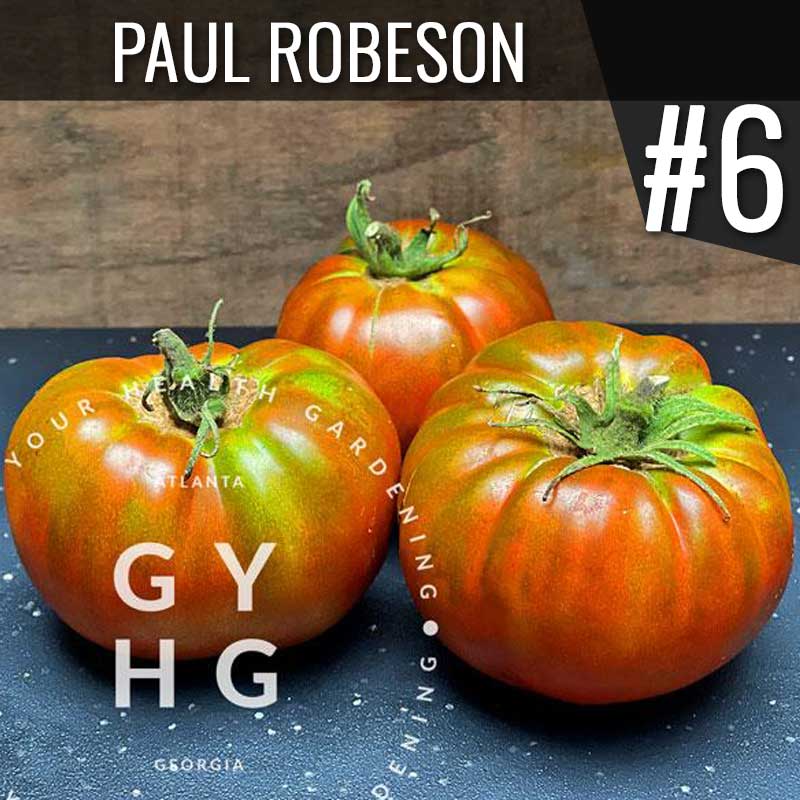
PAUL ROBESON HEIRLOOM TOMATO

Paul Robeson Heirloom Tomato is a nice slicer variety with a low seed count making it ideal for BLT sandwiches or it can even be used for making tomato paste. It has less acidity than traditional past varieties and a mild sweetness to it (though not as sweet as Cherokee Purple in our opinion). If you love Cherokee Purple, then you’ll enjoy this very similar, but more productive tomato variety. (At least grow the two varieties side-by-side and decide for yourself which one you like the best and share your opinion in the comments below.) Want to learn more about who Paul Robeson was in history? Click here

Grow Your Health Gardening Seed Company German Johnson Heirloom Tomato: Number 5 most productive variety from 2021

#5 MOST PRODUCTIVE 2021 SLICER TOMATO VARIETY:
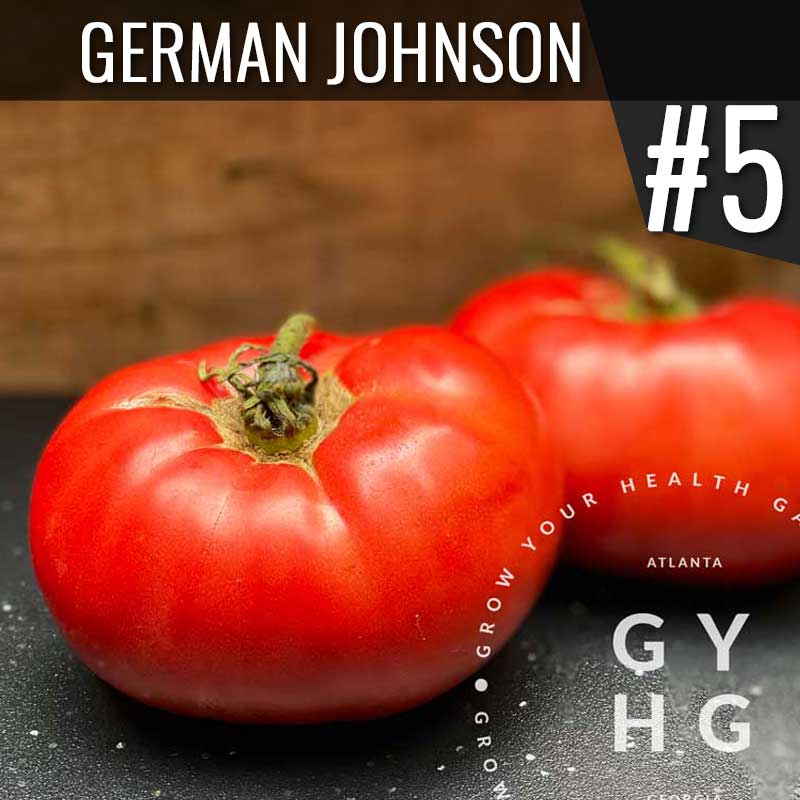
GERMAN JOHNSON HEIRLOOM TOMATO

German Johnson Heirloom Tomato is a highly productive and excellent tasting pink heirloom. It is slightly smaller than a Brandywine and it has a deep acidic classic tomato flavor. It is a gorgeous tomato on and off the vine! This is a regular-leaf strain which can tend to come in earlier and is more productive than the potato-leaf strain. Can be used as a slicer or as a paste tomato. Very versatile and one of our favorites from this past growing season!

Grow Your Health Gardening Seed Company Nostrano Grasso Italian Heirloom Tomato: Number 4 most productive variety from 2021

#4 MOST PRODUCTIVE 2021 SLICER TOMATO VARIETY:
NOSTRANO GRASSO ITALIAN HEIRLOOM TOMATO (RARE IN THE U.S.)

Nostrano Grasso Italian Heirloom Tomato is a very rare heirloom from Italy and mainly unheard of in the United States. It produces medium-sized tomatoes and is duo-purposed as a smaller slicer, but also a great sauce tomato. It has superb tomato flavor with a hint of sweetness. It just kept pumping out the tomatoes and didn’t get flower drop even in higher Hotlanta summer temps here in the Southeast. If you’re looking for authentic Italian flavor and a good producer, this is your tomato! Such a pretty tomato on the vine and on the plate!

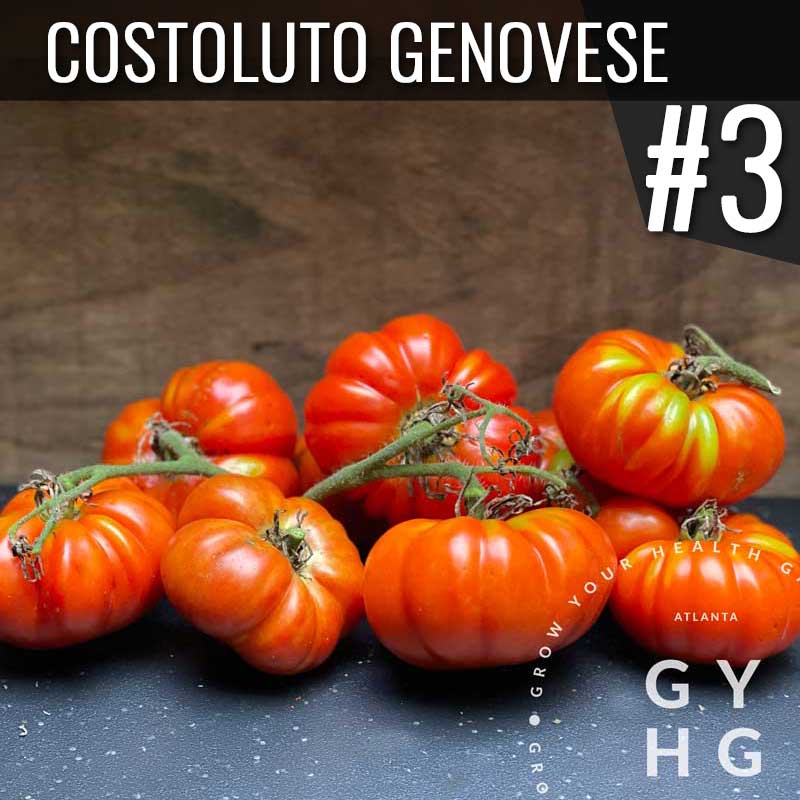
Grow Your Health Gardening Seed Company Costoluto Genovese Italian Heirloom Tomato: Number 3 most productive variety from 2021

#3 MOST PRODUCTIVE 2021 SLICER TOMATO VARIETY:
COSTOLUTO GENOVESE ITALIAN HEIRLOOM TOMATO

This variety pleasantly surprised us as well with it’s consistent production and final weigh-in totals. Costoluto Genovese Italian Heirloom Tomato is popular with chefs and a standard in Italy for both eating and preserving and we can see why! It has beautiful ruffled ribbing, so when it’s sliced, it looks pretty on the plate. Classic intense Italian tomato flavors. It was productive all season long no matter the temp. Definitely a keeper!

Grow Your Health Gardening Seed Company Olga's Round Chicken Tomato: Number 2 most productive variety from 2021

#2 MOST PRODUCTIVE 2021 SLICER TOMATO VARIETY:
OLGA’S ROUND CHICKEN TOMATO

Olga’s Round Chicken Tomato is a heavy producer of almost perfectly round globe-shaped tennis-ball sized tomatoes. Not only does this tomato variety have a funny name (which truth be told is what drew us to explore and grow it), but it’s also super tasty and looks great diced in salsa or sliced on a sandwich!

Grow Your Health Gardening Seed Company Apricot Brandywine Heirloom Tomato: Number 1 most productive variety from 2021

#1 MOST PRODUCTIVE 2021 SLICER TOMATO VARIETY:
APRICOT BRANDYWINE HEIRLOOM TOMATO

I can see why Brandywine cultivars are a favorite among many tomato grower enthusiasts! They consistently produce big slicers through high heat when other cultivars wane. Apricot Brandywine Heirloom Tomato is a wonderful yellow-orange beefsteak type of slicing heirloom tomato. It has a leaf that mimics a potato leaf and produces beautiful apricot-colored tomatoes that weight a pound or so. This variety is perfect for sandwiches and has a fantastic aroma as well! It’s a gorgeous and tasty tomato that produces all season long. Check out what the inside of this tomato looks like in the video below:

If only we could also let you taste it! If you want a lot of big juicy tomatoes, this is one to try!

And that’s how the slicer-type tomato trials went last growing season! We will tuck away this data and refer back to as we continue to grow out and adapt other cultivars in growing seasons to come.

If you like trying unique tomatoes you can’t find in any grocery store or Farmer’s Market, we’ve put together a collection and discounted it for our customers. Be sure to check out “The Tomato Lovers” Collection and as well as “Erin’s Top Picks” in the shop! Which new variety will you choose to grow this coming year?

Grow Your Health Gardening Seed Company's exclusive line of homegrown seed using organic growing methods.
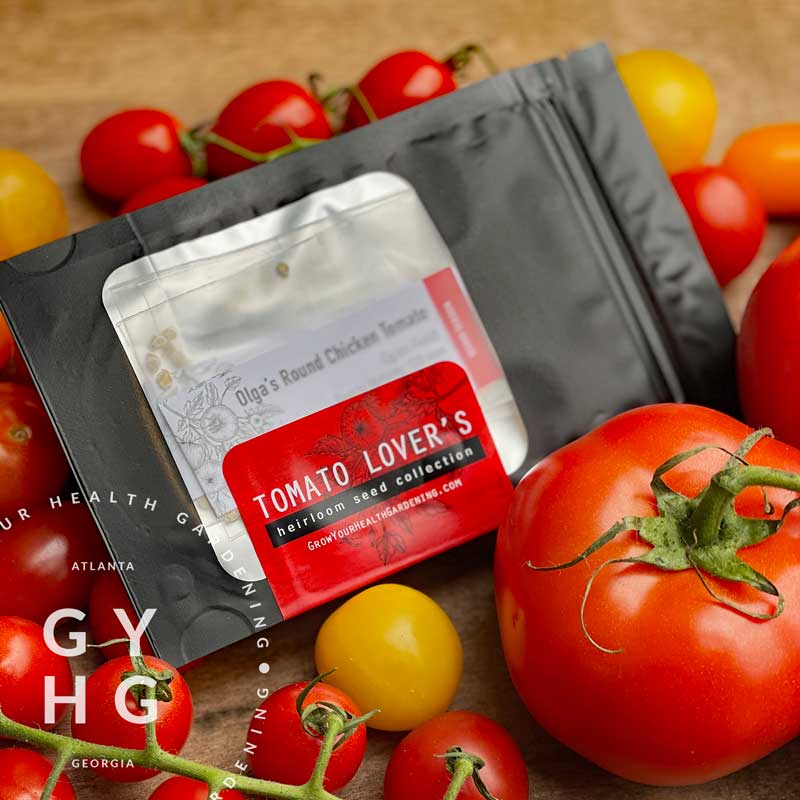
Grab several varieties of heirloom and open source tomato cultivars at a discounted price compared to purchasing individually with our Grow Your Health Gardening Tomato Lover’s Heirloom Seed Collection pack.

Which one will perform the best? 1) Worm castings, 2) Activated Charcoal, 3) Both 4) Neither?

I’m scheduled to give a “Tomato Talk” to a local group of community members who are interested in growing their own tomatoes from seed in the next 10 days and in the process for preparing for this talk, I thought I’d do a little soil test for what makes for a strong seedling and share it with y’all as things grow so that you can grow your health through gardening and learn tips for what I learn along the way. 😉

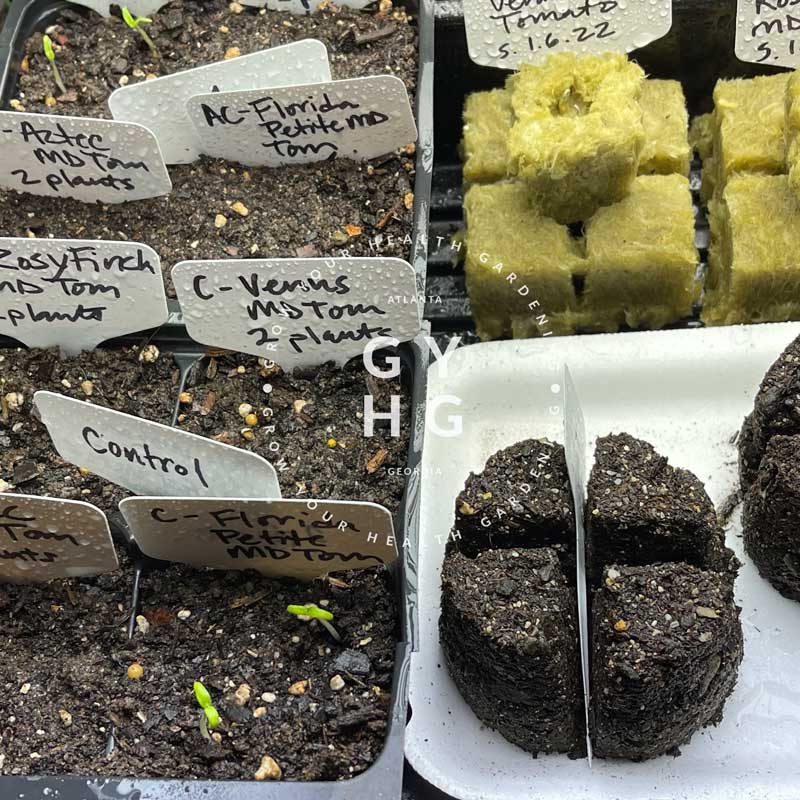
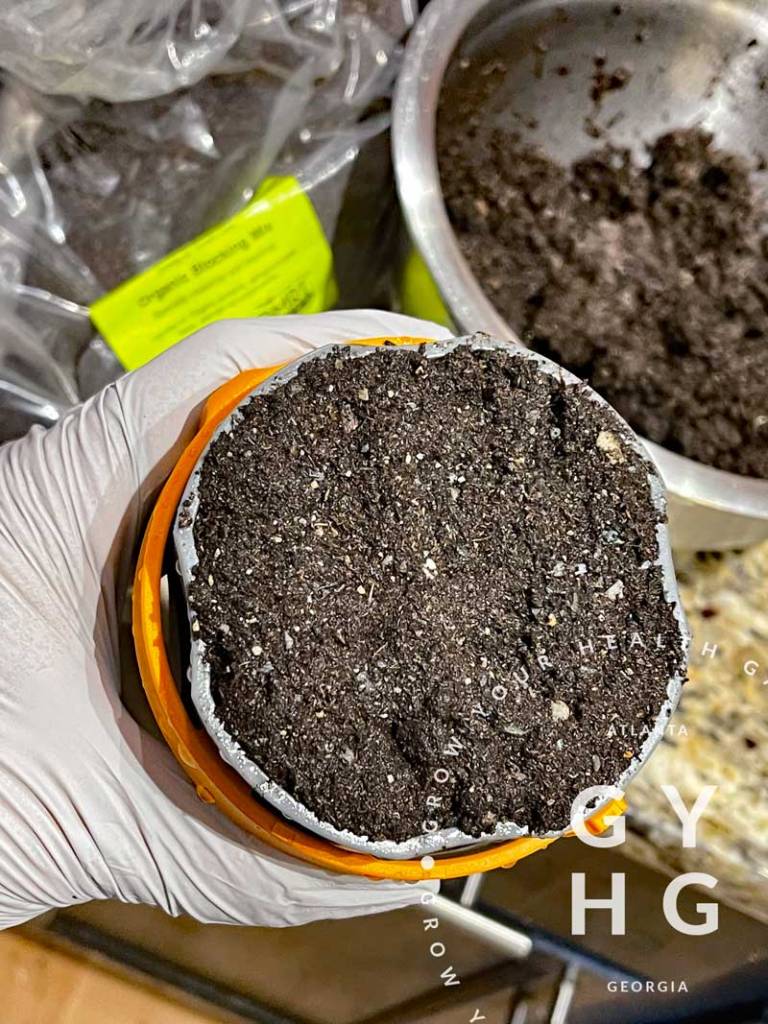
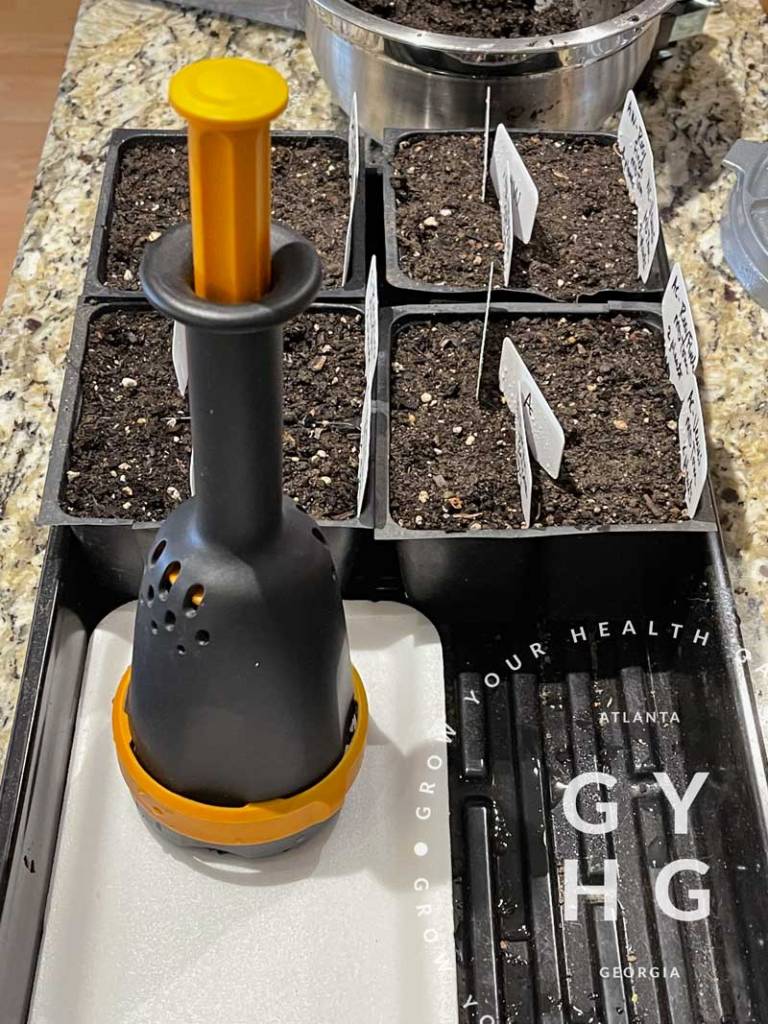
I took four (4) 4-pack planting trays and used the same batch of sifted soil for all four packs. The control 4-pack is straight up soil only. The second 4-pack I amended the soil with worm castings only. The third 4-pack I amended the soil with activated charcoal from a company I heard about and am trialing their product before bringing it to sell in our store and online. The fourth 4-pack soil is amended with the same ratio of worm castings as the second 4-pack as well as the same ration of the third 4-pack of soil with activated charcoal (so this final 4-pack has both amendments in it.)

A glimpse of our current seedling test subjects.

I then repeated the same amendments in another batch of similar soil, but put it in a soil block and amended certain soil blocks with worm castings only and activated charcoal castings only and a mix of both worm castings and activated charcoal. I also included rock wool just to compare growth of seed in this substrate as well. The rock wool will need to have kelp diluted and added to it as the seedlings grow as the rock wool is pH neutral and is devoid of nutrients.

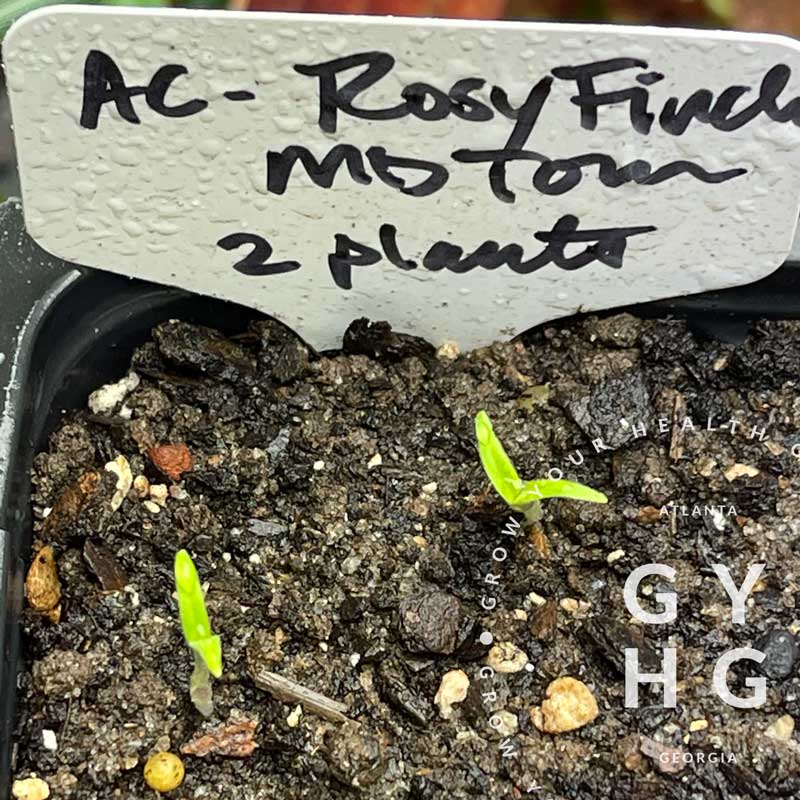
For plants, I chose seed that was from the same lot, same harvest, same parent plant. All seed is our homegrown line of seed that we’ve saved and developed season after season, so I am confident that we have good strong seed stock to run the test. I chose to plant microdwarf tomatoes, because we are in the middle of winter here in Atlanta, Georgia and I can grow micro-dwarf tomatoes indoors under lights and evaluate results before our busy season of the summer harvest begins. We selected different micro dwarf tomato cultivars including Florida Petite Microdwarf Cherry Tomato, Rosy Finch Microdwarf Cherry Tomato, Aztek Microdwarf Cherry Tomato and Venus Microdwarf Cherry Tomato.

Rosy Finch Micro Dwarf Tomato Seedlings pop out of the soil ready to reach for the light.
This is a Fiskars Soil Block that is a plunger style and easy to use. You can make soil blocks of four or one larger soil block.
Setting the first soil block with the other four 4-pack trays already finished and planted.
Small bits of Activated Charcoal in equal parts and mixed thoroughly in each 4-pack of soil as well as equal parts of worm castings mixed well in 4-packs of soil keeping things as consistent as possible. We are testing to see if the activated charcoal makes any significant difference before carrying a product in our store. Stay tuned!

To gauge results, we will weigh all produced fruit and count the number of blossoms and the number of final fruit set by each tomato plant. I will do my absolute best to give equal amounts of water by first measuring what each plant is given and offering the same amount to each plant.

My hypothesis is that the air pruning action of the soil blocked starts will produce stronger seedlings for transplanting in the long run because when that root hits the air, it will signal to the plant to produce roots on the interior of the soil elsewhere. More roots will mean the plant has more opportunities to take up moisture and nutrients in the long run. I also think the soil block with BOTH worm castings and activated charcoal will perform the best because the worm castings will further any biological activity that may be happening within the soil and “cling” to the activated charcoal which the plant can tap as it needs.

That’s my best guess, but I could be wrong! We shall see what plays out in our little science experiment. What do you think will perform the best and why? Tell us in the comments below!

Happy Growing!
Erin